
Review · USA
Kilauea: Volcanoes National Park Guided Hike
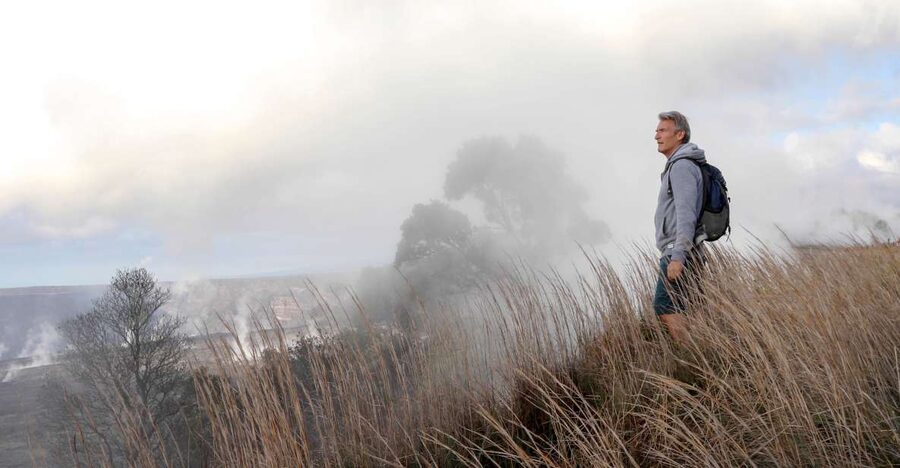
Kīlauea can change by the hour, and this hike makes that uncertainty part of the fun. You walk a four-mile loop through native Hawaiian rainforest and around a hardened lava lake, while your guide watches volcanic conditions and shares current information about the volcano.
I like the small groups of up to 10 and the way the guides connect geology with plants, wildlife, Hawaiian traditions, and recent eruption activity. The supplied backpack, trekking poles, snack, and extra rain gear are useful touches. The main consideration is that lava viewing is never guaranteed, and this is a real hike in weather that can change quickly.
I also like the meeting point at Kīlauea Visitor Center and the finish at Volcano House. You can end with a meal or drink overlooking the caldera, but remember that the park entrance fee and your transportation to the meeting point are not included.
Key points to know before you book

- A four-mile loop with volcanic highlights: Walk through native rainforest and around a hardened lava lake during a three-hour outing.
- Guides with strong local and scientific background: Jennifer and Yvonne explain eruptions, earthquakes, steam vents, plants, animals, Hawaiian legends, and current volcanic activity.
- Real-time eruption updates: Your guide may adjust timing or viewing plans when Kīlauea becomes more active, but lava sightings depend on conditions.
- A small-group format: The group is limited to 10 people, with no shared van ride and more time for questions.
- Useful gear is provided: Backpacks, trekking poles, and a healthy snack are included. Bring your own water, comfortable hiking shoes, and rain gear.
- A pleasant finish at Volcano House: The hike ends near the restaurant and bar, making lunch or a drink an easy follow-up.
Why this hike is more than a walk around Kīlauea

Hawaiʻi Volcanoes National Park is easy to visit on your own, but it is not always easy to understand. A crater can look like a vast gray hollow. A steam vent can look like a patch of mist. A forest plant can seem ordinary until someone explains how it survives on young volcanic ground.
That is where this guided hike earns its price. You are not simply following a path and taking photographs. You are given context for what you are seeing, from volcanic geology and eruption patterns to native plants, wildlife, and Hawaiian beliefs about the volcano.
The guide style is a major part of the experience. Jennifer has been praised for explaining Kīlauea’s eruptions, earthquakes, steam vents, invasive species, native plants, and local legends in a clear, lively way. Yvonne has also received strong praise for her ability to explain the park, its ecology, and volcano science while keeping the walk friendly and easy to follow.
One especially unusual detail is the use of current volcano information during the hike. A guide may show you charts or tilt meter data from a backpack, helping you understand how scientists track changes in the volcano. That is far more useful than simply being told that Kīlauea is active.
More Volcano and Crater Tours in the USA
- Hilo Shore Excursion: Volcanoes National Park & Black Sand Beach
★ 4.5 · 2,338 reviews - Big Island: Fat Tire E-Bike Tour through Volcanoes National Park
★ 5.0 · 546 reviews - Big Island, Hawaii: Volcanoes National Park Safari
★ 4.5 · 545 reviews
Starting at Kīlauea Visitor Center
You meet at Kīlauea Visitor Center, which keeps the beginning simple. There is no hotel pickup, so you need to arrange your own way to the park and pay the separate entrance fee.
The meeting point also makes sense for a guided outing. It gives you a clear place to gather before heading onto the trail, and your guide can review the plan, weather, and current volcanic conditions. The activity is offered in English.
Expect a short orientation rather than a rushed departure. One guide has been praised for asking about interests before the hike and giving clear instructions about the meeting time and location. That kind of preparation matters in a park where weather, visibility, and volcanic activity can affect the day.
The group limit is 10 people. That is small enough for questions and conversation without requiring a private tour price. There are no van rides with strangers, so the time is spent on foot with the guide and the group.
Walking through native Hawaiian rainforest

The route includes a walk through native Hawaiian rainforest, a setting that can feel surprisingly cool and wet compared with the sunny coastal areas of the island. Rain is not an exception here. The activity runs rain or shine, so you should treat waterproof clothing as part of your basic equipment.
The forest section gives your guide room to explain the living side of the park. You may learn to identify native plants, hear about animals found in the area, and understand how introduced plants affect the native ecosystem. Hawaiian chickens have also been spotted along the route, adding a little comic relief to the geology lesson.
The forest is not just filler between volcanic sights. It shows how life returns to ground shaped by eruptions. Your guide may point out the difference between native and invasive plants, explain how the ecosystem adapts, and connect local plant life with Hawaiian culture.
Bring water and wear shoes with a firm grip. Comfortable walking shoes are required, and hiking shoes are the safer choice. Open-toed shoes, high heels, and intoxication are not allowed. Trekking poles are supplied, which can help on uneven or sloping sections.
Reaching the hardened lava lake

The central feature is a hardened lava lake, reached as part of the four-mile loop. This is the point where the walk shifts from rainforest study to a close look at volcanic ground.
A hardened lava surface can appear empty at first, but the details matter. Your guide can explain how molten rock cooled, how eruptions shaped the area, and what the ground tells you about Kīlauea’s past activity. The walk becomes a lesson in reading volcanic features rather than simply viewing them from a roadside lookout.
The route has been described as moderate to easy, with some hills. One earlier outing was extended to nearly eight miles for a private group, but the advertised experience is a four-mile loop lasting about three hours. That distinction is useful: the standard hike is not presented as a severe trek, but it still requires steady walking and is not suitable for people with mobility impairments.
You should also expect some uphill effort. The walk into the caldera area has been described as comfortable overall, with the return section slightly more challenging. The supplied poles may be handy here, especially if the ground is wet.
Same park country, a different day out:
- Grand Canyon West, Hoover Dam Stop and Optional Lunch and Skywalk
★ 5.0 · 19,535 reviews - Grand Canyon West, Hoover Dam Stop, Breakfast, Lunch & Skywalk
★ 5.0 · 12,194 reviews - From Miami: Everglades Airboat, Wildlife Show & Bus Transfer
★ 4.2 · 8,622 reviews - Miami: Everglades National Park Airboat Tour & Wildlife Show
★ 4.5 · 7,296 reviews
Learning how Kīlauea behaves

The strongest part of the hike is the connection between what you see underfoot and what Kīlauea is doing now. Your guide may discuss eruptions, earthquakes, steam vents, and changing activity levels. You may also see photographs, video, or data that help explain recent events.
This matters because volcano viewing is not like visiting a fixed monument. A crater can look different from one day to the next. Lava may be visible during one visit and hidden by weather or inactivity during another. The guide’s real-time updates help you make better use of the time available, even when the volcano does not cooperate.
Recent outings have included special timing changes when an eruption began earlier than expected. A guide contacted the group and arranged an earlier meeting so they could see the event. That kind of flexibility is valuable, but it should not be mistaken for a promise. The activity clearly states that lava viewing depends on weather and Kīlauea’s activity.
If lava is visible, a guide may provide a telescope or direct you to a strong viewing area. One evening group finished with a view of glowing lava near Volcano House. Such moments can be extraordinary, but they are bonuses, not guaranteed parts of the three-hour walk.
Hawaiian stories, plants, and animals

The science is only one layer of the outing. Guides also discuss Hawaiian legends and how Hawaiians regard the volcano. That gives the hike a cultural dimension without turning it into a lecture detached from the place.
Jennifer has shared legends connected with Mauna Loa and the surrounding area, along with explanations of local plants and animals. The best moments are likely to come when the story matches the place around you, such as a plant growing from volcanic ground or a steam vent that carries both scientific and cultural meaning.
You can ask questions as you go. The small group makes that practical. Several outings were praised for stopping at photo spots, taking pictures for the group, and answering questions rather than keeping to a rigid script.
The tour is in English, but one group with limited English used a translation device and still enjoyed the experience. That suggests a patient guide can help, though the activity itself is not advertised as multilingual.
Finishing at Volcano House

The hike concludes at Volcano House restaurant and bar. This is a smart ending because you can sit down after the walk rather than immediately getting back in a car.
You are encouraged to stay for a meal or drink, but food and beverages are not included in the $120 price. The setting can also add to the experience, especially if volcanic activity is visible after dark. One group finished with dinner and saw a glowing lava view at night.
Think of Volcano House as an optional extension, not part of the paid tour package. If you plan to eat there, allow extra time and budget separately. A later start, such as a 3 p.m. outing, can work well if you want to finish near a meal, while an early start may be better for morning viewing when conditions are favorable.
Is the $120 price fair?

At $120 per person, this is not the cheapest way to visit Volcanoes National Park. You still pay the park entrance fee, and you must get yourself to Kīlauea Visitor Center. If you only want a quick crater photo, driving yourself will cost less.
The value improves if you want to understand the park. The price includes a certified interpretive guide, snack, backpack, and trekking poles. More important, you receive three hours of explanation and access to a carefully chosen route. You are paying for interpretation, timing, and local judgment, not just transportation.
The small group also matters. A limit of 10 means you can ask about a plant, volcanic feature, or recent eruption without shouting over a large crowd. There is no shared van ride, which keeps the outing focused on the park itself.
I would consider the tour good value for first-time visitors, anyone fascinated by volcanoes, and people who want a richer experience than roadside viewpoints provide. It is less compelling for experienced hikers who already know the park and prefer to explore alone.
Weather, fitness, and what to pack

This is a rain-or-shine activity. The rainforest can be wet, and weather may affect visibility or lava viewing. Bring rain gear even if the morning starts clear.
Pack:
- Water
- Comfortable shoes or hiking shoes
- Rain gear
- A phone or camera
- Clothing that can handle changing conditions
Backpacks and trekking poles are supplied, and guides have carried extra ponchos. A healthy snack is included, but it should not replace your own water or a meal if you tend to get hungry on a three-hour walk.
The activity is not suitable for children under six or people with mobility impairments. The route has hills and uneven volcanic ground, so you should be comfortable walking for several hours. It is described as moderate to easy rather than strenuous, but easy is not the same as fully accessible.
Cancellation is flexible: you can cancel up to 24 hours ahead for a full refund. You can also reserve now and pay later, which is useful when your Big Island schedule depends on weather and park conditions.
Who should book this Kīlauea hike?
Book it if you want a guide who can explain what you are seeing, not just lead you from one viewpoint to another. It is a particularly good fit for first-time visitors, amateur geologists, photographers, families with older children, and anyone curious about Hawaiian plants and culture.
It also suits people who want the best possible chance of responding to changing volcanic activity. The guide cannot control Kīlauea, but current updates and flexible timing may help you catch a better viewing opportunity.
Skip it if you need guaranteed lava, dislike walking in rain, or have serious mobility limits. You should also think twice if your main goal is a short, self-guided visit with minimal cost.
Should you book it?
I would book this hike if you have three hours to spare and want the park to make more sense. The combination of native rainforest, a hardened lava lake, volcanic data, Hawaiian stories, and a finish at Volcano House gives the outing more range than a basic crater stop.
The key is to book for the guided interpretation, not a guaranteed eruption. If lava appears, it may become the highlight of your trip. If it does not, you still get a focused walk through one of Hawaiʻi’s most unusual environments with a guide who can explain why the ground, plants, weather, and volcano all matter.
FAQ
Where does the Kīlauea guided hike meet?
The meeting point is Kīlauea Visitor Center in Hawaiʻi Volcanoes National Park.
How long is the activity?
The hike lasts three hours and covers an advertised four-mile loop.
Is lava viewing guaranteed?
No. Lava viewing depends on weather conditions and the current activity of Kīlauea.
What does the route include?
The route passes through native Hawaiian rainforest and around a hardened lava lake. Your guide also explains volcanic geology, eruptions, plants, wildlife, and Hawaiian culture.
Who leads the hike?
The guides include Jennifer and Yvonne. The activity is conducted in English by a certified interpretive guide.
How large is the group?
The group is limited to 10 participants.
Is transportation included?
No. Hotel pickup and drop-off are not included, and there are no shared van rides as part of the activity.
Is the park entrance fee included?
No. You must pay the separate entrance fee to Hawaiʻi Volcanoes National Park.
What should I bring?
Bring water, comfortable shoes or hiking shoes, and rain gear. Backpacks, trekking poles, and a healthy snack are provided.
Is the hike suitable for young children or people with mobility impairments?
The activity is not suitable for children under six or people with mobility impairments. It includes several hours of walking and some hills.
What happens at the end of the hike?
The hike ends at Volcano House restaurant and bar. You can choose to stay for a meal or drink, but those costs are not included.
More Hikes and Treks in the USA
- San Francisco: Yosemite National Park & Giant Sequoias Hike
★ 4.5 · 1,777 reviews - From SF: Yosemite Day Trip with Giant Sequoias Hike & Pickup
★ 4.9 · 1,331 reviews - East Zion Crimson Canyon Hike & UTV Adventure
★ 5.0 · 1,066 reviews - Private Yellowstone Tour: ICONIC Sites, Wildlife, Family Friendly Hikes + lunch
★ 5.0 · 739 reviews
Just added around the USA
- Yosemite National Park Self Guided Driving Audio Tour Guide★ 4.5 · 47 reviews
- Self-Guided Audio Driving Tour in Sequoia and Kings Canyon★ 4.5 · 29 reviews
- Bryce Canyon National Park Self-Guided Driving Audio Tour★ 4.5 · 71 reviews
- Bryce Canyon Hiking Challenge★ 5.0 · 92 reviews
- Bryce Canyon E-bike Tour★ 5.0 · 147 reviews
- Yellowstone Winter Wildlife Safari from Bozeman★ 5.0 · 42 reviews
- Private Yellowstone Winter Wolf Watching and Wildlife Safari★ 5.0 · 26 reviews
- Yellowstone Wildlife Safari from Bozeman – Private Tour★ 5.0 · 140 reviews
USA National Park Tours, compared.
Grand Canyon West, Hoover Dam Stop and Optional Lunch and Skywalk
Read our review →
Grand Canyon West, Hoover Dam Stop, Breakfast, Lunch & Skywalk
Read our review →
Everglades Airboat, Wildlife Show & Bus Transfer
Read our review →
Everglades National Park Airboat Tour & Wildlife Show
Read our review →
Grand Canyon West Bus Tour with Hoover Dam and Optional Skywalk
Read our review →
Clear Kayak Tour of Shell Key Preserve and Tampa Bay Area
Read our review →
Grand Canyon, Hoover Dam, Lunch/Skywalk Options, WiFi
Read our review →
Grand Canyon + Hoover Dam View + WiFi (Skywalk/lunch options)
Read our review →Browse the lists this tour appears in