
Review · NATURE RESERVE TOURS
Rio Lagartos: Boat Tour through the Nature Reserve
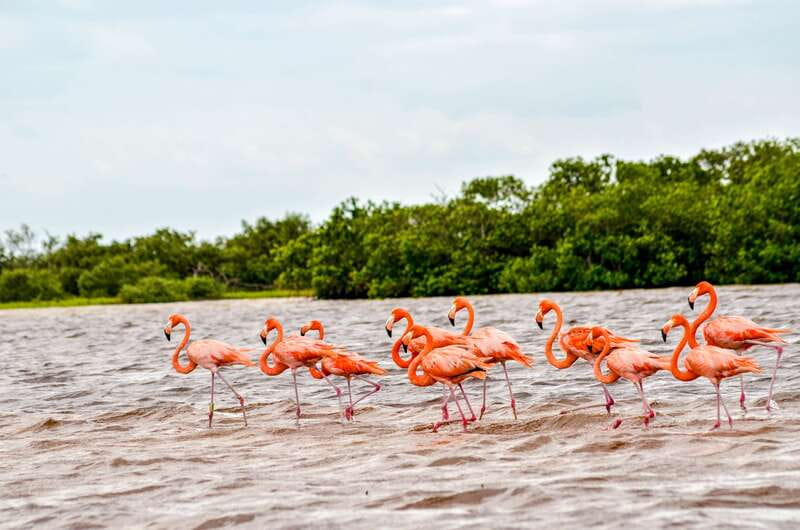
Rio Lagartos is at its best from the water, where narrow mangrove channels open into broad wetlands filled with birds. The main prize is the flamingo colony, but crocodiles, herons, pelicans, frigatebirds, and even eagles may appear along the way. You finish at a quiet beach with clear water.
I like the private boat and the local focus. Your guide can slow down for a bird or crocodile instead of rushing a large group, and guides such as Emilio and Manuel have been praised for explaining the reserve and pointing out wildlife. I also like that binoculars and a bird book are supplied.
The main caution is the English guiding. One recent family had a guide who was not comfortable speaking English, despite booking an English-language tour. Wildlife is seasonal, and the crocodile sighting is only estimated at 70 percent, so you should book this for the setting and chance to observe nature, not for a guaranteed animal checklist.
Key points to know before you go
- Flamingos change with the season: Summer usually brings more birds, while winter and spring are considered lower periods for flamingo numbers.
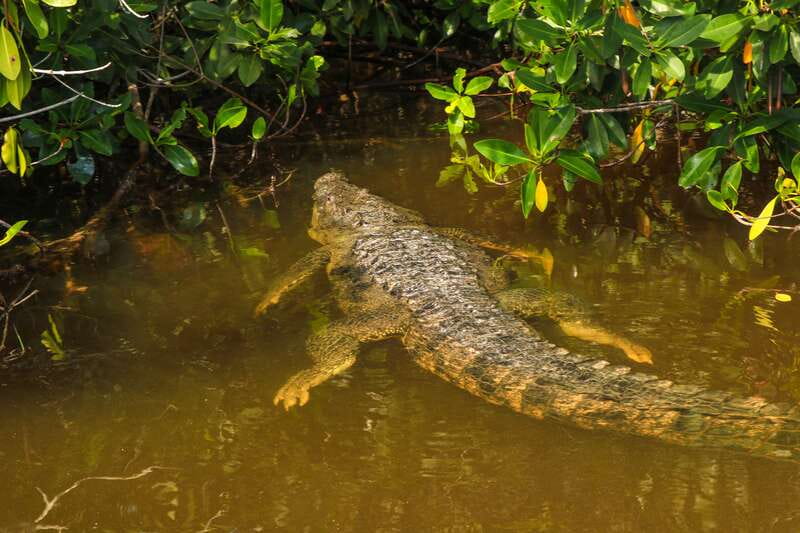
- Crocodiles live freely in the mangroves: The Morelet’s crocodile is not captive or handled, and sightings are not guaranteed.
- A private boat keeps the outing personal: You have a better chance to ask questions and pause for wildlife than on a large shared cruise.
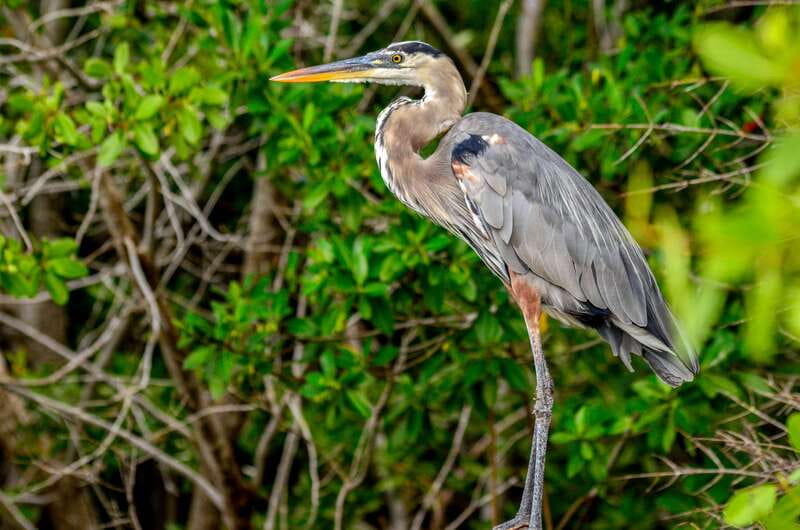
- The reserve is unusually important for birds: More than 320 bird species have been identified here, including herons, pelicans, cormorants, eagles, and frigatebirds.
- The tour ends at a beach: Bring swimwear, a towel, and dry clothes if you want to enjoy the final stop.
- You must reach Rio Lagartos yourself: Transportation to your accommodation is not included.
Why Rio Lagartos is worth the trip
Rio Lagartos is a small fishing village of about 4,500 people in eastern Yucatan. It is part of the Ria Lagartos Biosphere Reserve, a protected area covering about 60,347.82 hectares.
That scale matters. This is not a short ride around a decorative pond. The reserve includes wetlands, mangroves, and coastal dunes, creating several types of habitat in one outing. You are seeing working coastal nature, not a staged wildlife attraction.
The boat tour is aimed at people who want to understand the reserve as well as photograph it. Your local guide helps identify birds and explains how the mangroves support fish, reptiles, and nesting birds. If you already enjoy birdwatching, you will have plenty to look for. If you are new to it, the guide and included bird book make the activity easier to follow.
The village is not a practical stop for a quick add-on from anywhere in Yucatan. You need to make your own way to Rio Lagartos, and transport to your hotel is not part of the $87 price. That cost can be fair if you value a private boat, local guiding, equipment, and nearly three hours on the reserve, but you should factor in the separate journey to the meeting point.
More Nature Reserve Tours in the world:
- Jet Boat Journey through Fiordland National Park – Pure Wilderness
★ 5.0 · 678 reviews - Touw River Boat Cruise – Wilderness National Park
★ 4.5 · 72 reviews - Denali National Park: Wilderness ATV Adventure
★ 4.6 · 66 reviews
Finding the palapa on the malecón
The meeting place is a wooden palapa with a huano palm roof on the malecón. Look for tourist information signs. The palapa is in front of a green wooden house and a pink concrete house.
Those landmarks are more useful than relying on a vague town-center description. Give yourself enough time to find the spot, especially if you are driving into Rio Lagartos for the first time. The tour begins in town, not at your accommodation, and no pickup is included.
The activity is offered as a private group, with an English-speaking guide listed. That private format is one of the stronger reasons to consider this tour. A small group can usually keep the pace focused on wildlife, though the actual quality of the experience depends heavily on the guide assigned that day.
Emilio and Manuel are two guides who have been singled out for clear explanations, friendly service, and careful handling of the boat around animals. I would ask at booking, or before departure, to confirm that an English-speaking guide is available. That is especially important if you are paying for the tour mainly to learn about birds and ecology.
Through the mangrove channels
The first major part of the outing takes you into the mangrove canals. The boat moves through narrow waterways where roots, mud, shallow water, and dense vegetation create shelter for birds and reptiles.
The pace is important here. You are not simply riding from point A to point B. The guide watches the edges of the channels for movement and helps you spot shapes that blend into the vegetation. A bird book and binoculars are included, which gives you a useful advantage over relying on your phone camera alone.
Expect the bird list to change with the season. Species named for the reserve include herons, pelicans, cormorants, eagles, and frigatebirds. You may see several types of heron, and your guide can help explain the differences in shape, color, and behavior.
This is a good outing for anyone who enjoys quiet observation. It is less suited to someone who needs constant action. There can be stretches of calm water and still vegetation between sightings, but those pauses are part of how wildlife viewing works.
Bring a charged phone or camera, but do not forget that the sun can be strong on open water. Sunglasses, a sun hat, water, and comfortable clothes are practical choices. The recommended packing list also includes cash, which is sensible for a small coastal town, though no specific extra charge is stated for the tour.
Looking for Morelet’s crocodiles
A crocodile sighting is one of the most memorable possibilities on this route. The reserve is home to Morelet’s crocodiles, and the boat may find one resting in or beside the mangroves.
The key word is may. The stated chance of seeing a crocodile is about 70 percent, but no wild animal follows a schedule. You should not treat the figure as a promise. The crocodiles are in their natural habitat, which is precisely what makes the sighting special, but it also means the guide cannot guarantee one.
The boat allows you to observe from the water without turning the encounter into a performance. One of the best reported qualities of the outing is the careful way the driver approaches animals without disturbing them. That restraint matters in a reserve. You are there to watch wildlife behaving normally, not to force a close encounter.
The crocodile portion also explains why this activity is not a casual swim or party cruise. Pay attention to your guide and follow the life-jacket instructions. Life jackets are included, and you should wear comfortable clothing that allows you to sit safely in the boat.
Same park country, a different day out:
- Miami: Everglades National Park Airboat Tour & Wildlife Show
★ 4.5 · 7,296 reviews - Chiang Mai: Doi Inthanon National Park Eco-Friendly Tour
★ 4.6 · 6,667 reviews - Tenerife: Teide National Park Sunset & Stargazing Tour
★ 4.2 · 3,812 reviews - Discover Rocky Mountain National Park
★ 5.0 · 3,419 reviews
The flamingo feeding grounds
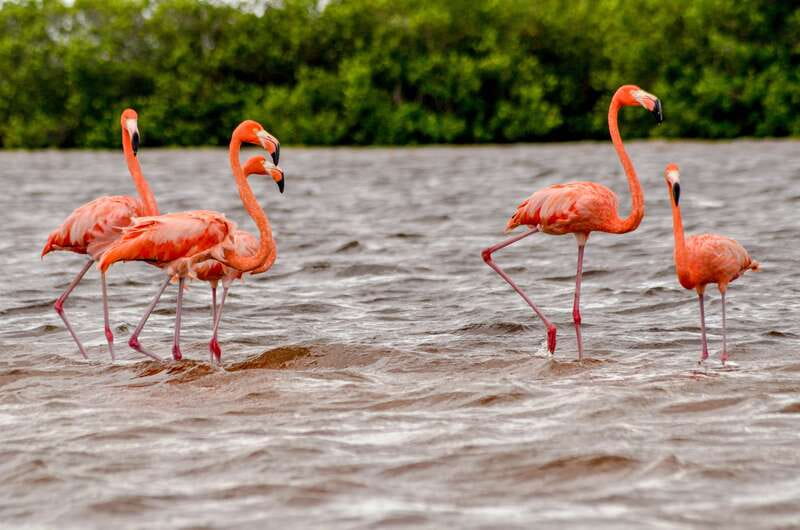
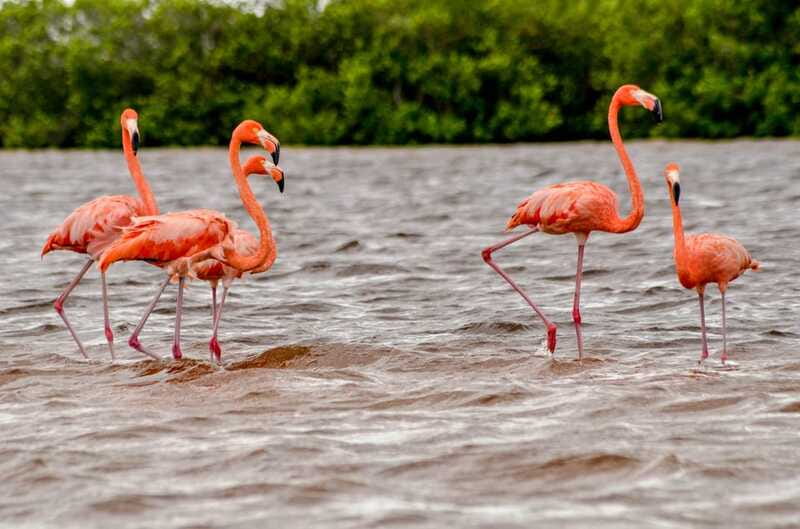
Flamingos are the main attraction, and the route includes selected areas where colonies feed. Seeing them in the reserve is far more interesting than viewing birds in a small enclosure because you watch them using the wetland as it was meant to be used.
The numbers vary during the year. Summer is described as the period with more flamingos, while winter and spring can be quieter. If flamingos are your top priority, ask about current conditions before booking and choose your expectations carefully.
The birds may appear as a distant pink band across the water rather than as one bird standing beside the boat. Binoculars are included for a reason. They help you see feeding behavior and flock movement without asking the boat to get too close.
This is also where an informed guide adds real value. Your guide can help you distinguish flamingos from other pale or pinkish shapes at a distance and explain why the feeding areas are important to the reserve. Emilio, in particular, has been praised for explaining the wildlife during the boat ride.
Birdwatching beyond the flamingos
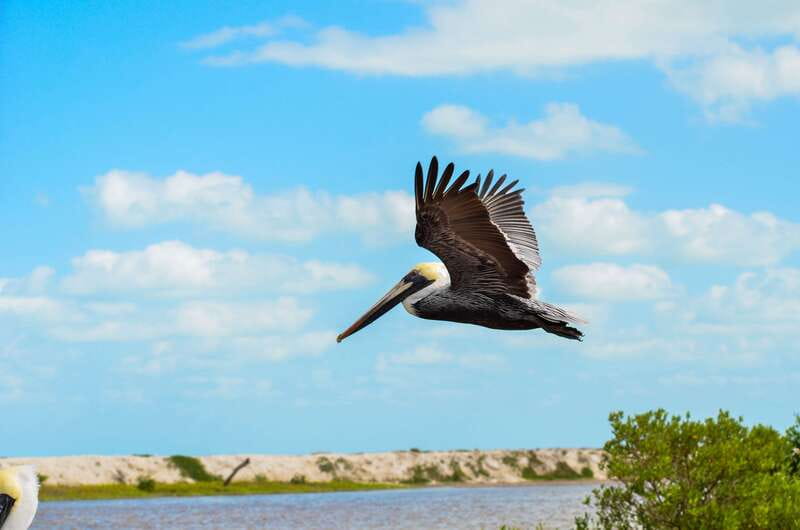
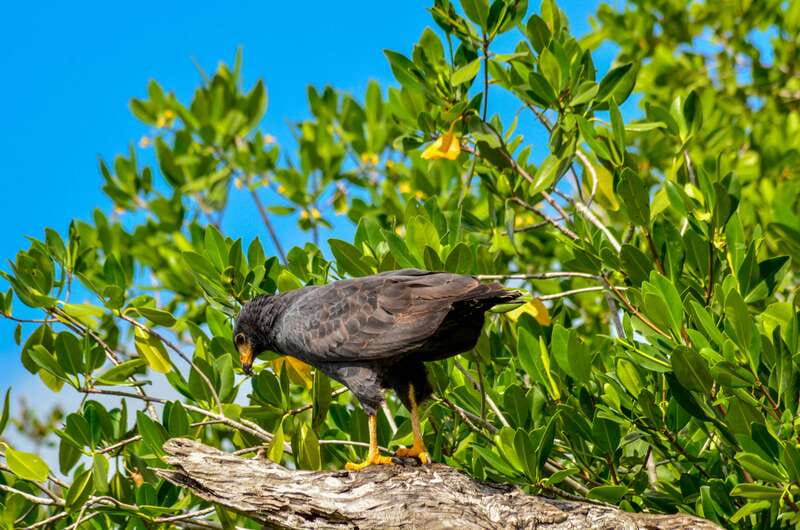
It would be a mistake to treat the flamingos as the only reason to come. More than 320 bird species have been identified in the reserve, and the channels may produce a varied mix of waterbirds and coastal birds.
Herons are a special focus of the tour. You may learn to recognize different kinds by their size, posture, and coloring. Pelicans are easier to spot, while cormorants, frigatebirds, and raptors can keep you scanning the sky and treetops.
The included binoculars and bird book make this more than a sightseeing ride. You can check what you see and ask questions as the boat moves. That is useful for beginners, while experienced birdwatchers may prefer to bring their own optics if they have them, since the supplied equipment is shared within the tour.
The private format also helps here. If one person wants to stop and study a heron, the group is not competing with a busload of people for the same view. You still depend on natural conditions, but you have a better setting for patient observation.
A final stop on the clear-water beach
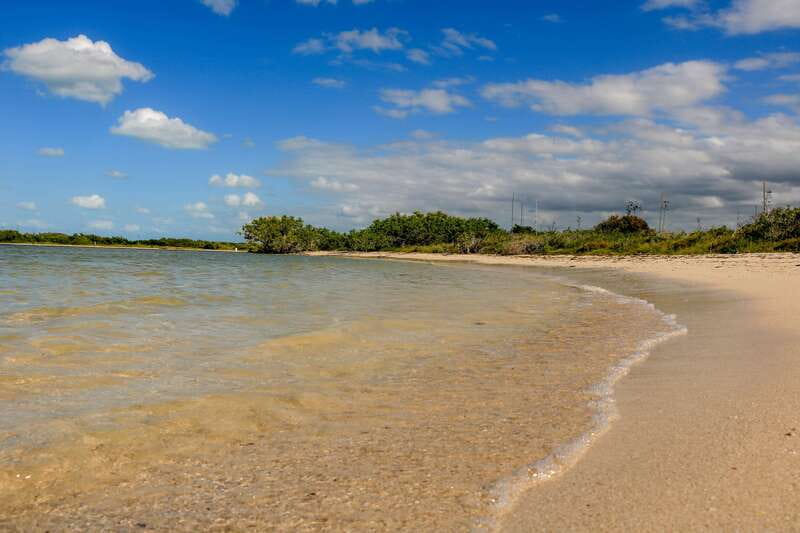
The final part of the route visits a quiet beach with clear water. This changes the mood after the birdwatching and mangrove channels. Instead of ending as soon as the boat returns, you get time in a coastal setting that feels separate from the reserve’s waterways.
Some versions of the outing have included a stop for a Maya clay mask, followed by rinsing on the Rio Lagartos beach. The supplied details describe the beach visit, but do not promise the clay treatment on every departure, so ask locally if that is important to you.
Pack swimwear, a towel, beachwear, and a change of clothes. These items are easy to overlook on a wildlife trip, especially if you expect to stay in the boat. The beach stop makes them useful, and dry clothes will be welcome afterward.
The clear water should not make you forget the practical limits of the tour. The activity is designed around wildlife and environmental interpretation, with the beach as the closing stop, not as a full beach day.
How much value do you get for $87?
At $87 per person, this is not the cheapest way to spend a morning in Yucatan. The value depends on what is included in your comparison.
You are paying for a 2.5-hour private boat tour, a local guide, access to the reserve by water, binoculars, a bird book, and life jackets. The guide’s role is more than steering. A good guide helps you identify species, explains the reserve, and knows where to look for flamingos and crocodiles.
The price is easier to justify for a couple or family that wants a private outing and plans to make a dedicated trip to Rio Lagartos. It is harder to justify if you are mainly looking for a guaranteed flamingo photograph or if your schedule allows only a short stop in the village.
The strong 4.8 rating from 27 reviews reflects a generally positive experience, with repeated praise for wildlife variety, friendly guiding, and safe boat handling. Still, the English-language issue reported by one family is significant. If clear explanations are central to your plans, confirm the language before you pay.
The reserve itself is the lasting value. You are not paying only for a boat ride. You are paying for a chance to see a protected wetland from inside its channels, with someone who can explain what you are looking at.
Who should take this boat tour?
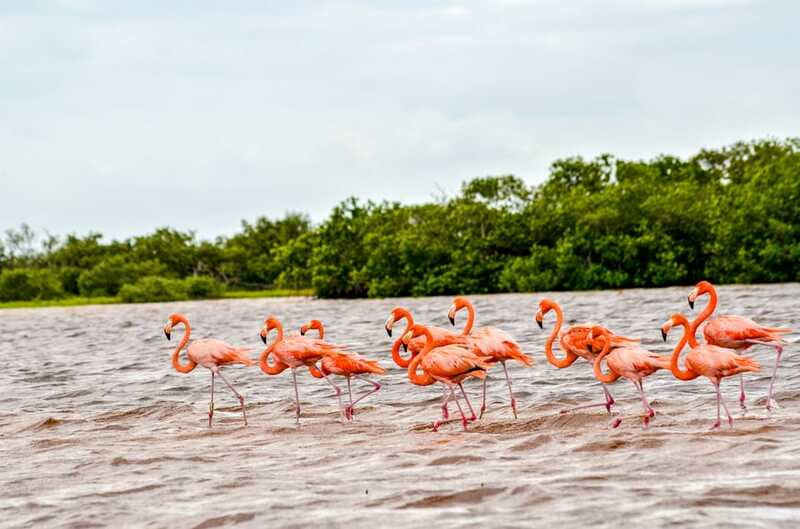
I would choose this outing if you enjoy birds, photography, quiet water, and natural settings. It suits couples, families with older children, and private groups that prefer a flexible pace.
It is also a good choice if you want something more focused than a general sightseeing cruise. The activity is built around wildlife identification and environmental learning, not music, food, or onboard entertainment.
You should think twice if you need guaranteed animal sightings, dislike sun exposure, or want a fully accessible boat experience. The stated restrictions exclude children under two, pregnant women, people with back problems, mobility impairments, wheelchair users, people with epilepsy, people with recent surgeries, and people with visual or hearing impairments. The provider also lists people over 65 and over 70 as not suitable, which is unusually broad, so contact the operator directly if age or health is a concern.
Food and drinks are not included. Bring water and eat before or after the tour, since the supplied information does not promise refreshments during the boat ride.
Booking, weather, and seasonal planning
The tour lasts 2.5 hours, but you should allow extra time for reaching Rio Lagartos and finding the palapa. Starting times depend on availability.
Season affects the wildlife more than the basic route. Summer is the better period for larger flamingo numbers, while bird species can change throughout the year. A quieter season can still produce herons, pelicans, crocodiles, and other birds, but you should not expect the same flock size in every month.
The activity allows cancellation up to 24 hours before departure for a full refund, and you can reserve now and pay later. Those terms help if your Yucatan schedule is still shifting. They do not remove the need to check the English guide arrangement or seasonal flamingo conditions before committing.
Should you book Rio Lagartos Xplore?
Book it if you want a private wildlife outing in a real wetland and are willing to make Rio Lagartos part of your day. The best reasons are the mangrove channels, local guiding, the chance to see Morelet’s crocodiles, and the final beach stop.
I would be more cautious if your main goal is a guaranteed close-up of flamingos or if you cannot manage the physical limits of a small boat. Confirm the English-speaking guide before departure, especially after the language problem reported on one recent trip.
For bird lovers and nature-minded visitors, this is a strong way to see eastern Yucatan. Go with patience, sun protection, and realistic expectations, and the reserve can provide far more than a quick flamingo photo.
FAQ
How long is the Rio Lagartos boat tour?
The activity is scheduled to last 2.5 hours. Some past departures have lasted about three hours.
What animals might I see?
Possible sightings include flamingos, Morelet’s crocodiles, herons, pelicans, cormorants, eagles, and frigatebirds. Bird species vary by season.
Is seeing a crocodile guaranteed?
No. The crocodile is wild, and the stated chance of seeing one is about 70 percent.
Are flamingos visible all year?
Flamingo numbers vary by season. Summer generally has more flamingos, while winter and spring are described as lower periods.
Is the boat tour private?
Yes. The activity is offered for a private group.
Is an English-speaking guide included?
English is the listed tour language. Because one recent departure had a guide who was not comfortable speaking English, confirm this detail before the tour.
What equipment is included?
Binoculars, a bird book, and life jackets are included.
Where does the tour meet?
The meeting point is a wooden palapa with a huano palm roof on the Rio Lagartos malecón. It has tourist information signs and is in front of a green wooden house and a pink concrete house.
What should I bring?
Bring sunglasses, a sun hat, water, comfortable clothes, a camera, cash, and a charged smartphone. For the beach stop, also bring swimwear, beachwear, a towel, and a change of clothes.
Just added around the world
- Combo Tour Marino Ballena National Park★ 4.5 · 123 reviews
- Corcovado National Park Hike – From Uvita★ 4.0 · 65 reviews
- Full day hikes, Cycles, Kayaks & swims in Cat Ba National park★ 5.0 · 241 reviews
- Nature Reserve ,Trekking Eco Tour in Iblei National Park★ 5.0 · 27 reviews
- Half Day Hiking to Discover Cat Ba National Park with a Guide★ 5.0 · 66 reviews
- Cat Ba National Park Full Day Trekking Tour to Viet Hai Village★ 5.0 · 111 reviews
- Cassis National Park E-Mountain Bike Experience with Virtual Guide★ 5.0 · 52 reviews
- Kruger National Park. 3 Days Best Ever Safari from Cape Town★ 5.0 · 25 reviews
Nature Reserve Tours, compared.

Wilderness, Wildlife, Glacier Experience from Anchorage
Read our review →
From Manapouri: Doubtful Sound Wilderness Day Trip
Read our review →
Ajaccio/Porticcio: Scandola Nature Reserve Guided Boat Tour
Read our review →

From Tromsø: Ice Domes Snow Park and Wilderness Experience
Read our review →
From Ota: Scandola Nature Reserve Eco-Friendly Boat Tour
Read our review →Browse the lists this tour appears in