
Review · AQABA
Wadi Rum: Camel Trek Adventure
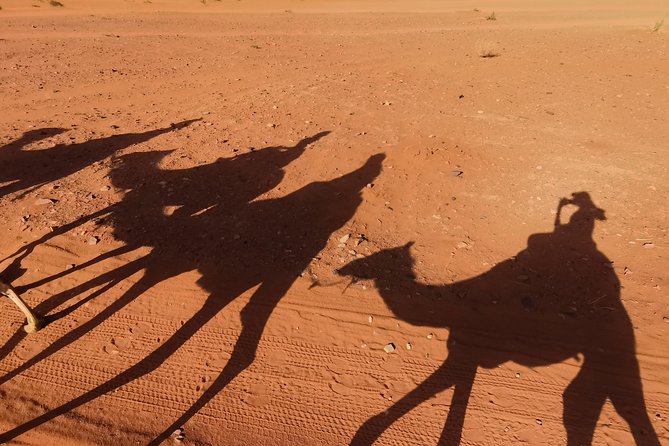
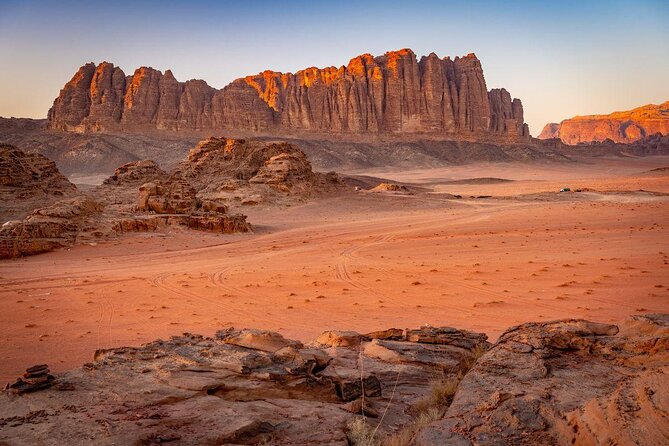
Wadi Rum is best appreciated slowly, with the soft rhythm of a camel and plenty of time to look up at the red cliffs. This private trek follows a Bedouin guide through orange valleys, dunes, canyons, and rock formations, with stops at places such as Lawrence Spring, the Red Sand Dune, and Khazali Canyon.
I like the small private format, since you can set a comfortable pace instead of following a large group. I also like the care given to the camels, a point repeatedly emphasized by visitors who found the animals healthy, gentle, and well treated.
The main drawback is physical: camel riding can leave your legs and back sore, even on a half-day outing. The supplied details also contain a timing mismatch, listing the activity as about 3 to 4 hours while one itinerary line says 8 hours, so confirm the exact schedule before setting up the rest of your day.
Key points to know before you book
- Private ride: Only your group takes part, with a guide leading the route.
- Main sights: The route can include Lawrence Spring, Red Sand Dune, Khazali Canyon, and major rock bridges.
- Bedouin guidance: Desert Eyes works with local Bedouin guides, with Khaled named in several trip accounts and Ibrahim mentioned for longer camel journeys.
- Cost: The tour is $91 per person, with the 7 JD Wadi Rum entrance fee paid separately or covered by the Jordan Pass.
- What is supplied: Bottled water is included. Bring your own sun protection and practical riding clothes.
- Good to know: A moderate level of fitness is advised, and you should expect some soreness after several hours in the saddle.
A slow way to see Wadi Rum
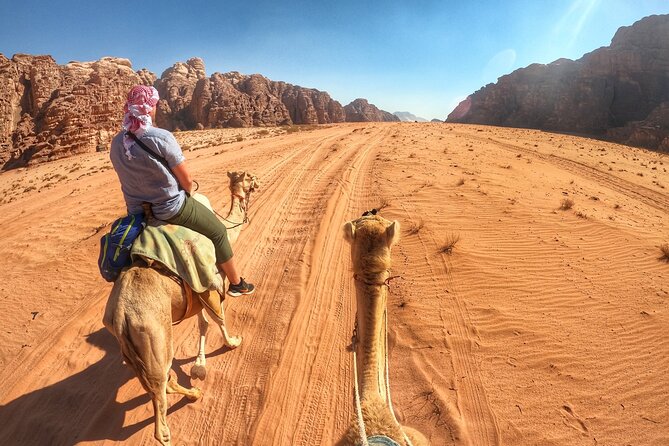
The great appeal here is not speed. A jeep can cover more ground, but a camel moves at the pace of the desert itself. You hear the animal’s steps, feel the gentle rise and fall of its walk, and have time to notice the small changes in the sand.
That quiet matters in Wadi Rum. The broad valleys can feel almost empty, with orange sand below and huge rock walls rising around you. From a camel’s back, you see the scenery from a higher, more open position than you would on foot, but the ride remains slow enough for photos and conversation.
This is a private activity, so your guide can adjust the pace to your group. That helps if one person is a first-time rider or if you want more time at a photo stop. It does not mean the ride is completely effortless. Mounting, dismounting, and staying balanced for several hours require some strength, and the motion can become uncomfortable.
The strongest part of this trip is its connection to local Bedouin guiding. Desert Eyes operates from Wadi Rum Village and works with Bedouin guides who know the routes and desert stops. Khaled is named in the supplied trip accounts as a helpful contact and companion, while guides including Mohammed and Ibrahim are associated with longer camel journeys. Your assigned guide may be someone else, but the local guiding element is central to the experience.
More Desert and Wadi Tours in Aqaba:
- Wadi Rum Full Day Jeep Tour + Overnight & Dinner in Bedouin Camp
★ 5.0 · 368 reviews - Wadi Rum: Morning or Sunset Jeep Tour
★ 5.0 · 285 reviews - Wadi Rum Cave Camping with Jeep Tour
★ 5.0 · 200 reviews
Meeting at Wadi Rum Rest House
The tour begins at Wadi Rum Rest House in Wadi Rum Village. This gives you a clear meeting point rather than an uncertain pickup somewhere in the protected area.
From there, the guide takes you toward the camels and explains the route. Some trip arrangements have used a desert truck to reach the animals, but that is not guaranteed for this specific outing, so you should treat the Rest House as the firm starting point and ask about any transfer when booking.
The private setup is useful here. You do not need to fit into the pace or preferences of a large group. If your party wants to stop often for photos, or if someone needs a slower start, the guide can work with that more easily.
Bring only what you need. A phone or camera, sunglasses, a hat, sunscreen, and a secure water bottle are practical choices. Bottled water is supplied, but the desert sun can still make you thirsty. Loose clothing can catch on the saddle, so simple, comfortable clothes are better than anything delicate.
Riding from Lawrence Spring toward the Red Sand Dune
One possible route begins at Ain Abu Aineh, also known as Lawrence Spring. The spring is associated with the landscape and stories made famous by T. E. Lawrence, often called Lawrence of Arabia. Here, the interest is not a grand monument. It is the contrast between a small water source and the dry red surroundings.
The route then continues toward the Red Sand Dune. This is the sort of place where the private format pays off. You can pause for photos of the camels against the colored sand, and your guide can help you follow a route that makes sense for the time available.
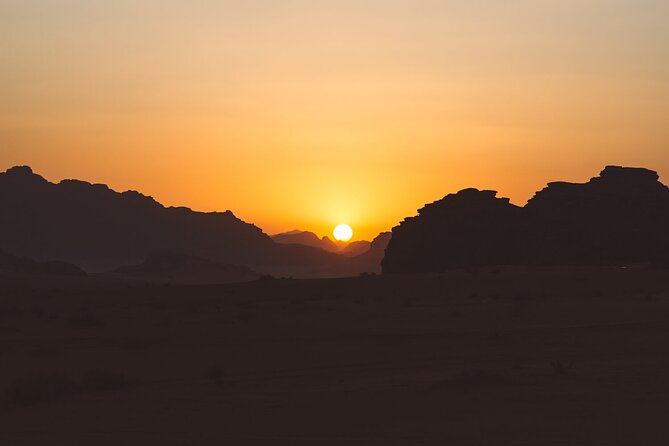
The color changes across Wadi Rum depending on the sun, the sand, and the surrounding stone. Morning and afternoon rides do not look identical. A morning departure offers cooler conditions and a different quality of light, while an afternoon outing may bring warmer tones and the chance to finish closer to sunset, depending on the schedule.
Do not expect a hard-riding adventure. The purpose is to move gently through the desert and take in the scale of the place. The camels are described as healthy, strong, friendly, and well cared for, with no whips or harsh treatment noted in the supplied accounts. That is important to me because the quality of an animal experience depends as much on how the animals are handled as on the scenery.
Khazali Canyon and the petroglyphs
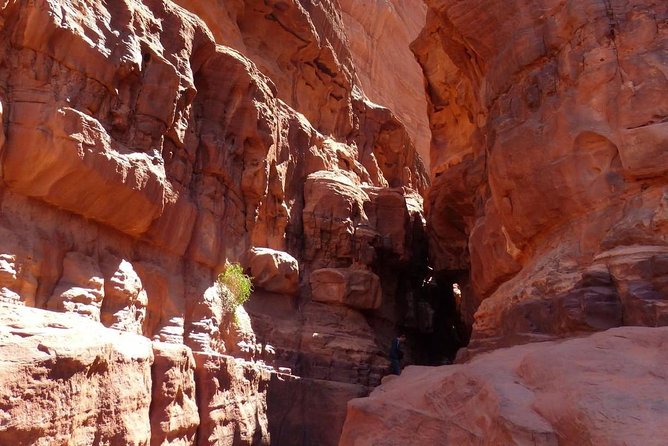
Khazali Canyon is one of the most worthwhile stops on the route. The narrow rock passage contains ancient petroglyphs and inscriptions, offering a brief change from the wide open valleys.
You will likely leave the camel for at least part of this stop, since a canyon is explored on foot. This adds a little variety to a ride that otherwise keeps you seated. It also explains the moderate fitness requirement. You do not need to be an athlete, but you should be comfortable mounting a camel and walking around a desert site.
The inscriptions make Khazali more than a photo stop. They provide a direct link to people who crossed and used these desert routes long before modern tourism. Your guide may be able to explain what you are seeing, though the supplied information does not promise a formal archaeological talk or a particular language beyond English being available on some longer trips.
Wear shoes with a firm sole. Sand and uneven rock are part of the setting, and flimsy footwear will not help. The canyon itself may offer shade, but you should still prepare for strong sun before and after the stop.
More Hikes and Treks in Aqaba:
- Cinque Terre Day Trip with Optional Hiking or Pisa
★ 5.0 · 8,486 reviews - Florence: Cinque Terre Day Trip with Optional Hiking or Pisa
★ 4.9 · 4,848 reviews - From Chania: Full-Day Samaria Gorge Trek Excursion & Guide
★ 4.6 · 3,191 reviews - San Francisco: Yosemite National Park & Giant Sequoias Hike
★ 4.5 · 1,777 reviews
Rock bridges, valleys, and photo time
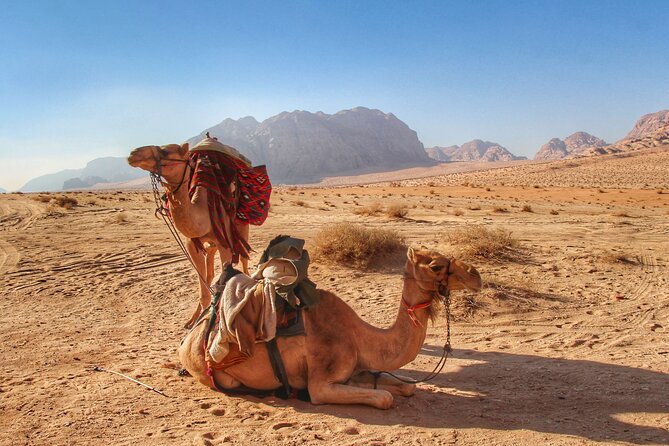
The route can also include Wadi Rum’s dramatic rock formations, including the little and big rock bridges mentioned in the trip accounts. These formations give the ride a sense of variety. You are not simply crossing one flat stretch of sand. The route moves between open valleys, cliffs, dunes, and stone formations.
Photo opportunities are plentiful, but the private nature of the trip matters more than the number of stops. You can take pictures of the camels, ask your guide to pause at a good viewpoint, and avoid feeling rushed by a group schedule.
I would use a phone with a secure strap or keep your camera in a small bag that closes properly. Camel movement can be steady but surprising, especially when the animal rises or kneels. Photos are easier once the group is safely stopped.
The scenery is the main attraction, but silence is part of it too. The slow ride gives you stretches with little to do except watch the sand and rock pass by. That will feel peaceful to some people and repetitive to others. If you prefer constant action, a jeep tour may suit you better. If you want to feel the distance and quiet of the desert, the camel is the better match.
Morning or afternoon: choosing the better departure
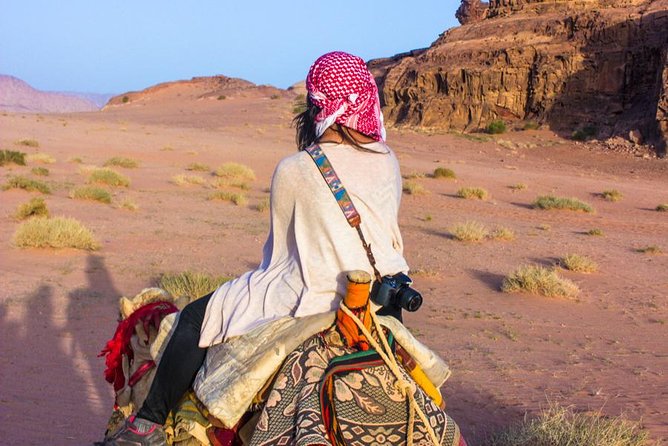
The route changes according to the departure time. Morning and afternoon tours do not necessarily visit the stops in the same order, and the exact program depends on conditions and the guide’s plan.
A morning ride is a sensible choice if you want to avoid the strongest heat and keep the afternoon open. It also gives you a wider margin if you are continuing to another Jordan destination later in the day.
An afternoon ride may appeal to you if you prefer warmer colors and want the desert at a softer time of day. The supplied information does not promise a sunset finish for this particular 3 to 4 hour trek, so do not book it solely on the assumption that you will see sunset from a dune.
The tour summary says about 3 to 4 hours, while the itinerary section includes an 8-hour duration line. That is a significant difference. The main description, highlights, and several accounts refer to two-, four-, or full-day options offered by Desert Eyes, so the company clearly handles different trip lengths. For this product, confirm whether your booking is the short private trek or a longer version before paying or arranging transport.
What the $91 price means
At $91 per person, this is not the cheapest way to see Wadi Rum. You are paying for a private camel experience with a guide, rather than simply joining a large group for a short ride.
The value improves if you care about control over the pace and route. You can stop for photos, spend time at the main sites, and avoid being tied to strangers with different expectations. For a couple or family, the private structure can also make the outing feel more personal.
The price does not include the Wadi Rum Protected Area entrance fee. That fee is 7 JD per adult at the Visitor Centre, or free if you have a valid Jordan Pass. Budget for it separately unless your own booking confirmation says otherwise.
Bottled water is included, but meals, camping, and overnight accommodation are not part of this short activity. Desert Eyes also offers longer camel treks with food and overnight stays, but you should not assume those extras are included here. The $91 price makes the most sense if you want a focused half-day desert experience and plan to spend the rest of the day elsewhere.
Comfort, fitness, and animal care
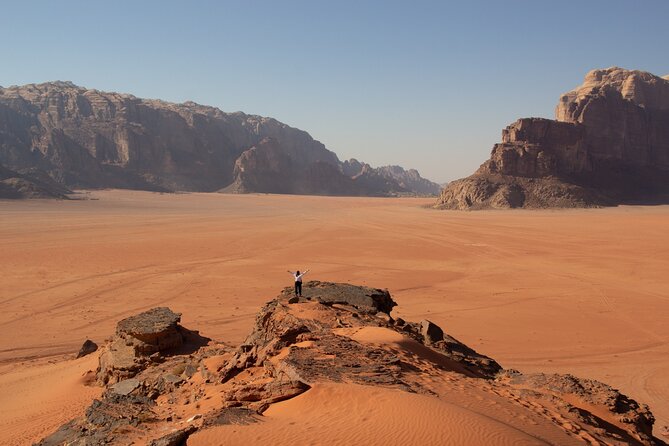
Camel riding is gentle in speed but not always gentle on the body. The first few minutes can feel awkward, and the repeated motion may bother your hips, knees, or lower back. Longer rides have left some people with painful legs, so a 3 to 4 hour trip is a more sensible introduction than an all-day trek if you are unsure about riding.
You should be able to climb onto the camel, sit upright, and walk short distances over uneven ground. The tour asks for a moderate fitness level. That is a fair warning, not an attempt to make the activity sound extreme.
The care of the animals is one of the strongest reasons to consider this operator. The camels are described as healthy, gentle, comfortable, and well looked after by local Bedouins. Accounts also specifically note the absence of whips and harsh handling. Conditions can change, so you should still look at the animals when you arrive and raise any concern with the guide.
Wear trousers or longer shorts that will not rub against the saddle. A scarf or light long-sleeved shirt can help with sun and dust. You may want to pack pain relief if you normally need it after riding, though that is a personal choice rather than a tour requirement.
Who will enjoy this private trek
This experience suits you if you want a quiet, traditional way to see Wadi Rum and do not need a packed schedule. It is particularly good for couples, families, and small groups who value privacy and photo stops.
It also works well for first-time camel riders who prefer a shorter outing. You can experience the animal, the desert silence, and several important sites without committing to a full day or an overnight journey.
It is less suitable if you dislike animal riding, have serious mobility problems, or want a highly active adventure. It is also not the best choice if you need a guaranteed sunset, a fixed eight-hour route, or a meal and camp stay. Those are different products and need separate confirmation.
The positive points are clear: local Bedouin guiding, well-cared-for camels, flexible pacing, and access to major Wadi Rum sights. The limits are just as clear: physical discomfort, an extra entrance fee, and uncertain timing unless you confirm the duration.
Should you book the Wadi Rum Camel Trek?
I would book this tour if your main goal is to experience Wadi Rum slowly and privately. The camel is not the fastest way across the protected area, but it gives the desert a human pace, and the local Bedouin connection adds meaning to the ride.
Before booking, ask one direct question: Is my reservation for the 3 to 4 hour private trek, or for a longer itinerary? Then confirm the start time, the route, and whether your Jordan Pass covers the park entrance fee.
Choose it for quiet views, cared-for animals, and a flexible private ride. Skip it if you want speed, luxury, or a completely pain-free outing. For the right kind of visitor, the $91 cost buys more than transport through the sand. It buys time to notice Wadi Rum.
FAQ
How long does the Wadi Rum Camel Trek last?
The tour is described as approximately 3 to 4 hours. One itinerary entry also lists 8 hours, so you should confirm the exact duration when booking.
Where does the tour begin?
The meeting point is Wadi Rum Rest House in Wadi Rum Village, Jordan.
Where does the tour end?
The activity ends back at the meeting point.
Is this a private tour?
Yes. Only your group takes part in the private activity.
What sites can the camel trek visit?
Depending on the departure time and route, the trek can include Ain Abu Aineh, also known as Lawrence Spring, the Red Sand Dune, Khazali Canyon, and major rock formations.
Is the Wadi Rum entrance fee included?
No. The entrance fee is 7 JD per adult at the Visitor Centre, or free with the Jordan Pass.
Is bottled water provided?
Yes. Bottled water is included.
What fitness level is required?
A moderate level of physical fitness is recommended. Camel riding and walking at desert stops can be tiring, and several hours in the saddle may cause soreness.
Can I cancel for a full refund?
Yes, if you cancel at least 24 hours before the experience start time. Cancellations or changes made less than 24 hours before the start time are not accepted for a refund.
Just added around Aqaba
- Wadi Rum 2-Day Jeep Tour with Meals and Overnight in Bedouin Camp★ 5.0 · 24 reviews
- Wadi Rum Jeep Tour & Camp; Overnight★ 5.0 · 41 reviews
- Wadi Rum Full Day Jeep Tour – Stargazing Overnight in a Cave – Traditional Food★ 5.0 · 38 reviews
- Wadi Rum: Full Day Valley Tour with Lunch★ 5.0 · 23 reviews
- Wadi Rum Short Tours★ 5.0 · 23 reviews
- Golden Triangle : Aqaba – Petra – Wadi Rum 04 Days / 03 Nights★ 5.0 · 28 reviews
- One Day Tour Wadi Rum★ 5.0 · 53 reviews
- One Day Petra & Wadi Rum from Aqaba★ 5.0 · 31 reviews
Aqaba National Park Tours, compared.
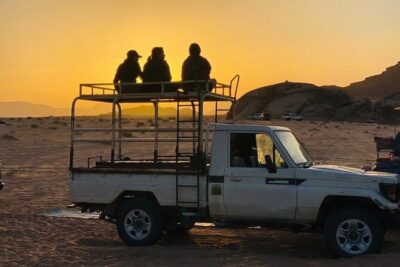
Wadi Rum Full Day Jeep Tour + Overnight & Dinner in Bedouin Camp
Read our review →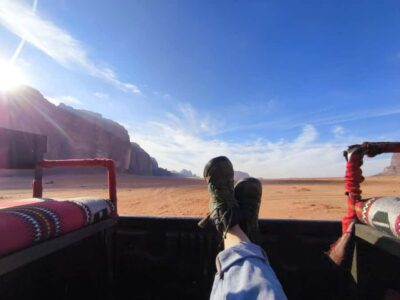
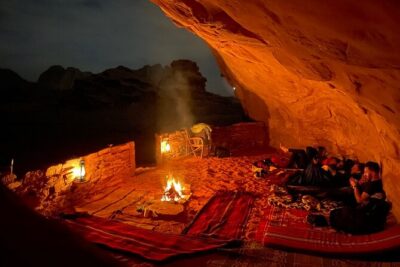
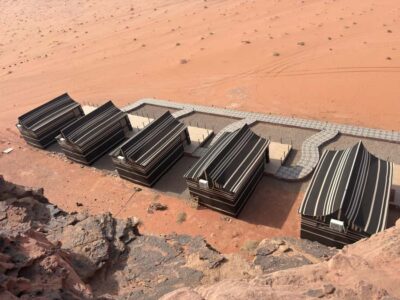
Wadi Rum: Bedouin Camp Stay,Full-Day Desert Tour with 3Meals
Read our review →
Full Day Jeep Tour & Traditional Lunch – Wadi Rum Desert Highlights
Read our review →
Wadi Rum: Explorer Jeep Tour PASS + Local Food + Optional Stay
Read our review →
4 Hour Jeep Tour (morning or sunset) – Wadi Rum Desert Highlights
Read our review →Browse the lists this tour appears in