
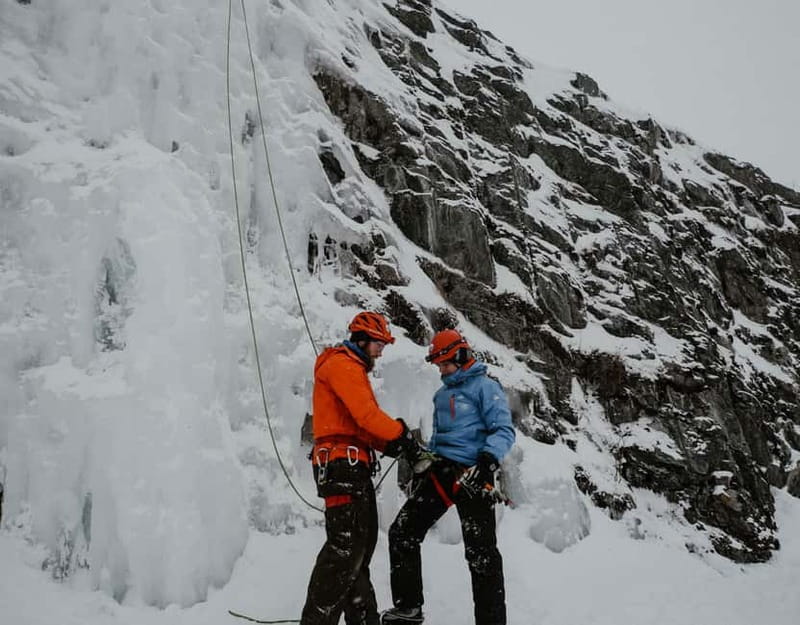
Review · ABISKO
Abisko: Ice Climbing for All Levels with Certified Guide
Ice climbing turns Abisko’s winter cold into a hands-on challenge. You’ll strap sharp crampons to alpine boots, swing ice tools into a frozen wall, and work your way upward while a certified UIAA guide manages the rope. No previous climbing experience is needed, and the route can be adjusted to your level.
I like the small-group format, which gives you more turns on the ice instead of standing around all day. I also like the short transfer from your hotel and the clear, patient coaching provided by guides such as Anna, David, Robin, Rebecca, and Emilia. The main drawback is that this is real exercise. Your forearms may tire fast, and warm climbing gloves are not provided, so glove choice matters.
Key points to know before you book
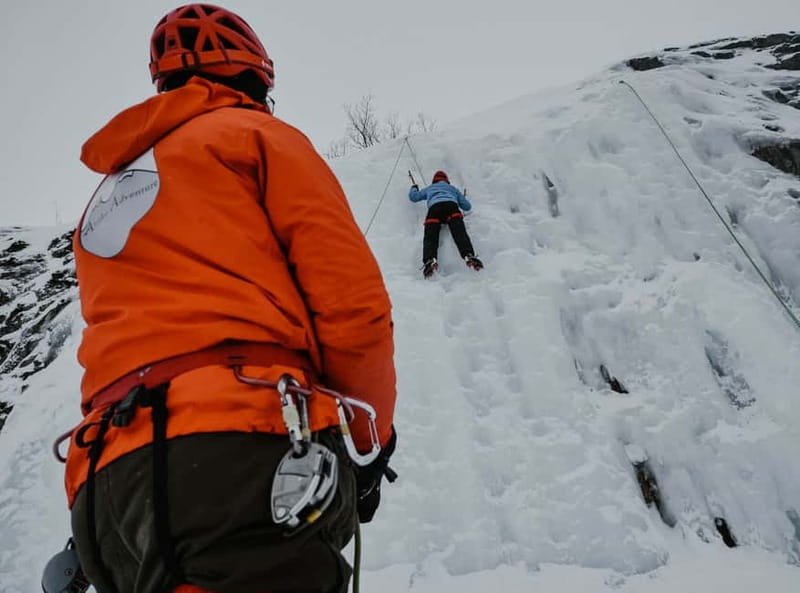
- Three hours on the ice: The outing includes roughly 20 minutes of driving and a full guided climbing session in Abisko.
- Designed for first-timers: Your guide covers crampon use, ice tools, rope safety, and basic climbing technique before you start.
- Several routes and repeat climbs: Different lines can suit different abilities, and many people get at least two or three attempts.
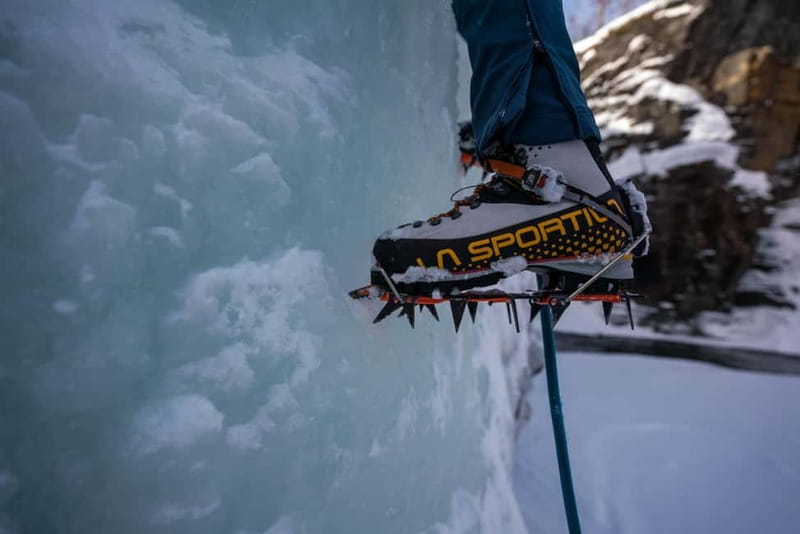
- Equipment is included: Alpine boots, crampons, harness, and helmet are supplied, but you bring your own warm clothing and gloves.
- Easy hotel pickup: Scheduled vans collect you in Abisko and Björkliden, then return you to one of the listed drop-off points.
- A physical winter activity: It is not suitable for children under 10, wheelchair users, people with mobility limits, recent surgery, or heart problems.
Why ice climbing works so well in Abisko
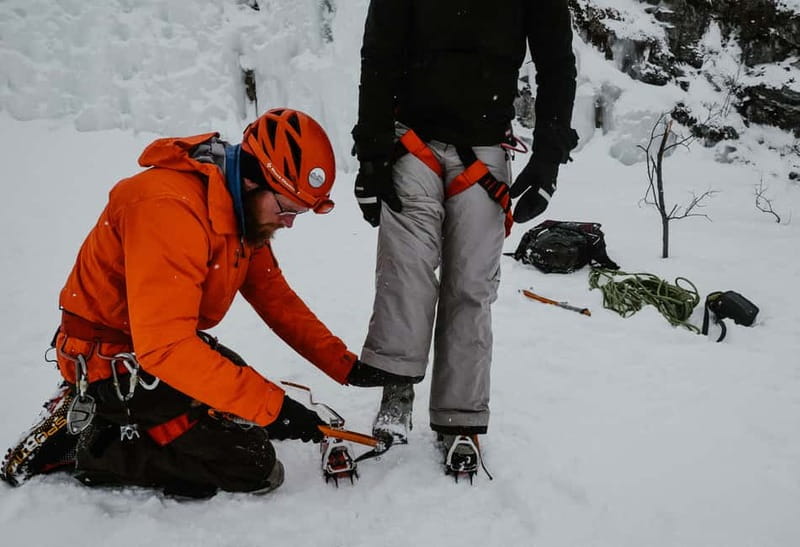
Abisko is a fine place to try ice climbing because the activity gives you more than a view of frozen scenery. You become part of it. The ice is not just something to photograph from a trail. It becomes the route beneath your feet and the wall in front of your face.
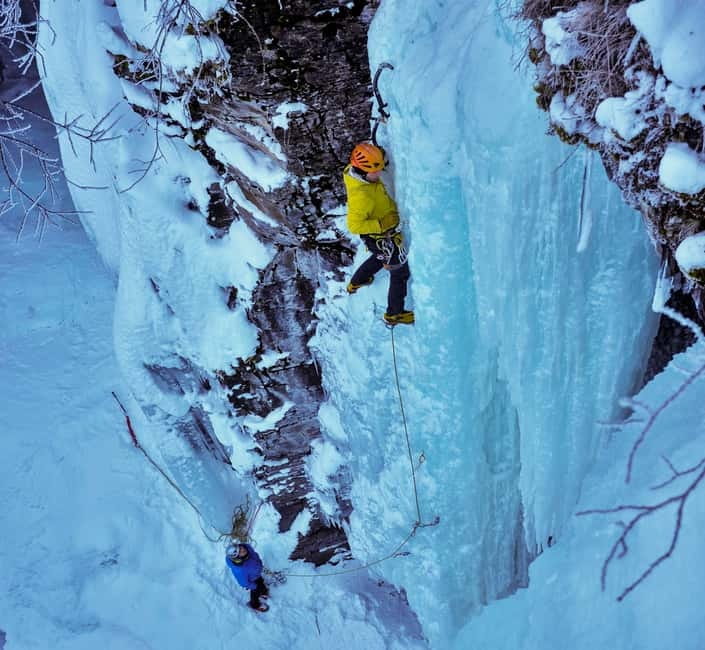
The setting can feel properly Arctic, with frozen sheets of ice and broad views around the climbing area. One outing had a view toward the Lapland Gate, adding a memorable backdrop while people worked through routes of different difficulty.
The exact climbing spot can vary with conditions. Early in the season, the ice may form close to the main road, which makes access easy but feels less remote. Later in winter, other areas may be available if conditions allow. That flexibility is useful for safety, though it means you should not book expecting one fixed wilderness location every time.
This experience suits you if you want a strong taste of climbing without committing to a full course. You learn the basics, climb under a controlled belay system, and get a sense of how your body handles steep ice. It is also a good choice if someone in your group climbs regularly and someone else has never tried it.
A few more park trips around Abisko worth a look
- Abisko: Guided Aurora Chase with Hotel Transfers
★ 4.5 · 311 reviews - Abisko: Guided Autumn Aurora Chase with Hotel Transfers
★ 4.9 · 100 reviews - From Chania: Full-Day Samaria Gorge Trek Excursion & Guide
★ 4.6 · 3,191 reviews
Your pickup from Abisko or Björkliden
The day starts with a short van ride from a selected pickup point. The listed stops include Abisko Mountain Lodge, Abisko.net Huskyhostel, Abisko Hostel, Abisko Guesthouse, STF Abisko Turiststation, Hotell Fjället, Gammelgården Ski Lodge, Abisko Fjällturer AB, and location 61.
The two main departure times are 9:30 a.m. and 2 p.m. The van collects people in stages, with the Abisko stops first and the Björkliden stops later. The timetable matters, because the van only stops at booked pickup points. You need to be there five minutes early, not strolling out as the vehicle arrives.
The drive to the climbing area takes about 10 minutes. That is a real advantage in a cold climate. You spend little time sitting in a vehicle and most of your three-hour booking on the main activity.
You must choose your pickup and drop-off location in advance. If your accommodation changes, update the location at least 24 hours before the start. The return uses the same general group of stops, including Abisko Guesthouse, STF Abisko Turiststation, Gammelgården Ski Lodge, Abisko Hostel, Abisko Mountain Lodge, Hotell Fjället, Abisko Fjällturer AB, and location 61.
Getting fitted with boots, crampons, and a harness
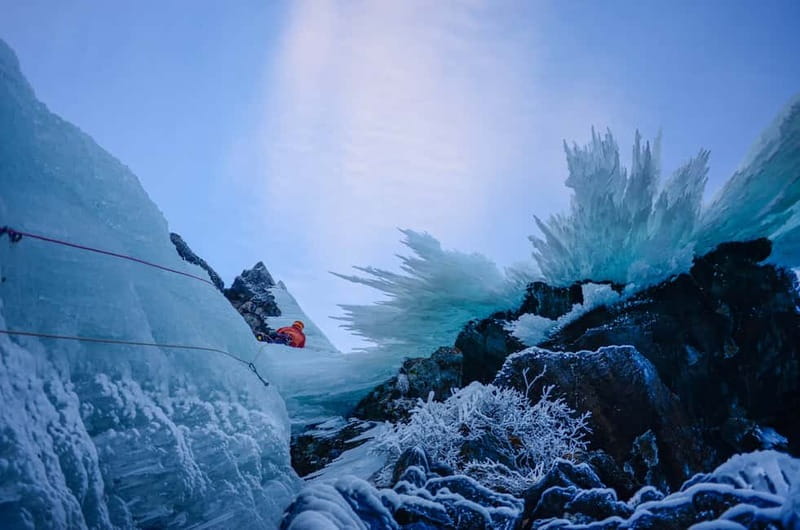
At the climbing site, you receive the technical gear needed for the session. That includes alpine boots, crampons, a harness, and a helmet. This saves you from renting several separate items and removes much of the guesswork for a first climb.
Your own job is to arrive in proper cold-weather clothing. Warm layers are not included, and the information specifically tells you to bring warm clothing. Pay special attention to your hands. One person found the supplied or personal gloves less suitable for gripping an ice tool, so bring warm gloves that still let you hold the handles securely.
You may also want a spare pair of gloves if you have room. Ice, snow, and contact with equipment can leave gloves wet. One guide helped a climber with an extra pair, but you should not count on that being available for every session.
The boots and crampons can feel awkward at first. Walking in them takes care, and using crampons on ice is different from walking on a normal trail. Your guide should give you the basic method before the climb begins, so pay close attention during this part. A few minutes of good footwork instruction can save a lot of wasted effort higher up.
The first briefing and your first climb
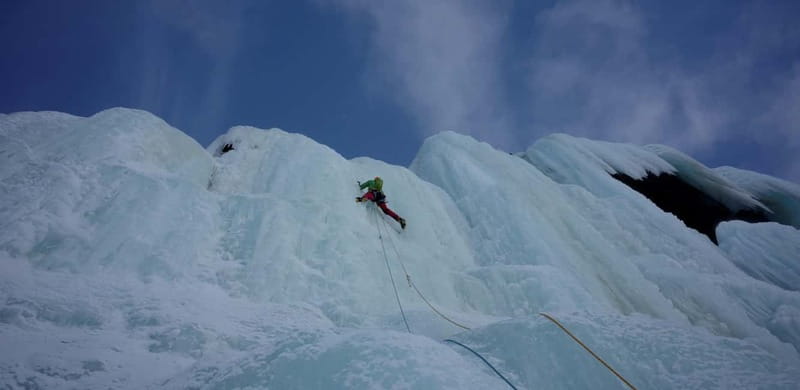
The first part of the three-hour session focuses on the basics. You learn how to place your feet, use the front points of the crampons, hold the ice tools, and move your body up a vertical surface. You also learn what to expect from the rope and belay.
The guides are the biggest strength of this experience. Anna is praised for clear instruction and encouragement. David has helped first-timers understand the technique while offering extra detail about ice climbing. Robin and Rebecca have guided people through their first climbs with steady support, while Emilia has been described as patient and professional.
That matters because ice climbing looks simple from below. Swing tool, step up, repeat. In practice, it takes coordination. You need to place your feet firmly, avoid wasting arm strength, and trust the rope system. Good coaching helps you learn before fatigue takes over.
Your first attempt may feel clumsy. That is normal for the activity, not a sign that you are unfit or incapable. The guide can adjust the challenge and offer tips during the climb. Some people make it to the top on every turn. Others reach the middle and still consider the attempt a success. You are there to learn a new skill, not pass a test.
Same park country, a different day out:
- Abisko National Park: Scenic Morning Hike with Transfer
★ 4.7 · 172 reviews - Abisko: Aurora Chasing with Snowmobiles
★ 4.6 · 113 reviews - Explore the Norwegian Fjords and the Wildlife from Abisko.
★ 4.9 · 109 reviews - Abisko: Wilderness Snowshoe Hike
★ 4.8 · 94 reviews
Routes for different strengths and experience levels
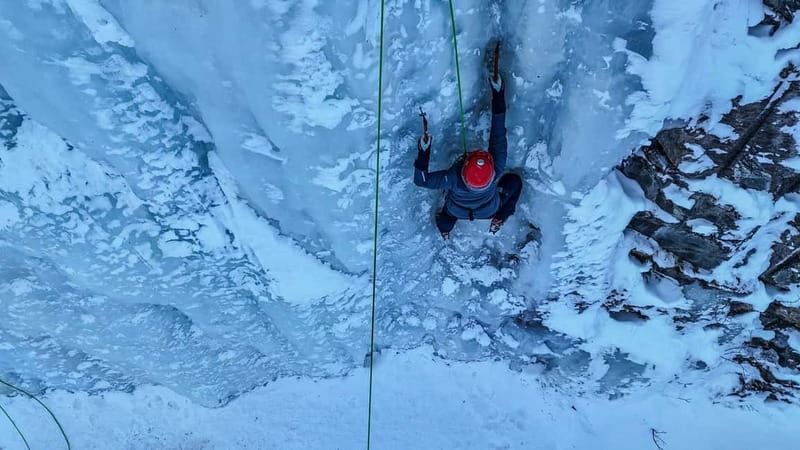
The climbing area can offer several routes with different levels of difficulty. A beginner may use a straightforward line and concentrate on foot placement, while a stronger climber can try a harder route. This is especially helpful for mixed groups.
The activity is advertised for all experience levels, and the practical format supports that claim. People with no climbing background can learn the basics, while those with prior climbing experience can ask for a more demanding line. Guides have also adjusted the challenge for individuals within the same group.
You should still understand that all levels does not mean effortless. Ice climbing is strenuous even on an easier route. Your forearms, shoulders, and legs all work. One person described the activity as physically exhausting but rewarding, and another joked about burning forearms and sore muscles the next day.
Small groups improve the experience. You spend less time waiting and have a better chance of climbing more than once. Several sessions have allowed each person at least two attempts, with some people climbing three times. A busy holiday period can bring a larger group, so the wait between turns may grow during peak dates.
Warm drinks, fika, and time between climbs
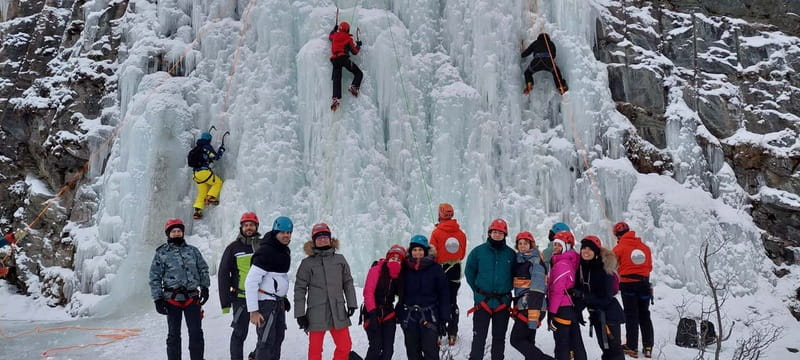
You will spend some time on the ground while another person climbs. That is when you can watch technique, catch your breath, and warm your hands. Some sessions have included a mid-activity fika with hot tea, coffee, or warm lingonberry juice. In a few cases, the cup was offered as a small keepsake.
Do not treat food and drinks as guaranteed inclusions, since the official details list them as not included. Bring what you need if you are particular about snacks or hot drinks. The important point is that a pause is built into the rhythm of the activity, and guides have used it to help people warm up before another attempt.
That break also gives you a chance to study the ice. You can see how another climber places the tools and feet, then copy the movement when it is your turn. For a first-timer, watching one person climb before you can make the wall feel less mysterious.
How safe does the activity feel?
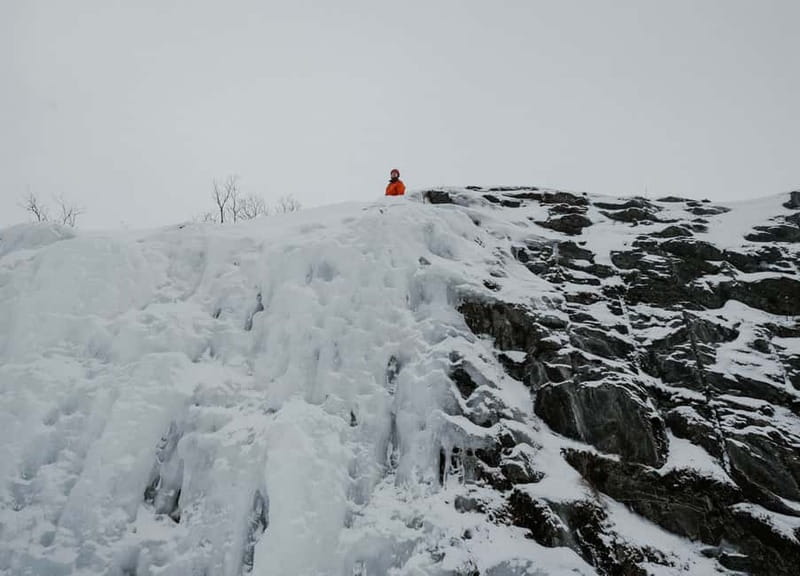
Ice climbing carries genuine physical risk, but this session is structured around instruction and a managed rope system. A certified UIAA guide leads the activity, explains the equipment, and belays you while you climb.
Safety depends on listening closely and using the gear correctly. Keep your helmet on, follow the guide’s directions, and ask questions before leaving the ground. The instructors are described as attentive and quick to offer help when someone slips or needs more stability.
The rope may support you, but it does not remove the physical demand. You still need enough mobility and strength to use crampons and ice tools. The activity is not suitable for wheelchair users, people with mobility impairments, heart problems, recent surgery, or children under 10.
Alcohol and drugs are not allowed. That rule is basic but important for an activity involving sharp crampons, ice tools, and a belay system.
Is $121 a fair price?
At $121 per person, the price is reasonable if you want a guided introduction rather than simply a short photo stop. You receive the main technical equipment, a certified guide, transport from and back to your accommodation, and about three hours for the experience.
Buying or renting alpine boots, crampons, a harness, and a helmet separately would add both cost and hassle. You also avoid arranging transport to the icefall. The small-group setup adds value because you can usually take multiple turns instead of paying for a single brief climb.
The value drops if you dislike physical activities or only want a quick taste of ice climbing. Three hours is a substantial session, and your arms may tire before the time is over. You also need to supply warm clothing, and food and drinks are not included.
The flexible booking terms help. You can reserve now and pay later, and cancellation is allowed up to 24 hours before the start for a full refund. Check the available time before booking, especially if you are arranging the activity around train travel or another fixed excursion.
Who should book this Abisko experience?
I would choose this for a first-time climber who wants a memorable Arctic activity with clear instruction. It also works for couples, families with children aged 10 and over, and mixed-ability groups.
An 11-year-old and a 55-year-old family member both enjoyed a first attempt, but that does not mean every child or older adult will find it easy. Fitness, confidence, and comfort with cold conditions matter more than age alone.
You should also consider it if you already climb indoors or outdoors and want to try ice. You will not receive an advanced mountaineering course in three hours, but you can request a tougher route and work on basic ice technique.
I would skip it if you have a serious mobility limitation, heart condition, recent surgery, or poor tolerance for cold. I would also think twice if you need a relaxed sightseeing outing. This is active, sometimes tiring, and occasionally uncomfortable in the hands and forearms.
Practical tips for a better climb
- Wear warm layers that let you move your shoulders and legs freely.
- Bring warm gloves with enough grip for ice tools.
- Arrive five minutes before the scheduled pickup.
- Confirm your pickup point at least 24 hours ahead if plans change.
- Eat beforehand, since food and drinks are not included.
- Listen carefully to the first equipment briefing.
- Use your legs and feet instead of pulling only with your arms.
- Expect to improve after the first attempt, not necessarily during it.
Should you book it?
Book this if you want to do something distinctly Arctic, not just look at snow from a viewpoint. The short transfer, included equipment, certified guides, and repeat climbing turns make the $121 price sensible for an active three-hour outing.
My main caution is simple: bring proper clothing and respect the physical effort. If you do, you get a well-supported introduction to ice climbing, a choice of challenge levels, and the satisfaction of moving up a frozen wall under your own power.
FAQ
How long does the ice-climbing experience last?
The activity lasts three hours. The itinerary includes about 10 minutes by van to the climbing area and about 10 minutes back, with the main guided climbing session taking place in Abisko.
Is previous climbing experience required?
No. The guide teaches the basic steps of ice climbing, including how to use the equipment. Routes and instruction can be adjusted for different experience levels.
What equipment is included?
The price includes alpine boots, crampons, a harness, and a helmet. Warm clothing, food, and drinks are not included.
Where can I be picked up?
Pickup points include several accommodations in Abisko and Björkliden, such as Abisko Mountain Lodge, Abisko Hostel, Abisko Guesthouse, STF Abisko Turiststation, Hotell Fjället, and Gammelgården Ski Lodge. You must select your pickup location when booking.
Is the activity suitable for children?
Children under 10 are not permitted. The experience may suit children aged 10 and over, but it remains a physical activity and should match the child’s comfort, fitness, and ability to follow instructions.
What languages do the guides speak?
Instruction is available in English and Swedish.
Just added around Abisko
- Snowmobile Adventure Abisko (Drive your own)★ 4.9 · 24 reviews
- Explore the Norwegian Fjords and the Wildlife from Abisko.★ 4.9 · 109 reviews
- From Abisko: Dog Sledding Excursion to Kiruna with Fika★ 4.6 · 67 reviews
- Abisko: Lake Torneträsk Arctic Ice Fishing Trip★ 4.6 · 48 reviews
- Abisko: Snowmobile Sightseeing Tour★ 4.9 · 43 reviews
- Abisko/Björkliden: Panorama Snowmobile Tour with Snacks★ 4.9 · 60 reviews
- Abisko: National Park Northern Lights Photo Tour★ 4.6 · 86 reviews
- Abisko: Northern Lights Photography Tour with Dinner★ 5.0 · 31 reviews
Abisko National Park Tours, compared.

Abisko: Guided Aurora Chase with Hotel Transfers
Read our review →
Abisko National Park: Scenic Morning Hike with Transfer
Read our review →
Explore the Norwegian Fjords and the Wildlife from Abisko.
Read our review →
Abisko: Guided Autumn Aurora Chase with Hotel Transfers
Read our review →
Abisko: National Park Northern Lights Photo Tour
Read our review →
From Abisko: Dog Sledding Excursion to Kiruna with Fika
Read our review →Browse the lists this tour appears in