
Review · UDAWALAWA
Udawalawe: National Park Safari & Elephant Transit Home Tour
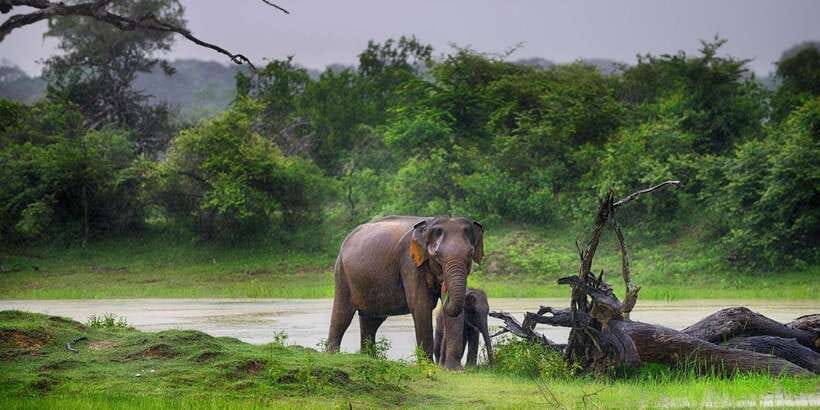
Udawalawe is one of Sri Lanka’s best places to see wild elephants in open country, and this four-hour outing gives you two different views of them: free elephants inside the national park and young elephants cared for at the Elephant Transit Home. Guides such as Pathum, Koshala, Mahesh, and Prasad are often praised for spotting small animals, explaining elephant behavior, and choosing quieter routes.
I like the hotel pickup and return, which removes a fair bit of hassle, and I like the chance to see more than elephants, including crocodiles, buffalo, deer, jackals, monkeys, birds, and monitor lizards. The main catch is price clarity: the $21 rate covers the jeep and guide, but national park and Elephant Transit Home entrance fees are extra.
Key points to know
- Early starts improve the safari: Cooler weather and softer light can make morning drives more comfortable and productive.
- Elephants are the main event: You might see solitary males, family groups, young elephants, and, with luck, babies.
- The guides make a real difference: Pathum, Koshala, Mahesh, Prasad, and other local drivers are praised for spotting wildlife and avoiding crowded routes.
- The park holds more than elephants: Look for crocodiles, water buffalo, deer, wild boar, mongoose, jackals, peacocks, monkeys, and many birds.
- Transit Home admission is separate: Feeding times are the reason to plan this stop carefully, and the entrance charge is not included.
- A jeep can carry up to seven people: That keeps the advertised price low, but a smaller group may feel more comfortable.
Why Udawalawe is so good for elephant watching
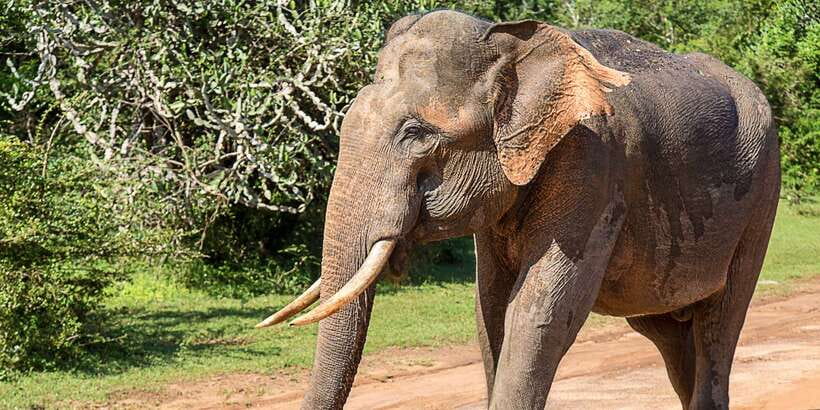
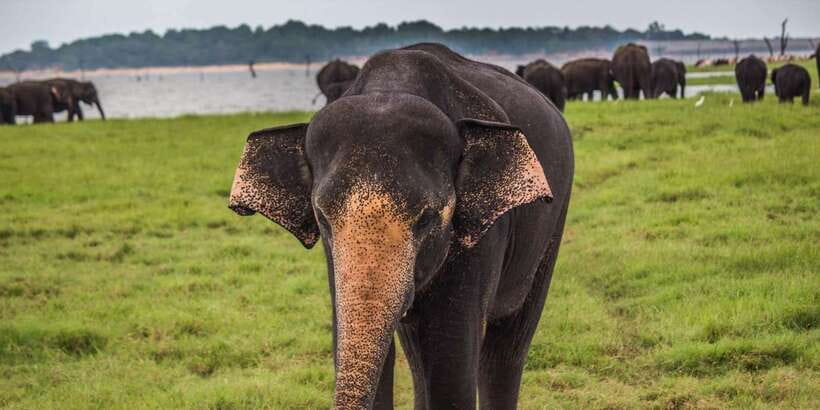
Udawalawe National Park is built around water, open grassland, woodland, and lakes. That mix makes animals easier to spot than in a thick forest, especially around water. Elephants are the clear draw, and the park supports a large population thanks to its water sources.
You should still treat every sighting as luck, not a guarantee. One outing may produce a dozen elephants, while another may bring only a few animals spread across the park. That uncertainty is part of a real safari, but Udawalawe gives you a strong chance of seeing elephants without needing a long expedition.
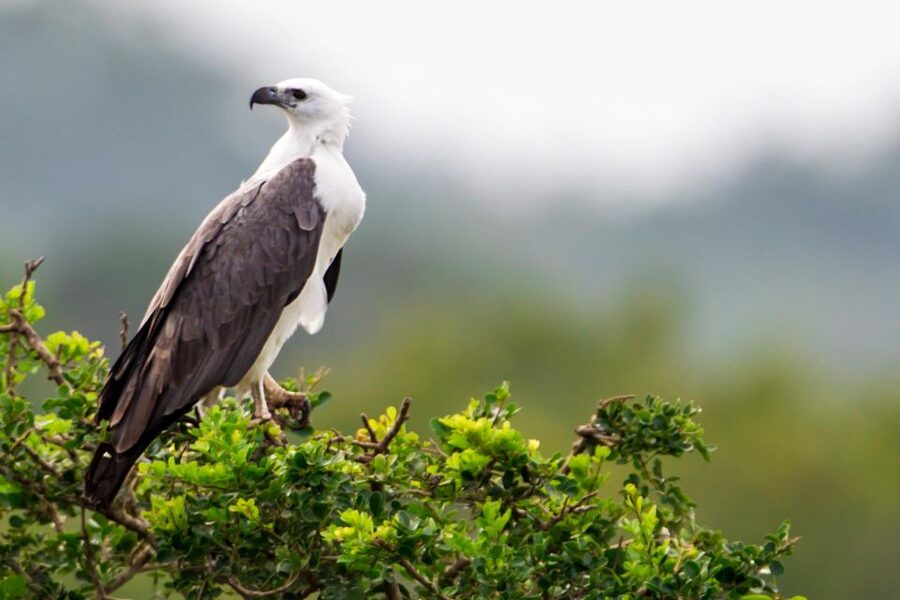
I especially like that the safari is not limited to large animals. The stated wildlife list includes wild buffalo, spotted deer, barking deer, wild boar, sambar, hare, mongoose, crocodiles, and many bird species. You might also find peacocks, monitor lizards, iguanas, jackals, monkeys, and snakes.
A leopard has been seen on some outings, but that is a rare bonus rather than something to expect. The same goes for tuskers and elephants with very young calves. Go for the variety of wildlife and the setting, then enjoy any rare sighting as an extra gift.
More Elephant Safaris in Sri Lanka
- Udawalawe National Park: Elephant Safari with Expert Guide
★ 4.9 · 641 reviews - From Sigiriya: Minneriya National Park Elephant Safari
★ 4.8 · 365 reviews - Private Jeep Safari at Minneriya National Park to Visit Elephants
★ 5.0 · 338 reviews
The 4×4 jeep ride and choosing a good guide
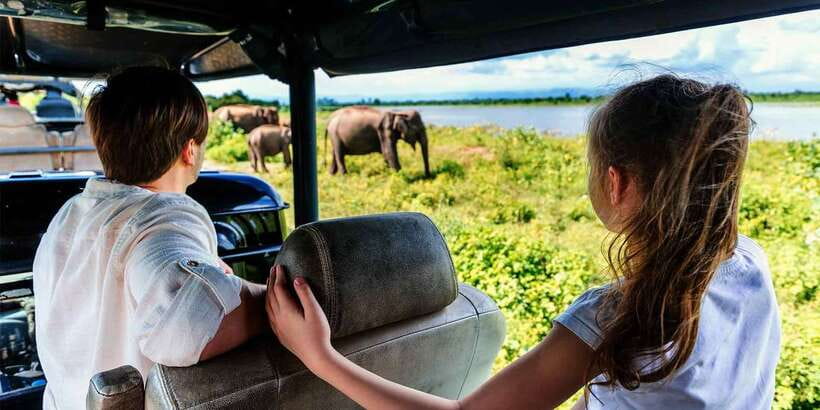
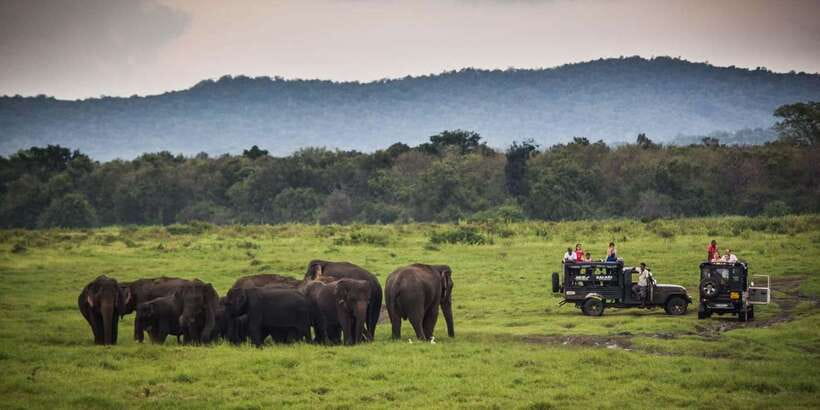
The safari takes place in a four-wheel-drive jeep, with up to seven passengers per vehicle. That is a practical way to cover a large park, and the open sides give you a good view for photography and birdwatching.
The quality of the day depends heavily on the driver-guide. Pathum is repeatedly singled out for his animal knowledge, calm driving, and ability to find less crowded routes. Koshala is praised for reading elephant body language, finding good photo positions, and spotting wildlife. Mahesh and Prasad also receive strong praise for friendly service, wildlife information, and good timing.
You do not need a guide who simply races from one elephant to the next. A better guide slows down, keeps a respectful distance, explains what you are seeing, and lets you watch quietly. Several guides on this tour are described as moving away from packed groups of jeeps, sometimes leaving you as the only vehicle at a sighting.
That matters for two reasons. First, fewer vehicles make the experience calmer. Second, animals are easier to watch when you are not competing with a line of jeeps for the same view. Your guide may take a different track from the busiest vehicles, so the day can feel less like a convoy.
The trade-off is that a shared jeep may include people with different interests. One person may want to photograph every bird, while another wants to reach the elephant areas quickly. With a maximum of seven people, the vehicle is not private unless you arrange it separately.
What the safari portion feels like
Pickup is available from hotels in the Udawalawe area, or you can meet at the national park entrance. The tour then enters the park in the safari jeep for several hours of wildlife watching, with return transport at the end.
An early start is a smart choice. Morning drives are generally more comfortable than the hotter middle of the day, and an early outing leaves much of the afternoon free for onward travel. This is useful because Udawalawe is often a stop between other parts of Sri Lanka rather than a place where you need to spend the whole day.
Your first sightings may be modest. You might see a few birds, water buffalo, or an elephant near the entrance, then find more wildlife as the jeep moves farther into the park. Do not judge the safari in its first half-hour. Some of the most memorable sightings can come later, near water or along quieter tracks.
The park’s lakes and water sources are useful viewing areas. Crocodiles may lie near the water’s edge, while buffalo and birds gather in the same general zones. Deer can appear in more open areas, and small creatures such as mongoose or lizards reward anyone who keeps looking between the headline sightings.
A good guide will point out details you could easily miss. That may be a bird in a tree, a snake near the road, or a change in an elephant’s posture. The best part of having an English-speaking guide is not simply naming animals. It is understanding when an elephant is relaxed, wary, or likely to move away.
Elephants in the wild, at a respectful distance
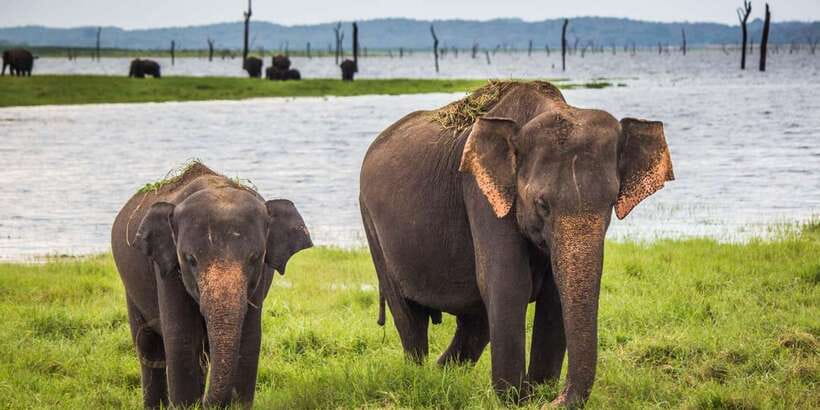
Udawalawe’s elephants are the heart of this experience. You might see a single adult, a group of females, younger animals, or a male moving on his own. Several outings have produced groups with babies, though young calves can be shy and may stay close to their mothers.
The distance between jeep and elephant can sometimes feel surprisingly short. That does not mean you should expect to touch the animals. Your guide should position the vehicle carefully, avoid blocking their path, and give them room to behave naturally.
I appreciate the emphasis on quiet observation. If the elephant turns away, raises its ears, or begins to move, the right response is to let it go. A safari is better when you see natural behavior rather than a stressed animal surrounded by vehicles.
Photography is easy from the jeep, but bring patience rather than relying only on a camera. A close view of an elephant is exciting, yet watching a herd feed, walk, or cross near water often gives you more insight than a quick photograph.
More Safari Tours in Sri Lanka
- Udawalawe National Park | Private Safari Tour
★ 5.0 · 1,499 reviews - Yala National Park Safari Tours: Morning/Evening/Full Day
★ 4.8 · 818 reviews - Full day Safari – Yala National Park – 04.30 am to 06.00 pm with – Janaka safari
★ 5.0 · 603 reviews - Yala National Park: Half, 7-Hour, or Full-Day Safari & Meals
★ 4.8 · 489 reviews
Visiting Elephant Transit Home during feeding time
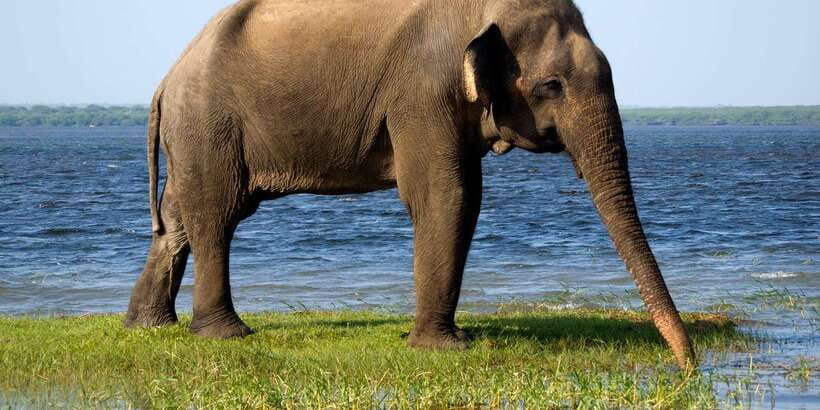
The second part of the outing is a visit to the Elephant Transit Home. This is a separate facility for young wild elephants, and feeding time is the main reason to include it in your plans.
The experience is different from seeing elephants in the park. Here, you are watching a scheduled care routine involving young animals brought in from the wild. You may see many elephant babies gathered for feeding, but this is not the same as a free encounter in the national park.
The timing needs attention. Feeding sessions take place at set times, with morning and afternoon examples appearing in the available information, including a 2:30 PM session. Ask for the exact feeding time when you book and make sure the safari schedule allows you to arrive without rushing.
Several outings combine roughly three hours in the park with the transit-home visit. The full activity lasts about four hours, but the exact balance depends on the start time and feeding schedule. If seeing the young elephants is your priority, tell the provider clearly before the day begins.
This stop adds emotional weight to the outing, but it also adds another entrance fee. The Elephant Transit Home admission is not included in the $21 price, just as the national park fee is separate. Consider the advertised price a transport and guiding cost, not the final cost of the day.
The real cost and what you get for $21
At $21 per person, the basic rate is attractive for a four-hour jeep safari with hotel pickup in the Udawalawe area. It includes the safari jeep, an English-speaking driver-guide, and return transport. If you are comparing options, check that other operators include the same services.
The price does not include the national park entrance fee, the Elephant Transit Home entrance fee, food, or drinks. The extra admission cost can be significant, especially for a small party. One recent outing reported about $50 for park entry, while another quoted 3,600 Sri Lankan rupees for two people at the transit home. Fees can vary, so confirm the current amounts before you go.
There may also be an additional pickup charge if your hotel is outside the stated Udawalawe area. You can avoid surprises by giving the provider your exact hotel location and asking for the full expected cost, including both entrance fees.
Even with those additions, the tour can be good value if you want a simple half-day plan. You are paying for access to a jeep, a local driver who knows the park, and a direct transfer rather than arranging several pieces yourself. The value is strongest when the guide finds animals, avoids traffic, and keeps the outing focused.
It is less appealing if you expect the $21 to cover every expense. Budget for the park and transit-home admissions from the start, and you will have a clearer idea of the total.
Practical tips for a better morning
Wear light clothing and bring sun protection. The jeep is open to the surroundings, which is useful for viewing animals but leaves you exposed to sun, dust, and changing temperatures.
Bring water and snacks because food and drinks are not included. Some guides may help arrange a simple breakfast stop, but you should not count on meals being part of the tour.
Use a camera with a useful zoom if you have one. Animals may be close, but you will often want to photograph them without asking the driver to move nearer. Binoculars can also help with birds and distant animals.
Keep your voice low around wildlife. The quieter you are, the easier it is to notice small movements and the less likely you are to disturb the animals. Follow the guide’s instructions around elephants and crocodiles.
If you care most about elephants, say so at the beginning. If you prefer birds and smaller creatures, say that too. Guides such as Pathum and Koshala are praised for adjusting their route and stopping when there is something worth seeing.
Finally, do not schedule a tight transfer immediately after the tour. Pickup, park entry, wildlife sightings, and the feeding session can all affect the timing. The activity is listed as four hours, but a safari day is more enjoyable when you leave some breathing room.
Who this Udawalawe tour suits best
I would recommend this outing to first-time safari visitors, couples, families, and anyone passing through Udawalawe with only half a day available. It gives you a good introduction to Sri Lanka’s wildlife without requiring a full-day commitment.
It is particularly well suited to people who want elephants but also care about birds, crocodiles, deer, buffalo, and smaller animals. The Transit Home visit makes it a good choice for families, though parents should explain that the young elephants are being observed during a care routine rather than handled as pets.
Photography fans should like the open jeep and frequent stops. Birdwatchers may also enjoy the range of species, though the main focus remains elephants and general wildlife rather than a specialist birding program.
I would think twice if you want a private, quiet vehicle guaranteed for just your group. The jeep can hold seven people, and the standard package does not promise a private ride. I would also reconsider it if you dislike extra entrance charges or need a fixed finish time for a long transfer.
Should you book the Udawalawe safari?
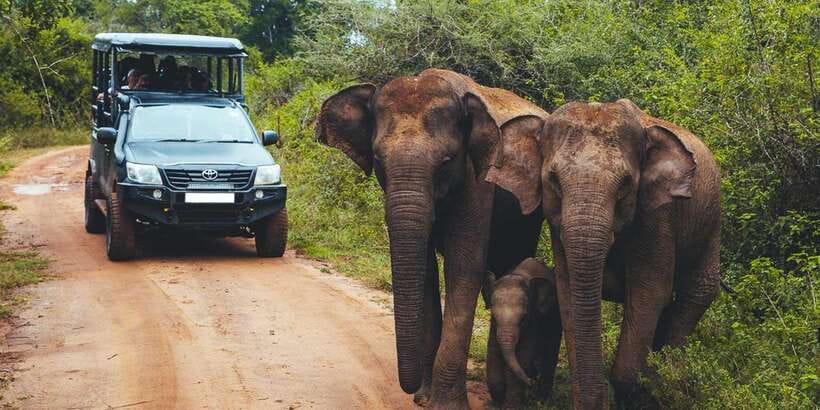
Book it if you want a straightforward half-day safari with hotel transport, a strong chance of elephant sightings, and a useful visit to the Elephant Transit Home. The guides are the main strength, especially when they use quieter routes, spot small animals, and keep a respectful distance from elephants.
Before paying, confirm your pickup point, the feeding time, the current entrance fees, and whether the jeep will be shared. If you plan well and accept that wildlife is unpredictable, this is a practical and well-priced way to see Udawalawe.
FAQ
How long is the Udawalawe safari and elephant visit?
The activity lasts about four hours. The safari portion may take around three hours, with time also allowed for the Elephant Transit Home visit.
Is hotel pickup included?
Pickup and return are included for hotels in the Udawalawe area. You can also meet the jeep at the Udawalawe National Park entrance. Hotels outside the stated area may require an additional charge.
Are national park and Elephant Transit Home entrance fees included?
No. You must pay the Udawalawe National Park entrance fee separately, and the Elephant Transit Home entrance fee is also not included.
How many people can share one jeep?
The safari jeep can carry a maximum of seven passengers.
What animals might I see?
Possible sightings include elephants, wild buffalo, spotted deer, barking deer, sambar, wild boar, hares, mongoose, crocodiles, jackals, monkeys, monitor lizards, snakes, butterflies, and many bird species. Leopards are possible but rare.
Can I cancel or pay later?
You can cancel up to 24 hours before the activity for a full refund. A reserve-now, pay-later option is also available.
Just added around Sri Lanka
- Minneriya National Park Safari from Habarana★ 5.0 · 23 reviews
- Minneriya National Park Safari – Private Jeep with Hotel Pickup★ 5.0 · 44 reviews
- Kaudulla National Park Safari | Jeep with Tickets★ 5.0 · 21 reviews
- Minneriya National Park Elephant Jeep Safari Private Tour★ 5.0 · 68 reviews
- Sri Lanka Wild Life Uniqe Safari 26★ 5.0 · 28 reviews
- Minneriya National Park | Private Safari★ 5.0 · 59 reviews
- All Inclusive Private Safari in Minneriya National Park★ 4.5 · 26 reviews
- Tangalle/Hiriketiya: Yala National Park Safari in a 4×4★ 4.9 · 22 reviews
Udawalawa National Park Tours, compared.
Udawalawe National Park | Private Safari Tour
Read our review →Udawalawe National Park — 4-Hour Private Jeep Safari (Pickup)
Read our review →Browse the lists this tour appears in