
Review · ABISKO
Abisko: Northern Lights Photography Tour with Dinner
Abisko is one of the world’s best places to chase the northern lights, and this tour gives you more than a ride to a viewpoint. You begin with a local dinner, then head out with guide and photographer Jesús in a 4×4 van, following weather and aurora conditions to find darker skies. I especially like the included professional photos and the chance to learn camera settings while the sky does its work. The main catch is simple: the aurora is never guaranteed, and the night can involve long hours in serious cold.
I also like the small group, limited to eight people, and the guide’s willingness to adjust the plan when clouds get in the way. Jesús has taken groups as far as 300 kilometers in search of clear skies. That flexibility is valuable, but it also means the tour may run anywhere from four to six hours rather than ending on a strict schedule.
Key points at a glance
- Dinner comes first: Begin with a local meal in Abisko, including the chance to try reindeer.
- Jesús leads the night: Your guide combines photography skills with lessons on weather, astronomy, and the aurora.
- The van goes where the sky is clearer: A 4×4 vehicle can reach remote dark-sky locations far from town lights.
- You do not need to be a photographer: Bring a camera if you have one, but everyone receives the guide’s photos.
- The plan follows the forecast: Cloud cover and aurora activity may change the route, timing, or even the date.
- Small groups matter: With no more than eight participants, you should get useful help with camera settings and composition.
Dinner in Abisko before the sky show
The evening begins in Abisko with dinner at a local restaurant. This is a smart way to start an aurora outing. You can eat before heading into the cold, and the meal gives the group time to meet Jesús and hear how the night will work.
The food has a local angle rather than being treated as a simple fuel stop. Reindeer has been served on the tour, and one diner found it surprisingly mild rather than strongly gamey. Water is included, but other non-alcoholic drinks may cost extra, so keep that small detail in mind when you budget.
Dinner timing can vary, but one outing began at 6:30 p.m. The exact start time depends on availability and the night’s conditions. Since the full experience generally lasts four to six hours, you should plan for an evening that takes up most of your night.
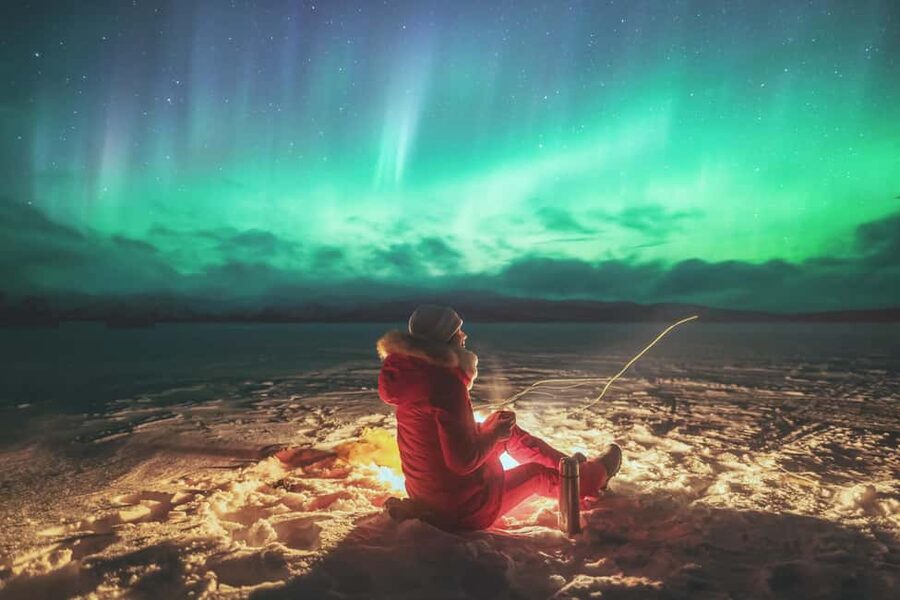
The dinner is also useful because aurora tours can involve waiting. A warm meal gives you a proper start before standing outside beside a frozen lake, road, or open Arctic field. Eat enough, but save room for the hot lingonberry drink that may be served later in the evening.
A few more park trips around Abisko worth a look
- Teide National Park Sunset & Stargazing with Dinner (Star Safari)
★ 5.0 · 2,601 reviews - Teide National Park: Sunset & Stargazing Safari with Dinner
★ 4.6 · 2,115 reviews - Pula: Dolphin&Sunset Cruise in Brijuni with Dinner&Drinks
★ 4.6 · 1,010 reviews
A 4×4 search for clearer skies
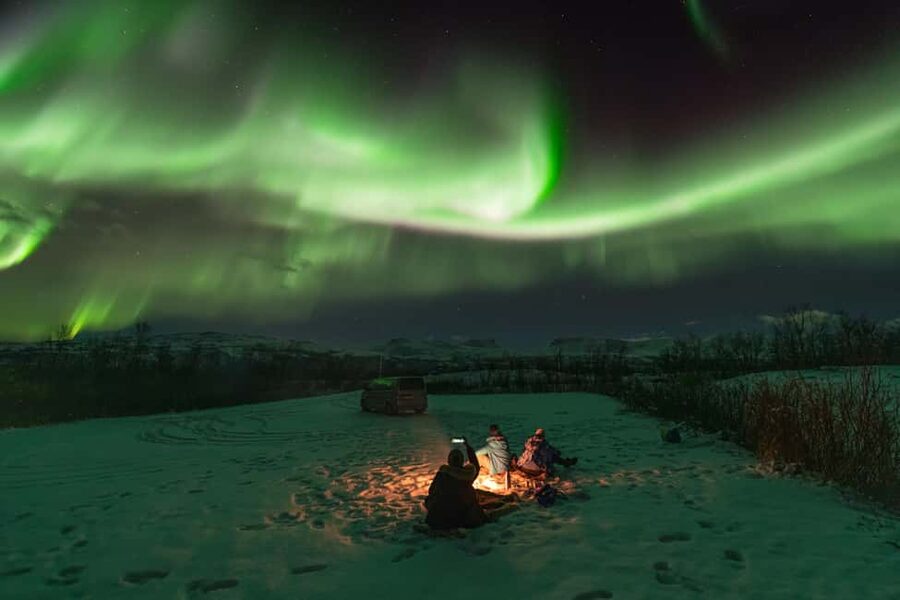
After dinner, you are picked up at your Abisko hotel and travel by 4×4 van. The route is not fixed in the way a normal sightseeing tour is. Jesús watches the forecast, cloud cover, and aurora conditions, then chooses a location where your chances look strongest.
That flexibility is one of the most useful parts of the outing. If the sky near Abisko is cloudy, the group may drive to a different area. The search can cover as much as 300 kilometers, so you should not expect a quick stop just outside town. You may spend a good portion of the night in the vehicle.
The van is also part of the experience. One evening included sky-themed music during the drive, which adds a little atmosphere without taking over the main event. More important, the vehicle provides warmth between outdoor stops, something you will appreciate once temperatures drop.
The group size is capped at eight people. That is small enough for the guide to offer camera help without turning the night into a crowded queue for attention. It also means the vehicle may feel more personal than a large coach tour, though you should still be ready to share limited viewing space and photo positions with the other participants.
Finding a dark place for the aurora
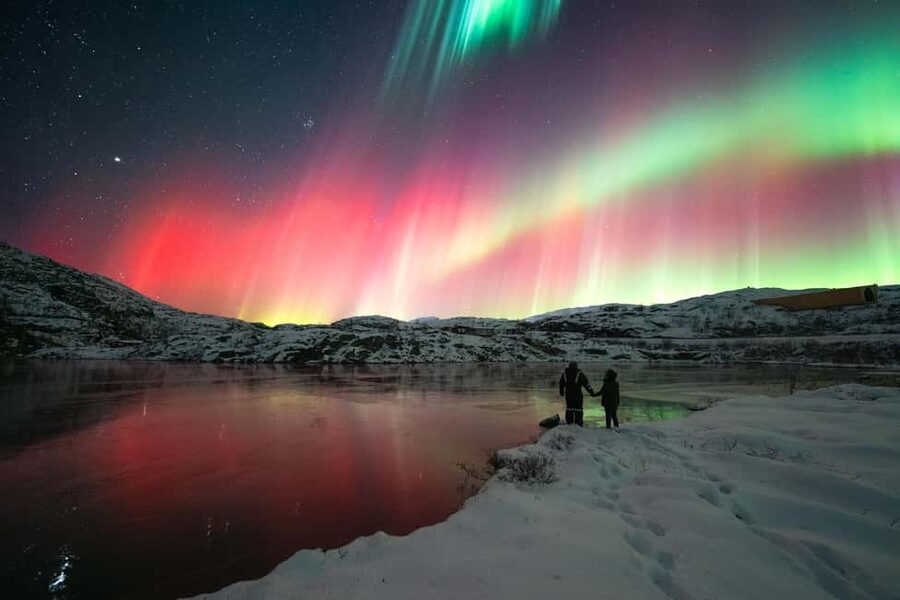
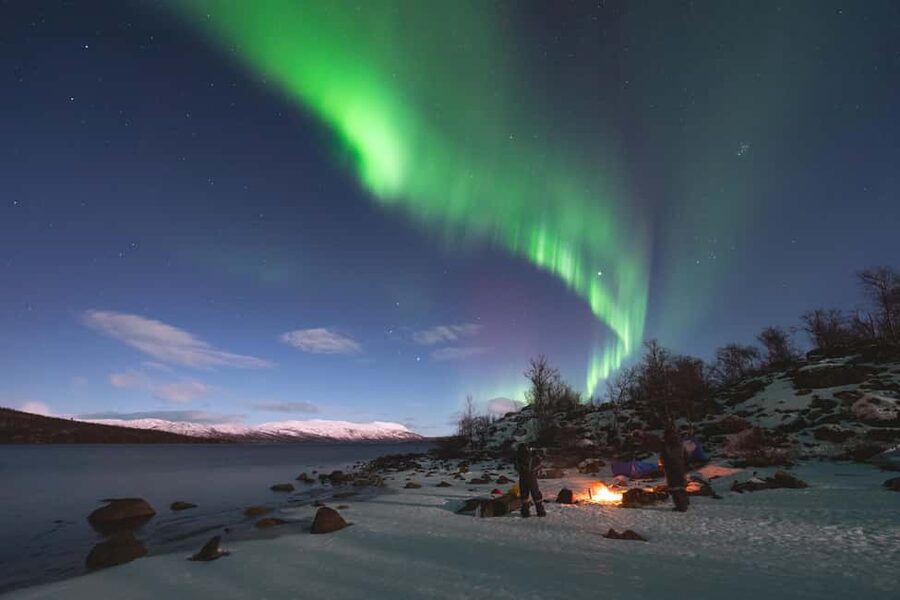
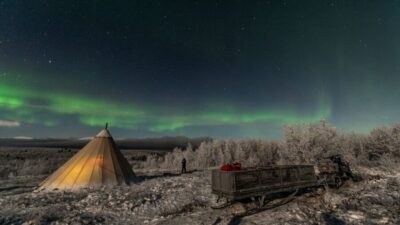
The remote stop is chosen for darkness and sky conditions, not for a standard attraction with a sign and a viewing platform. You might find yourself beside a lake with ice formations, under a broad open sky, or near another quiet Arctic setting selected for its low light pollution.
This matters because town lights weaken the contrast between the aurora and the stars. A darker location gives the camera a better chance to record color and detail, while your eyes get a cleaner view of the sky.
The scenery can be striking even before the lights appear. Snow, ice, mountains, and dark water can give your photos a foreground, which makes an aurora picture feel like a sense of place rather than a green band floating on a black background. Jesús also looks for attractive settings where he can photograph you beneath the aurora.
Still, the remote route has a tradeoff. The best viewing place may require a long drive, and there is no promise that every stop will produce a display. The tour’s value rests partly on the guide’s effort to keep searching instead of giving up when the first location is cloudy.
One March outing was canceled for a night with poor aurora prospects, then rearranged two days later. The group was taken to a dark, cloud-free spot by a lake, while some participants followed in their own car. This shows how much the experience depends on conditions and how the guide may work with other local operators to compare weather reports and find a better opening.
Learning to photograph the northern lights
If you bring a camera and tripod, Jesús can help you handle the technical side of night photography. Expect guidance on camera settings, composition, and how to frame people against the sky. The basic astronomy lesson adds useful context while you wait, including an explanation of how the aurora forms and help identifying star constellations.
You do not need advanced skills. The point is not to turn a five-hour outing into a photography course. Instead, you get practical help at the moment you need it, when the sky is dark, your fingers are cold, and the camera screen may be hard to read.
Bring your own photography equipment if you want to make your own images. The tour does not include a camera or tripod. Dress in layers so you can adjust as you move between the van and the open air, and take the cold seriously. A thin jacket is not enough for a long wait in Arctic night conditions.
If photography is not your interest, you can simply watch the sky. The tour is designed so that non-photographers still receive the guide’s photographs afterward. That is a major benefit for anyone who wants a good memory of the night but does not own a camera suited to long exposures.
Same park country, a different day out:
- Abisko: Guided Aurora Chase with Hotel Transfers
★ 4.5 · 311 reviews - Abisko: Ice Climbing for All Levels with Certified Guide
★ 4.9 · 207 reviews - Abisko National Park: Scenic Morning Hike with Transfer
★ 4.7 · 172 reviews - Abisko: Aurora Chasing with Snowmobiles
★ 4.6 · 113 reviews
Professional photos you receive afterward
Jesús photographs the participants during the evening as well as the aurora. He then sends the images through a download link after the tour. The timing may be several days later, so do not expect to receive the complete set before you leave Abisko.
These photos add real value to the price. Northern lights are difficult to photograph without the right equipment, a tripod, and a clear understanding of manual settings. A professional guide can also position you in the frame, something that is hard to manage when you are busy trying to keep your own camera steady.
The images are not a substitute for taking in the sky with your own eyes. They are a useful extra, especially if the aurora appears suddenly or conditions make your own camera work frustrating. If you are traveling with family or friends, the shared photos may become the clearest record of the evening.
Ask about the download process if you need the pictures by a certain date. The supplied details confirm that the guide sends them afterward, but they do not promise a specific delivery time.
How the night unfolds
The advertised duration is five hours, but actual outings last about four to six hours. The difference depends on aurora activity and weather, so you should not schedule another fixed activity immediately afterward.
A typical sequence looks like this:
- Hotel pickup in Abisko.
- Dinner at a local restaurant.
- A drive in the 4×4 van toward a dark location.
- An astronomy and aurora photography lesson while you wait.
- Time outside to watch and photograph the sky.
- Further movement if clouds or aurora conditions make another spot more promising.
- Return to Abisko.
The route may feel active if the forecast is changing, or slower if the group needs to wait for the sky to clear. That uncertainty is part of aurora hunting. You are paying for local decision-making and transport, not a guaranteed stage show.
The guide may also share suggestions for good places to watch the aurora on later nights. That can be helpful if you are staying in Abisko for several days and want to try again on your own.
Is $230 a fair price?
At $230 per person, this is not a budget evening. The price includes dinner, hotel pickup in Abisko, 4×4 transport, a small group, a photography lesson, an astronomy talk, and the guide’s photos. Those inclusions make it easier to justify than a simple transport-only aurora outing.
The strongest value comes from combining several services in one night. You get a meal, a local guide, weather-based route decisions, camera help, and professional images. Hiring separate transport and photography assistance would likely cost more, though the supplied details do not provide comparison prices.
The cost makes less sense if you already have private transport, strong night-photography skills, and several nights available to wait for good conditions. It makes more sense if you have only one or two chances to see the aurora, do not know where to go, or want photos of yourself beneath the lights.
The tour also carries the normal financial risk of nature-based activities. A clear schedule cannot force the aurora to appear. The guide may make a sincere effort, drive to better conditions, and still face a blank sky. Flexible cancellation up to 24 hours before the tour and the option to reserve now and pay later can reduce the planning risk, but they cannot change the weather.
Who should book this Abisko tour?
I would recommend it most strongly to you if you want a guided night with both atmosphere and practical help. It suits first-time aurora watchers, couples, small families, solo visitors, and photographers who want a local guide to handle the route.
It is also a good fit if you want to try reindeer, learn a little astronomy, and return home with polished images. The small group and personal attention from Jesús are especially useful if you are unsure how to set up your camera.
You may want another option if you dislike long drives, cannot tolerate cold weather, need wheelchair access, or want a strict start and finish time. The experience is not suitable for wheelchair users, and the route may change as conditions develop.
Spanish and English guiding are available. If you need one particular language, confirm it when booking.
Practical tips for a better night
Wear several warm layers, including clothing that works while standing still outside. The instruction to dress warmly is not a formality. You may spend extended periods waiting in freezing conditions, even with a heated vehicle available between stops.
Bring a tripod and camera if you want to practice. The tour includes help with photography, but it does not include personal equipment. If you are not carrying a camera, you can still enjoy the show and rely on the photos Jesús takes.
Keep your schedule open after dinner. A four-hour outing and a six-hour outing feel very different when you are trying to catch a natural event. The longer version may reflect a successful search rather than poor organization.
Finally, bring patience. The best moment may come after a cloudy start, a long drive, or a quiet period with little activity. The guide’s willingness to keep checking conditions is helpful, but the sky remains in charge.
Should you book it?
Book this tour if you want a well-rounded Abisko night rather than a simple aurora transfer. The local dinner, flexible 4×4 search, astronomy lesson, small group, and included photos give you several ways to enjoy the evening, even if your own camera struggles.
The main reason to hesitate is the price and the uncertainty built into any northern lights trip. You may drive a long way and still see little. But if you have limited time in Abisko and want expert help finding darker skies, plus professional photos to take home, the $230 cost is a reasonable investment.
FAQ
Where does the tour begin?
The tour begins in Abisko, with pickup included from your hotel there.
How long does the experience last?
The advertised duration is five hours, but the outing can last from four to six hours depending on aurora activity and weather.
What is included in the price?
The price includes the northern lights photography tour, 4×4 transportation, dinner at a local restaurant, a basic astronomy lesson, and photos taken during the tour.
Is dinner included?
Yes. Dinner at a local restaurant in Abisko is included.
Are drinks included with dinner?
Water is included. Other non-alcoholic drinks may not be included.
Do I need to bring a camera?
No. You can join without personal photography equipment and still receive photos taken by the guide. If you want to take your own photos, bring a camera and tripod.
Who leads the tour?
The tour is led by Jesús, a professional photographer and guide with experience in photography, astronomy, and meteorology.
How many people are in the group?
The group is limited to eight participants.
Is the northern lights display guaranteed?
No. The tour duration and route depend on weather and aurora activity, and natural conditions can prevent a sighting.
What languages are available?
The live guide is available in English and Spanish.
Is the tour suitable for wheelchair users?
No. The experience is not suitable for wheelchair users.
Can I cancel the booking?
You can cancel up to 24 hours in advance for a full refund. You can also reserve now and pay later.
More Photography Sessions in Abisko
- Abisko: National Park Northern Lights Photo Tour
★ 4.6 · 86 reviews - Abisko: Aurora Car Chasing Tour with Photographer
★ 4.8 · 60 reviews - Abisko: Fjord Sightseeing and Photography Tour
★ 4.8 · 48 reviews - Selous Luxury Day Safari with Photographer
★ 5.0 · 211 reviews
Just added around Abisko
- Snowmobile Adventure Abisko (Drive your own)★ 4.9 · 24 reviews
- Explore the Norwegian Fjords and the Wildlife from Abisko.★ 4.9 · 109 reviews
- From Abisko: Dog Sledding Excursion to Kiruna with Fika★ 4.6 · 67 reviews
- Abisko: Lake Torneträsk Arctic Ice Fishing Trip★ 4.6 · 48 reviews
- Abisko: Snowmobile Sightseeing Tour★ 4.9 · 43 reviews
- Abisko/Björkliden: Panorama Snowmobile Tour with Snacks★ 4.9 · 60 reviews
- Abisko: National Park Northern Lights Photo Tour★ 4.6 · 86 reviews
- Abisko: Wilderness Snowshoe Hike★ 4.8 · 94 reviews
Abisko National Park Tours, compared.
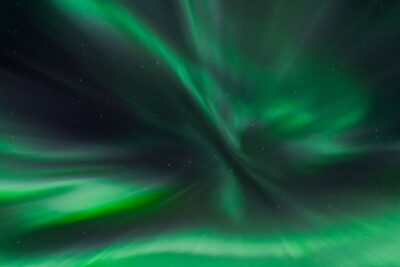
Abisko: Guided Aurora Chase with Hotel Transfers
Read our review →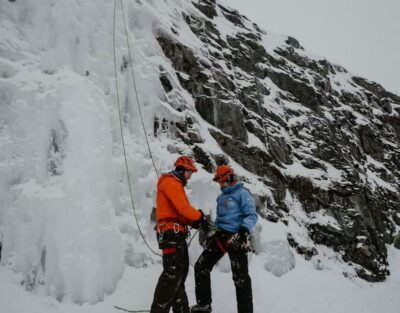
Abisko: Ice Climbing for All Levels with Certified Guide
Read our review →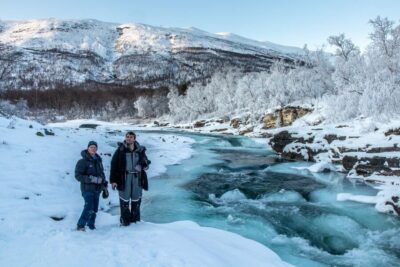
Abisko National Park: Scenic Morning Hike with Transfer
Read our review →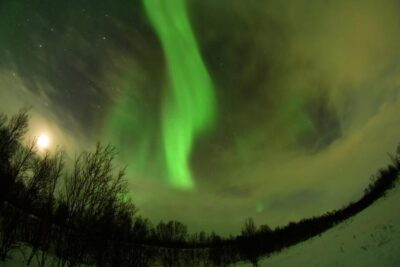
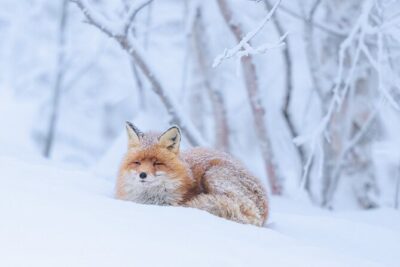
Explore the Norwegian Fjords and the Wildlife from Abisko.
Read our review →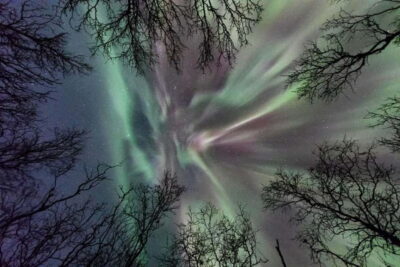
Abisko: Guided Autumn Aurora Chase with Hotel Transfers
Read our review →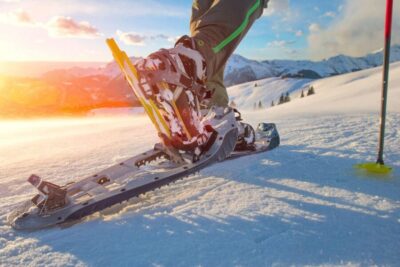
Abisko: National Park Northern Lights Photo Tour
Read our review →Browse the lists this tour appears in