
Review · SPAIN
From Seville: Doñana National Park Day Trip
Doñana is not a quick photo stop in the countryside. It is a huge patchwork of marshes, pine woods, rice fields, dunes, beaches, and pasture, and this 10-hour trip from Seville gives you a useful sweep from the park’s northern wetlands to the Atlantic coast. The wildlife is the star, but the changing scenery is just as important.
I like the way the day combines habitats rather than parking you in one visitor center. I also like the guides’ care with wildlife spotting. José, Sergio, Luismi, Patricia, and others have been praised for stopping, repositioning the vehicle, and explaining what you are seeing. The main drawback is simple: you spend plenty of time in a vehicle, and some stops can feel short, especially El Rocío and the beach.
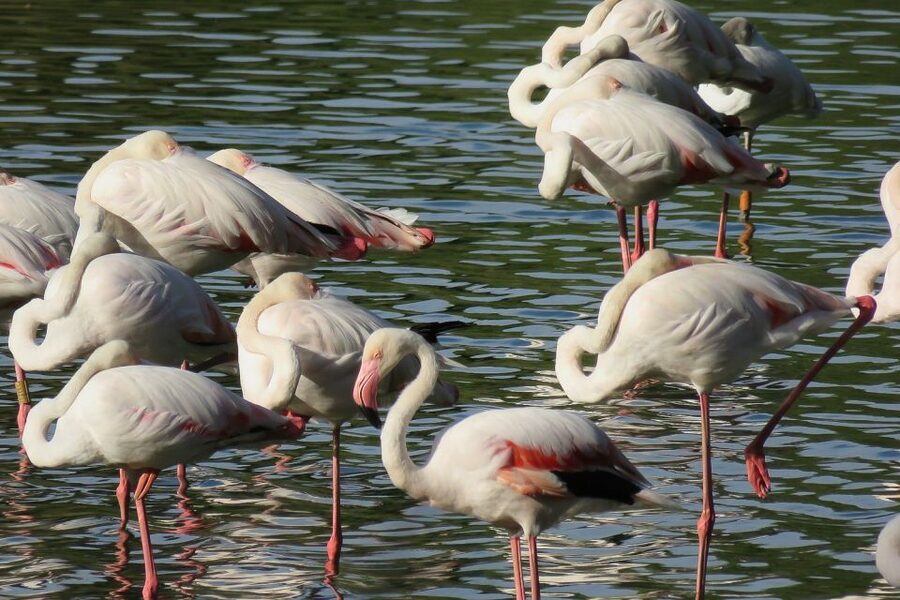
- Northern wetlands: Watch for flamingos, storks, egrets, herons, and other marsh birds around Dehesa de Abajo.
- Wildlife expertise: Guides such as José and Sergio can make the difference when animals are hard to spot.
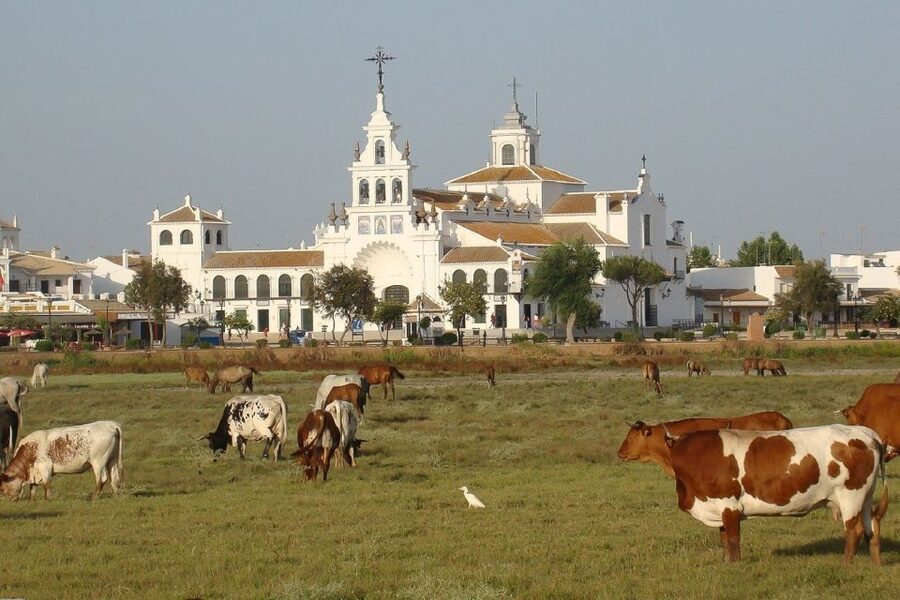
- El Rocío: See the famous chapel and village before walking near the La Rocina stream.
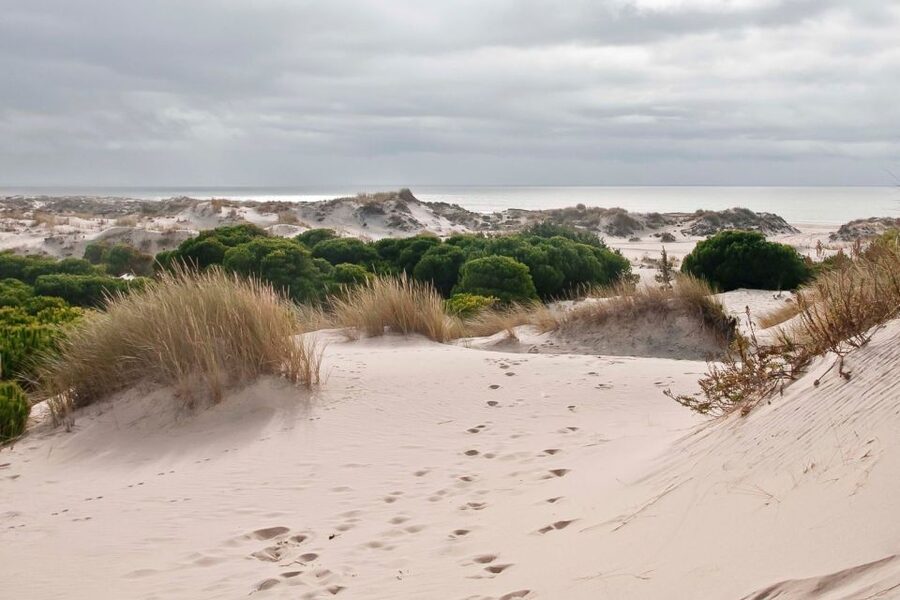
- Atlantic coast: Reach Matalascañas, Spain’s largest dune system, with time for the beach and a summer swim.
- Full park crossing: Travel through pine forest, rice fields, marshes, pasture, dunes, and shoreline in one day.
- Flexible booking: Choose a private or small-group tour, with pickup and return to your Seville hotel.
Why Doñana Makes a Good Day Away From Seville
Seville is full of grand buildings, tiled courtyards, tapas bars, and busy squares. Doñana gives you something completely different: open space and the chance to watch wildlife in its own setting.
The park is famous for its birdlife. Around 300 bird species can be found across its wetlands, forests, and fields, with flamingos and Spanish imperial eagles among the headline sightings. A rice field on the route is known for Europe’s largest colony of storks, while the marshes may produce glossy ibis, spoonbills, purple swamphens, black kites, herons, and egrets.
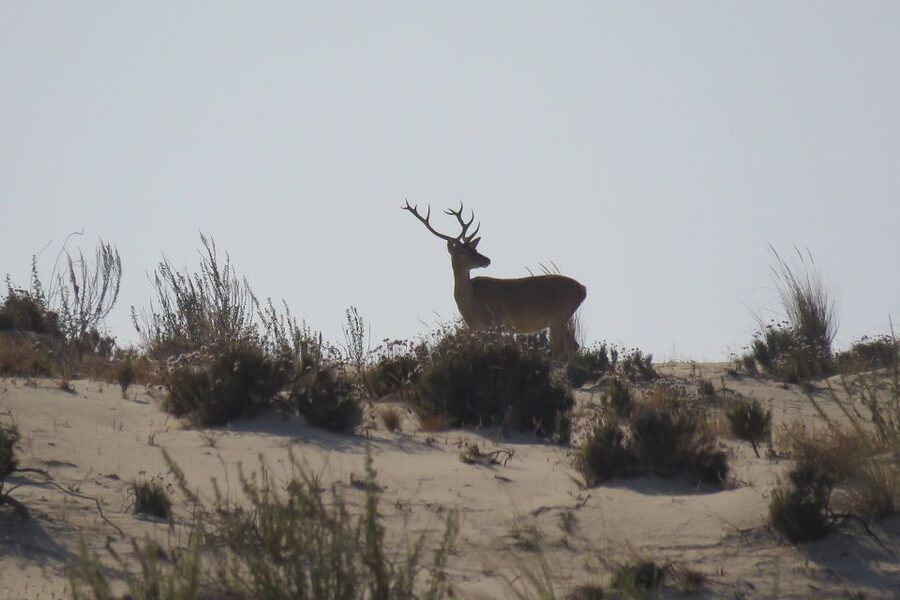
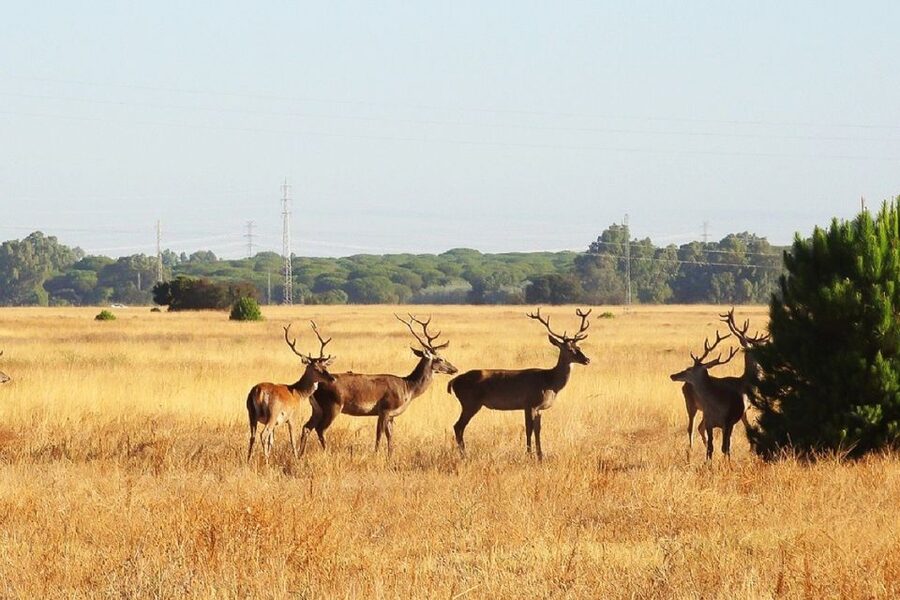
I would not book this expecting a guaranteed lynx sighting. The Iberian lynx is elusive, and even a good guide may only find pawprints or a fleeting glimpse. Deer and wild boar are more realistic hopes, while the birds are the most dependable reason to come.
The wider value is that you see how many environments fit inside Doñana. One hour you may be watching birds over water, and later you are walking among pines or looking across a broad beach backed by dunes. That variety makes the long day worthwhile.
From Seville to Dehesa de Abajo
The morning begins with pickup at your hotel or agreed location in Seville. You should wait in the reception or lobby about 10 minutes before the scheduled time. The drive first passes through Coria del Río, a town beside the Guadalquivir River, before reaching the northern side of Doñana.
The first major stop is the visitor center at Dehesa de Abajo. This is a good place to start because the wetlands introduce you to the park’s birdlife before the route moves into other habitats. Bring patience. Wildlife watching is not a parade, and the best moments may be a small bird in the reeds or a distant shape on the water.
Binoculars, called prismatics here, are included. That is helpful, but I would still bring your own binoculars if birdwatching matters to you. One person specifically found the supplied equipment well used, and another counted about 70 bird species during a day with guide José. That level of viewing depends on the season, weather, eyesight, and luck, but the potential is there.
The northern section can involve a fair amount of driving. The road may be bumpy in places, and you will not spend the entire morning walking. If you want a hiking day, this is not the right format. If you want access to several distant parts of Doñana without arranging separate transport, the vehicle is a practical trade.
More National Park Day Trips in Spain
- Lanzarote: Timanfaya Park and Jameos del Agua Full-Day Tour
★ 4.5 · 1,977 reviews - Tenerife: Teide National Park Full-Day Tour with Pickup
★ 4.5 · 1,613 reviews - Arrecife/Playa Blanca: Timanfaya National Park Area Day Tour
★ 4.4 · 856 reviews
Rice Fields, Storks, and the Northern Marshes
The route passes rice fields associated with a very large stork colony. This is one of those details that helps you understand Doñana as a working natural region, not just a protected area made for sightseeing.
The marshes support roughly 200,000 animals and provide feeding and nesting space for many birds. Depending on the conditions, you might see flamingos, storks, black-winged birds, egrets, herons, or birds of prey such as the Spanish imperial eagle. One day produced sightings of a glossy ibis, blue heron, little egret, great white egret, storks, flamingos, and a black kite.
The guides are especially useful here. A good guide can recognize movement at a distance and tell the driver where to stop. José was praised for reversing and repositioning the vehicle so everyone could get a better view, rather than pointing out an animal and moving on. That matters in a small group, where the person on the wrong side of the van can otherwise miss the sighting.
Your view depends partly on your seat. One person found the back of the minibus less useful for spotting everything, while another described the vehicle as comfortable and modern. If you are offered a choice, ask about seating. A private tour gives you more control, though it costs more than the listed shared price.
El Rocío and the La Rocina Stream
El Rocío brings a human and cultural element to the day. The village is known for its chapel and its strong connection with the annual pilgrimage tradition. The broad sandy streets and low buildings give it a very different feel from central Seville.
You have a guided visit and a photo stop here, followed by time near the La Rocina stream. The nearby paths let you stretch your legs and see another side of Doñana, with woodland and wet areas supporting birds and smaller wildlife.
This is the part of the schedule I would watch carefully. Some people wanted more time to explore El Rocío after hearing about its history, while others felt the stop was longer than needed and would have preferred more time by the lake or in the park. The balance is not perfect for every interest.
If you care about the village, its chapel, or local traditions, you may wish the stop were longer. If birds are your priority, you may prefer less time here and more time at the marshes. A private tour offers the best chance of adjusting the pace, but even on a shared trip you should tell your guide what matters most.
Lunch Before Matalascañas
Meals and drinks are not included, so plan to buy lunch or bring money for it. The day includes a longer break, with one person estimating about an hour and a half to relax and eat.
The exact meal setting is not specified, so I would not book this expecting a formal restaurant experience or an included picnic. The practical point is to carry water and a few snacks. One older comment advised eating before departure because parts of the drive can be bumpy, though the current trip information confirms only that food is not included.
This pause matters because the day is long. Ten hours of driving, walking, looking through binoculars, and getting in and out of the vehicle can wear you down. A proper break makes the final coastal section more enjoyable.
Same park country, a different day out:
- Tenerife: Teide National Park Sunset & Stargazing Tour
★ 4.2 · 3,812 reviews - Tenerife: Sunset and Stargazing at Teide National Park
★ 4.7 · 2,826 reviews - Teide National Park Sunset & Stargazing with Dinner (Star Safari)
★ 5.0 · 2,601 reviews - Lanzarote: Timanfaya Park, Jameos Agua, & Cueva Verdes Tour
★ 4.5 · 2,393 reviews
Matalascañas, Dunes, and the Atlantic
After El Rocío, the route continues toward Matalascañas. This coastal stop lasts about two and a half hours on the stated schedule and brings you to the beach and Spain’s largest dune system.
The dunes are one of the most memorable parts of the day because they show how quickly Doñana changes from wetland to dry coastal terrain. You can walk, take photographs, and enjoy the open Atlantic setting. In summer, you may even take a swim.
Do not assume all two and a half hours will be free walking time. One person felt that only about 35 minutes was available for the beach and dunes, with other time used for the wider program. The exact balance can depend on the group, traffic, wildlife stops, and the guide’s decisions. If beach time is your main goal, a dedicated coastal outing would give you more of it.
For most people, the value here is the contrast. You have already seen marshes, fields, and woodland, and now you are looking at sand and sea. Bring a hat, sunglasses, sunscreen, and comfortable shoes. The sun can be strong, and the day offers limited shelter.
The Return Through Asperillo Pine Forest
The trip heads back toward Seville through the Asperillo area. The return drive is listed at about 75 minutes, though traffic can affect the timing.
The pine forest and dunes can look particularly attractive late in the day, when the light softens. The route is also a final chance to look for larger mammals. Deer and wild boar are possible, while the lynx remains a lucky sighting rather than a promise.
This is where a strong guide adds real value. Sergio was praised for making detours, slowing down, and trying hard to locate animals. Another guide, Luismi, was singled out for making the full range of Doñana’s habitats understandable. That kind of attention can turn a long ride into active wildlife watching.
Still, keep expectations realistic. You may spend stretches looking without seeing much. Nature does not follow the schedule, and the tour cannot control the animals. The reward is the chance to see something unusual, not a fixed list of species.
How Much Is the $105 Price Worth?
At $105 per person, the tour is not the cheapest way to spend a day outside Seville. It is also more than a simple bus trip to the coast. The price includes hotel pickup and drop-off, transport, a guide, and binoculars, and it gives you access to widely separated parts of Doñana in one day.
I see the value in the logistics. Doñana is large, and arranging the wetlands, El Rocío, La Rocina, Matalascañas, and the Asperillo area independently would take more planning. You would also need to know where wildlife viewing is permitted and how to connect the northern and southern sections.
The strongest value comes if you care about birds or natural history. If you simply want a beach day, spend your money on a coastal trip with more time by the water. If you want a relaxed countryside drive with guaranteed close-up animals, this may also disappoint.
A private option should suit couples, families, or serious birdwatchers who want more say over stops. A small shared group is likely the better deal if you want the price kept down. The activity is rated 4.3 out of 5 from 380 ratings, which fits my view: a strong nature day with some scheduling and transport compromises.
Guides Make the Difference
The most consistent strength is the guiding. José is repeatedly praised for his wildlife spotting, calm driving, and attention to the group. Sergio is noted for his strong understanding of Doñana’s biodiversity and his willingness to make small detours. Luismi, Patricia, Diego, Ramón, and others are also described as friendly, engaged, and good at explaining the area.
The guide can affect the day more than the printed schedule. A well-informed guide can tell you why a wetland matters, identify a bird before it flies off, and decide when it is worth waiting. Guides have also helped groups find flamingos when the first part of the day produced little luck.
Language is available in English, French, Italian, and Spanish, but a minimum of four people speaking a requested language is required. If that number is not met, the operator may offer another language, date, or a full refund. Confirm your preferred language before you rely on it.
Who Should Book This Doñana Day Trip?
I would choose this tour if you want a broad introduction to Doñana and do not have a car. It works especially well for birdwatchers, photographers, nature lovers, and anyone who wants a break from Seville’s city streets.
You should be comfortable with a full day, several hours of driving, uneven or bumpy roads, and some time spent watching from a vehicle. Bring comfortable shoes, sunglasses, a sun hat, sunscreen, water, and your own binoculars if you have them.
I would hesitate if your main goals are long walks, a guaranteed lynx sighting, or several uninterrupted hours on the beach. The itinerary covers a lot, and that breadth means each individual stop has limits.
Final Recommendation
Book this Doñana trip if you value variety and expert wildlife spotting more than a slow pace. The combination of marshes, rice fields, pine woods, El Rocío, dunes, and Atlantic beach is hard to match in a single day from Seville.
For the best experience, go in spring or winter if birdlife is your priority, ask about the language and pickup details, and bring your own binoculars. Summer adds the possibility of swimming but can mean stronger sun and drier scenery. The lynx may remain unseen, but the wider day still offers a fine look at one of Andalusia’s most unusual natural areas.
FAQ
How long does the Doñana National Park trip take?
The experience lasts about 10 hours, including pickup from Seville, transport between stops, guided visits, and the return journey.
What places does the tour visit?
The route includes Dehesa de Abajo in the northern marshes, El Rocío, the La Rocina area, Matalascañas, the dune system, and the Asperillo pine forest area.
Are meals and drinks included?
No. Meals and drinks are not included, so you should bring money for lunch and carry water or snacks.
Is a lynx sighting guaranteed?
No. Lynx are elusive, and you may instead see tracks or other mammals such as deer and wild boar. Bird sightings are a more dependable focus of the trip.
What languages are available?
The tour can be offered in English, French, Italian, or Spanish. A minimum of four people speaking the requested language is required, and an alternative language, date, or refund may be offered if that condition is not met.
What should I bring?
Bring comfortable shoes, sunglasses, a sun hat, and sunscreen. Binoculars are provided, but you may prefer to bring your own. Pets are not allowed, and infant seats are available when requested in advance.
More 1-Day Tours in Spain
- Lanzarote: Guided Day Trip to Timanfaya Park & Lago Verde
★ 4.3 · 732 reviews - From Tenerife: Teide National Park Guided Day Trip by Bus
★ 4.2 · 88 reviews - From Madrid: Day Trip to Guadarrama National Park
★ 4.5 · 65 reviews - Lanzarote: Timanfaya and Cueva de los Verdes Day Trip
★ 4.5 · 39 reviews
Just added around Spain
- Tour to Timanfaya, La Geria and La Laguna Verde★ 4.5 · 48 reviews
- Visit and wine tasting with sausage and BODEGA PIRINEOS cheese★ 5.0 · 73 reviews
- Rafting in Gallego River – Spain, Murillo de Gallego – UR Pirineos★ 5.0 · 139 reviews
- Timanfaya National Park: Evening Tour with Volcano Dinner★ 4.4 · 129 reviews
- From South Tenerife: Teide National Park Tour★ 4.8 · 283 reviews
- Tenerife: Teide National Park Buggy Tour with Hotel Transfer★ 4.5 · 145 reviews
- Tenerife: Teide National Park & Teno Rural Park Private Tour★ 5.0 · 35 reviews
- Tenerife: Teide National Park and Volcano Buggy Tour★ 4.0 · 39 reviews
Spain National Park Tours, compared.

Teide National Park Sunset & Stargazing with Dinner (Star Safari)
Read our review →
Timanfaya Park, Jameos Agua, & Cueva Verdes Tour
Read our review →
Teide National Park: Sunset & Stargazing Safari with Dinner
Read our review →
Timanfaya National Park Volcanic Craters Tour
Read our review →
Arrecife: Timanfaya and Green Lagoon for Cruise Passengers
Read our review →
Timanfaya Park and Jameos del Agua Full-Day Tour
Read our review →Browse the lists this tour appears in