
Review · AUSTRALIA
Hobart: Maria Island National Park Active Full-Day Tour
Maria Island is the rare place where the best sights arrive at walking pace. You cross the water, leave vehicles behind, and spend the day among wombats, old convict buildings, colorful sandstone, and cliffs exposing fossils hundreds of millions of years old. The island feels wonderfully removed from Hobart, even though it is only a ferry ride and a drive away.
I like the mix of wildlife and history, since you are not simply ticking off viewpoints. I also like the small-group format and the guides’ flexibility. Guides including Heather, Hannah, Nick, Lucas, Trevor, and Ben have been praised for spotting animals and explaining the island in a friendly, clear way.
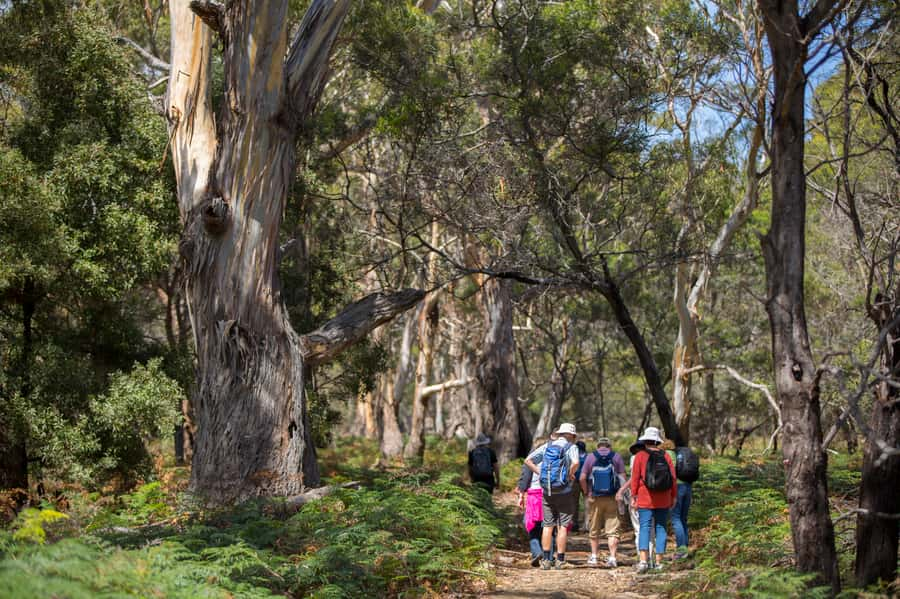
The catch is simple: this is a serious walking day. You cover about 10 kilometers over unpaved paths, beaches, hills, and uneven ground. Lunch and drinks are not included, and the early start means you must be ready before 6:45 AM in summer.
Key points to know before booking
- Expect about 10km of walking: The two main walks are each roughly 4.5km, with extra walking around Darlington and the island.
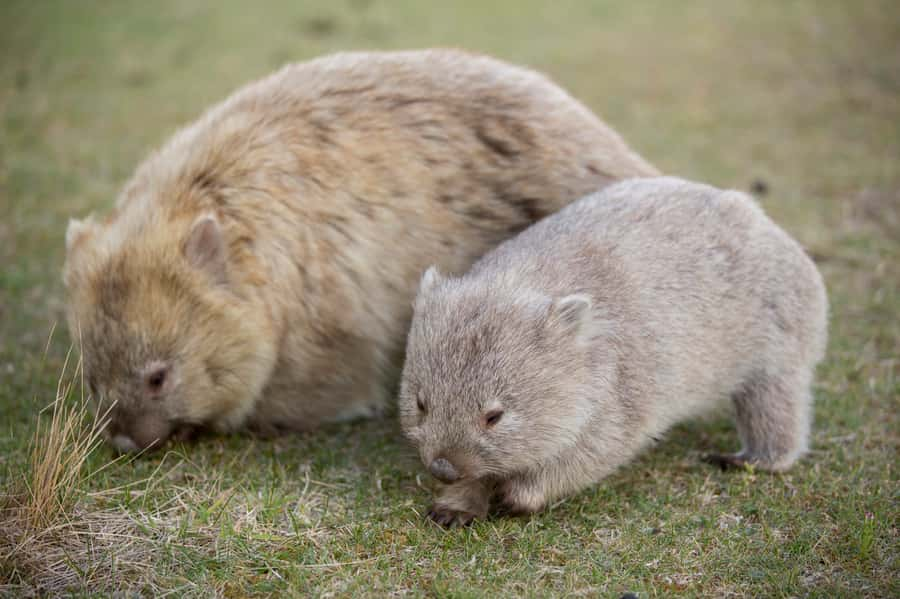
- Wombats are a real possibility: You might also see wallabies, kangaroos, pademelons, Cape Barren geese, bandicoots, possums, and many other birds.
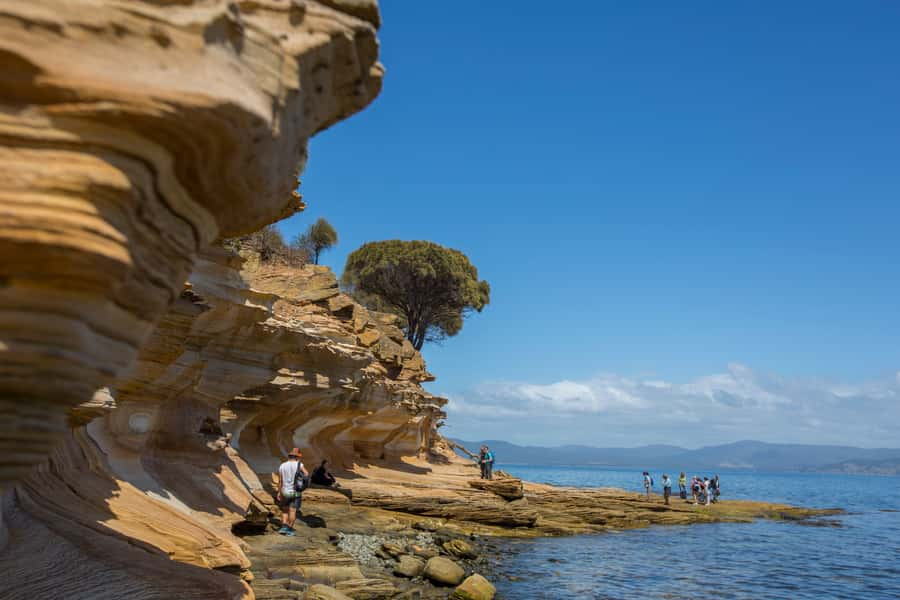
- The Painted Cliffs are tidal: Their striped sandstone colors are best appreciated when you can get close along the shore.
- Darlington adds real depth: The preserved convict settlement gives the day a strong historical side, not just scenery and animals.
- Bring your own food and water: There is no included lunch, and carrying enough water is important on a long outdoor day.
- The day begins early: Summer departure is 6:45 AM, while the winter departure is 8:00 AM.
Why Maria Island makes such a good day from Hobart
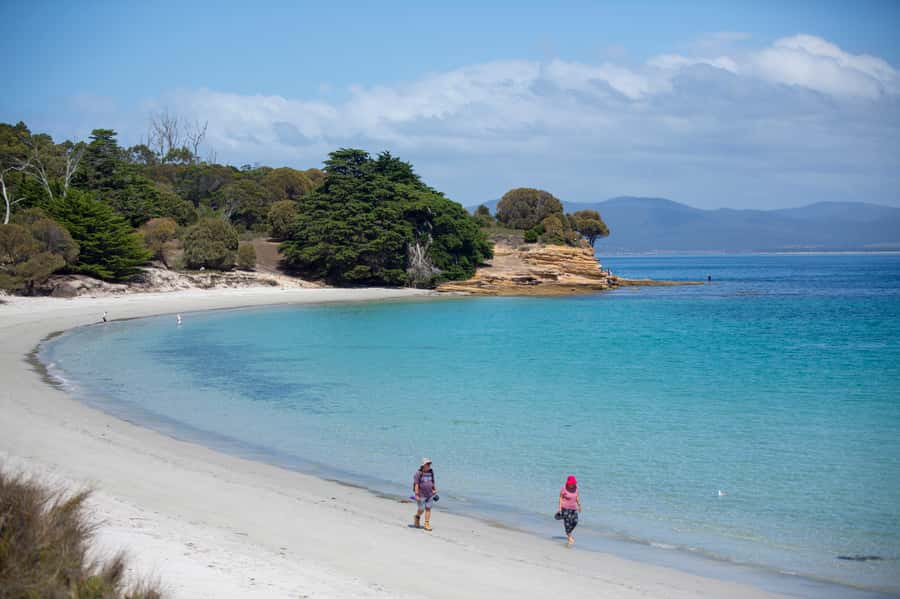
The appeal begins with the change of pace. From the Tasmanian Travel and Information Centre on Davey Street, you travel by coach for about an hour, then take a 30-minute ferry to Maria Island. That combination matters. You are not stepping straight from a city shuttle into a crowded attraction. The journey gradually strips away traffic, buildings, and noise.
The island has no vehicles, but it has plenty of animal movement. Wombats, wallabies, kangaroos, Cape Barren geese, and Tasmanian devils are part of the island’s story, and animals may appear along the paths or near the settlement. A good guide helps you notice what you might otherwise walk past, from a bird in the treetops to a small creature near a rock pool.
The most highly praised part of the experience is the guiding. Ben, Trevor, Heather, Nick, Lucas, Hannah, and others have been singled out for their wildlife spotting, local knowledge, good pacing, and relaxed manner. That makes a difference here. Maria Island is large enough that a guide can turn a quiet stretch of bush into a useful lesson about plants, animals, geology, and colonial history.
More National Park Day Trips in Australia
- Grampians National Park Small-Group Eco Day Tour
★ 4.8 · 577 reviews - From Darwin: Kakadu Wilderness Escape & Rock Art Day Tour
★ 4.5 · 403 reviews - Litchfield National Park Day Tour from Darwin
★ 4.0 · 264 reviews
The coach and ferry set the rhythm
The summer schedule starts at 6:45 AM, with a 6:40 AM meeting time. In winter, the departure moves to 8:00 AM, with a 7:55 AM meeting time. You must arrive early because the bus cannot wait for late arrivals and the ferry connection is fixed.
The coach ride is not dead time. One guide pointed out the pastures, waterways, sheep, and lambs along the route, giving you a pleasant introduction to rural Tasmania before the island walk begins. It is also a useful chance to eat a little breakfast if you can manage food early in the morning.
The ferry ride lasts about 30 minutes. It is short enough to feel easy, but long enough to make the crossing feel like a proper transition. Once you arrive, the lack of cars and modern noise becomes part of the experience. You should not expect a polished visitor center atmosphere. The charm comes from the island’s quiet, open feel.
Darlington: convict history without the museum glass
Darlington is one of the most important stops because it connects the island’s natural setting with Tasmania’s convict past. The settlement is a UNESCO World Heritage site and is described as one of the best-preserved probation stations of its kind.
You walk among the buildings rather than viewing the story only through displays. That gives the place a strong sense of scale. The settlement is not just a name on a sign, but a group of structures set within the island’s bush and open spaces. Your guide explains how the site functioned and helps you read details that could be easy to miss.
This is also where the history and wildlife begin to overlap. Animals move through the same broad spaces once used by people, and the quiet makes it easier to think about how isolated the settlement must have felt. The historical portion is not a long indoor lecture. It is spread through the walk, which suits the island well.
If you mainly want a hard hiking day, Darlington may feel like a pause in the walking program. I think that pause improves the trip. It gives the day a second subject and prevents Maria Island from becoming just a wildlife photo stop.
The Painted Cliffs walk, about 4.5km round trip
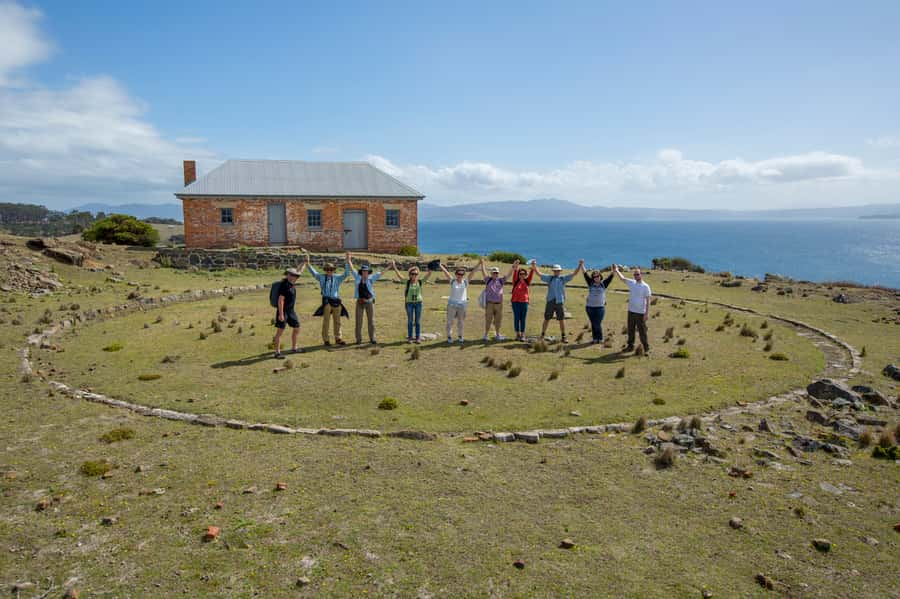
The walk to the Painted Cliffs is one of the day’s signature outings. It is described as an easy 4.5-kilometer return walk, though you should still expect uneven, unpaved ground and some small hills.
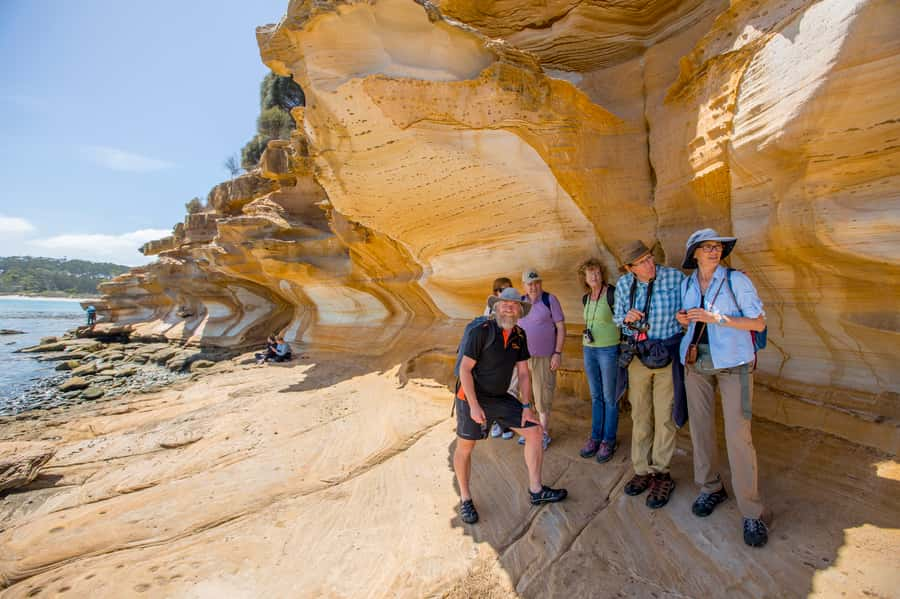
The cliffs get their color from the exposed sandstone formations. Close up, the rock has curved, striped, and weathered shapes that look far more interesting than they do from a distant viewpoint. The shore setting adds another layer, with sea views, rock pools, and places where you can stop for photos.
You should not rush this section. The value is in seeing the patterns at different angles and noticing how the rock changes as you move along the coast. The guide may also point out small details in the rock and surrounding area that would be easy to miss alone.
The walk is generally manageable for anyone with moderate fitness, but easy does not mean effortless. You are still walking several kilometers before the second main route. Wear closed-toe shoes with a good grip, not casual sandals.
Same park country, a different day out:
- Litchfield National Park and Jumping Crocodile Cruise
★ 5.0 · 2,119 reviews - Noosa: Afternoon Cruise through the Noosa Everglades
★ 4.5 · 906 reviews - Grampians National Park Small-Group Eco Tour from Melbourne
★ 5.0 · 761 reviews - From Port Arthur: Tasman Island Wilderness Cruise
★ 4.9 · 704 reviews
Fossil Cliffs and 300 million years of exposed geology
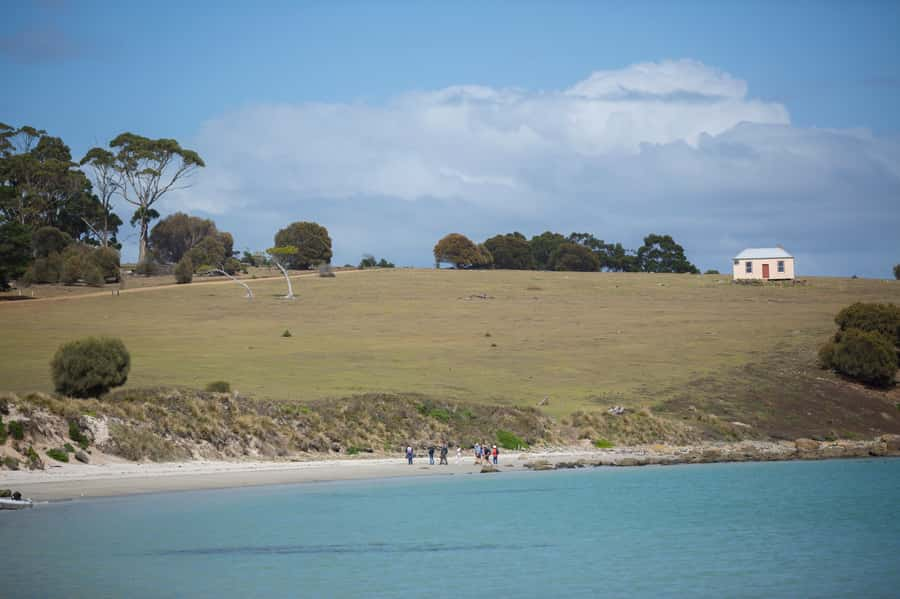
The Fossil Cliffs walk covers another roughly 4.5-kilometer circuit on the western side of the island. It crosses windswept hills and reaches cliffs where fossils from around 300 million years ago are visible in the rock.
This is a very different experience from the Painted Cliffs. The Painted Cliffs are about color and shape. Fossil Cliffs are about time and evidence. Instead of looking at a surface shaped mainly by erosion and mineral color, you are seeing traces of ancient life preserved in stone.
The walk is mostly easy, but it includes open hills and exposed sections. Wind can affect the feel of this part of the day, so bring a jacket even if Hobart looks warm when you leave. Spring weather can change quickly, and layers are more useful than one heavy item.
A guide adds real value here. Geological details can seem abstract when you are standing beside a cliff, but an explanation of what you are looking at turns the rock into a record of the island’s past. The tour does not require you to know geology beforehand. You only need to be willing to stop and look closely.
Wildlife spotting is the star attraction
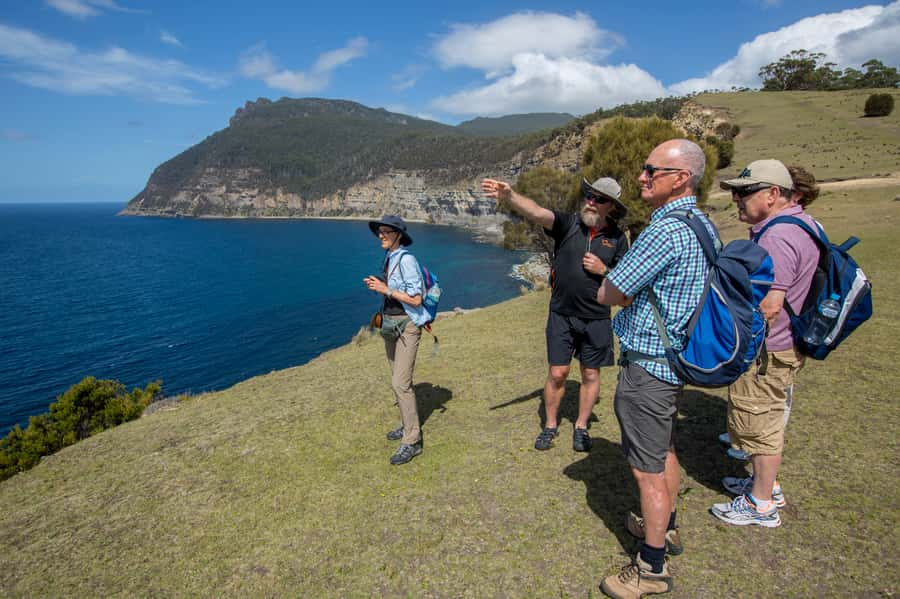
The strongest reason to choose this tour is the chance to see Australian wildlife in a natural setting. Wombats are the headline act, and several people have had close encounters with them, including sightings of mothers and babies. You might also see kangaroos, wallabies, pademelons, possums, bandicoots, Cape Barren geese, and a wide range of birds.
No guide can promise a specific animal. One group saw several wombats, while another saw wallabies and kangaroos but no wombats. That uncertainty is part of wildlife watching, and it is worth understanding before you book.
A good guide improves the odds without treating the animals like a staged show. Ben was praised for continuing to look for wombats despite windy conditions, while other guides have been noted for knowing the best places to pause and scan the area. The right approach is patient observation. Keep your voice down, stay on the path where required, and do not approach or feed animals.
The island’s wildlife also makes the walking feel less repetitive. You may stop for a wombat, then look up at birds, then notice movement in the scrub or a wallaby near the trail. The day becomes a series of small discoveries rather than one long march.
What the 10-hour schedule feels like
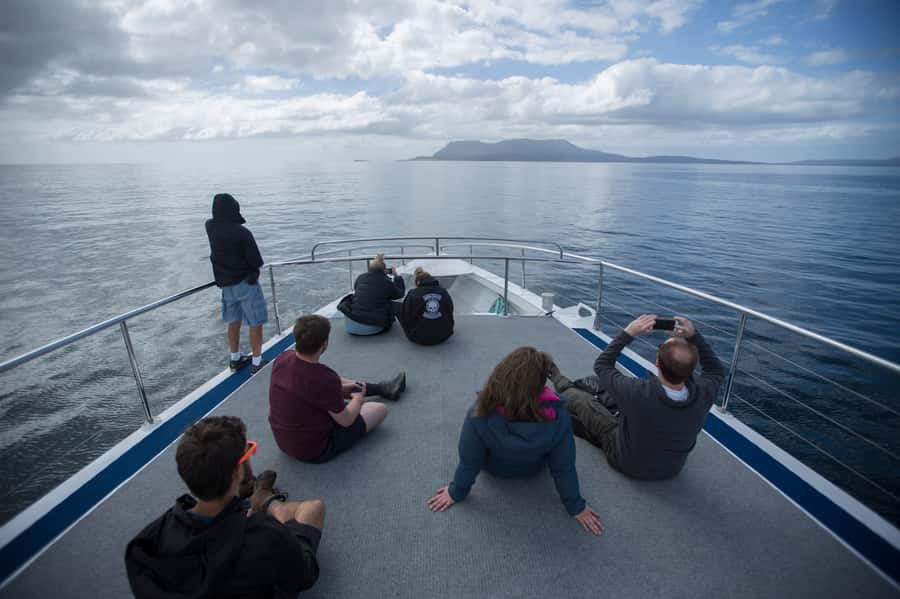
The tour leaves Hobart in the morning and returns to the Tasmanian Travel and Information Centre at about 5:00 PM. That sounds long, but transport takes roughly three hours in total, leaving a substantial block of time on the island.
The program generally includes Darlington, the Painted Cliffs walk, and the Fossil Cliffs walk. The guides manage the pace and may adjust the options based on weather and the group’s speed, especially in winter when daylight hours are shorter.
That flexibility is useful, but it also means you should not expect a minute-by-minute sightseeing schedule. The goal is to complete the main walks while allowing time for wildlife, history, photos, and short breaks. One older group found the walking achievable but felt that a delayed start within the group reduced their lunch time. If you walk slowly, tell the guide early and understand that the whole group needs to stay on schedule for the ferry.
There may be time to pause at a beach or rock pool, but this is not primarily a beach-lounging trip. If you want a long swim or an unhurried beach afternoon, a self-planned visit with fewer scheduled walks may suit you better.
Small-group travel and guide quality
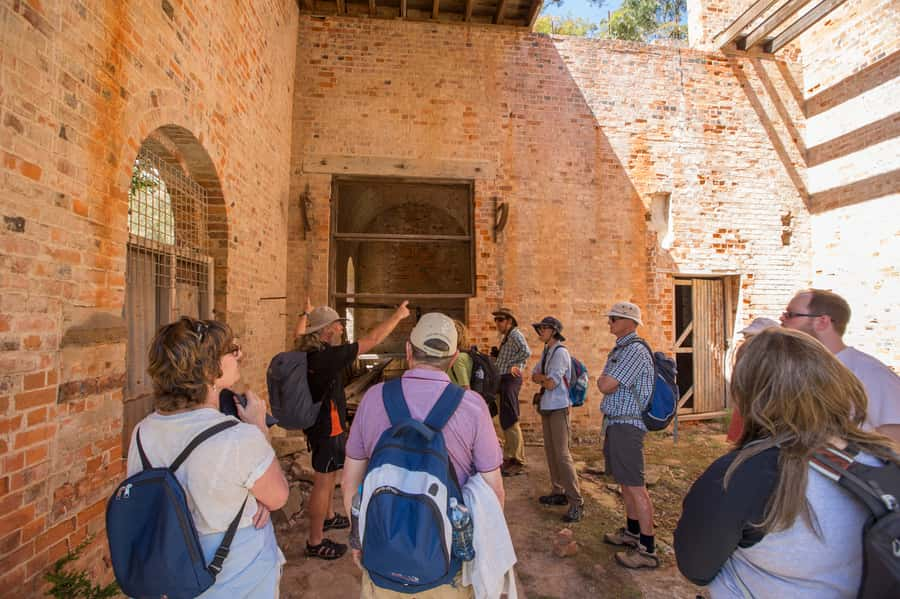
The small-group format is one of the tour’s practical strengths. A group of six can feel almost private, making it easier to ask questions and stay close enough to hear the guide. It also helps when the group stops to watch wildlife.
The guide is both driver and interpreter during the day, so personality matters. The strongest feedback centers on guides who are relaxed, friendly, well prepared, and respectful of the environment. Trevor has been praised as a good storyteller, Lucas for his calm and thorough approach, and Heather for her wildlife knowledge and care with the schedule.
You should still remember that the experience depends partly on the group. A slow walker can affect the lunch break and the time available at the cliffs. The winter version is more flexible, but daylight limits remain real.
What to pack, and what not to underestimate
Meals and drinks are not included, so pack a substantial lunch, snacks, and enough water for a full day outside. One person specifically wished that water or a light lunch had been supplied, and that is fair practical feedback. Carrying water is less convenient, but going without enough is worse.
Bring:
- Comfortable closed-toe walking shoes
- A daypack, not a suitcase or large bag
- Water in a reusable bottle
- Lunch and snacks
- Sunscreen and a hat
- A warm layer and weatherproof clothing
- Comfortable outdoor clothes
The weather can change between Hobart, the ferry, and the exposed western cliffs. Layers let you respond without carrying too much. Large bags and luggage are not allowed, and there is no parking at the general meeting point if you are arriving by car.
The tour is not suitable for wheelchair users or people with mobility impairments. Children must be at least eight years old. You need moderate fitness and enough balance for unpaved paths, small hills, and long periods on your feet.
Is the $152 price fair?
At $152 per person, the cost includes the national park fee, return ferry tickets, transport from Hobart, a small-group format, a guide, and guided walks with interpretation. That is a solid bundle for a full day, particularly because the ferry and park costs are already handled.
The value is strongest if you want wildlife, transport, and context without arranging the connections yourself. Maria Island is not difficult to imagine visiting independently, but you would need to coordinate the early coach or drive, ferry timing, park access, food, walking routes, and your own wildlife spotting.
The price is less appealing if you only want a short scenic outing. You are paying for a 10-hour active day with two long walks, not a quick ferry ride and a few easy viewpoints. You also need to buy your own lunch and drinks.
Cancellation is flexible up to two days before departure for a full refund. That helps when your Tasmania schedule depends on weather, but check the conditions at booking.
Who should book this Maria Island tour?
You should book it if you want a full outdoor day combining wildlife, geology, convict history, and coastal walking. It suits couples, solo visitors, active families with children eight and older, and anyone who prefers a guide to handle transport and explain what they are seeing.
It is especially good for people who want a strong chance of seeing wombats without giving up cultural and geological sights. You will also appreciate it if you like small groups and do not mind an early start.
You should skip it if 10 kilometers sounds excessive, if you need wheelchair access, or if your ideal island visit means spending most of the day sitting on a beach. The walking is manageable for a reasonably fit person, but the distance is not a footnote.
For most active visitors based in Hobart, I would book it. The combination of close wildlife encounters, Darlington’s preserved buildings, the Painted Cliffs, and fossil-bearing rock gives you a fuller day than any single attraction could provide. Pack food, wear proper shoes, arrive early, and let the island set the pace.
FAQ
How long does the Maria Island tour take?
The tour lasts about 10 hours. It leaves Hobart in the morning and returns to the Tasmanian Travel and Information Centre at approximately 5:00 PM.
What time does the tour depart?
From October 1 to April 30, you meet at 6:40 AM for a 6:45 AM departure. From May 1 to September 30, you meet at 7:55 AM for an 8:00 AM departure.
How much walking is involved?
You should prepare for approximately 10 kilometers of walking over varied, unpaved terrain. The Painted Cliffs and Fossil Cliffs walks are each about 4.5 kilometers, with additional walking around Darlington and other parts of the island.
Are meals and drinks included?
No. You need to bring your own food, snacks, and drinks, including enough water for a full day outdoors.
What wildlife might I see?
Possible sightings include wombats, wallabies, kangaroos, pademelons, Cape Barren geese, possums, bandicoots, Tasmanian devils, and other birds. Wildlife sightings cannot be guaranteed.
Is the tour suitable for children and people with limited mobility?
The minimum age is eight. The tour is not suitable for wheelchair users or people with mobility impairments, and participants need moderate fitness for long walks on uneven ground.
More Full-Day Trips in Australia
- Port Arthur Full-day Guided Tour with Harbour Cruise and Tasman National Park
★ 4.5 · 585 reviews - Litchfield National Park: Full-Day & Lunch from Darwin
★ 4.6 · 205 reviews - Darwin: Kakadu National Park & Wildlife Full Day Tour
★ 4.5 · 200 reviews - Full Day Kayaking Tour in Coorong National Park
★ 5.0 · 120 reviews
Just added around Australia
- Cape Tribulation & Daintree Wilderness (TCT)★ 5.0 · 136 reviews
- Barron Gorge and Kuranda National Park Half Day Rainforest and Waterfall 4WD Tour from Cairns★ 5.0 · 73 reviews
- Half-Day Abseiling Adventure in Blue Mountains National Park★ 5.0 · 59 reviews
- Full Day Kayaking Tour in Coorong National Park★ 5.0 · 120 reviews
- Tasmania: Wilderness and Wildlife Guided 6-Day Tour★ 4.6 · 60 reviews
- Sydney: Northern Beaches and Ku-ring-gai National Park Tour★ 4.6 · 32 reviews
- Sydney: Royal National Park private day tour★ 5.0 · 24 reviews
- Sydney: Blue Mountains Kangaroos, Wilderness and Sunset Tour★ 4.8 · 97 reviews
Australia National Park Tours, compared.
Litchfield National Park and Jumping Crocodile Cruise
Read our review →
Noosa: Afternoon Cruise through the Noosa Everglades
Read our review →
Grampians National Park Small-Group Eco Tour from Melbourne
Read our review →
From Port Arthur: Tasman Island Wilderness Cruise
Read our review →
Blue Mountains National Park Tour with River Cruise
Read our review →
From Hobart/Adventure Bay: Bruny Island Wilderness Cruise
Read our review →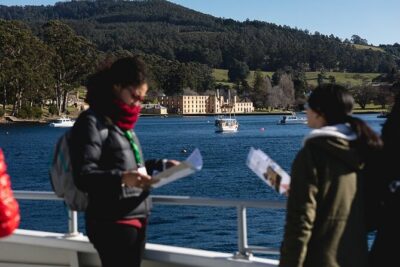
Port Arthur Full-day Guided Tour with Harbour Cruise and Tasman National Park
Read our review →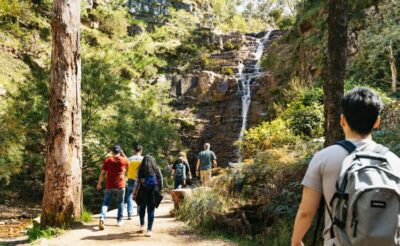
Grampians National Park Small-Group Eco Day Tour
Read our review →Browse the lists this tour appears in