
Review · MOSHI
5 Days Camping Tarangire, Serengeti & Ngorongoro crater & Visiting Maasai
The great appeal here is variety packed into five days: Tarangire’s baobabs and elephants, two full days in the Serengeti, then a crater floor where zebra, wildebeest, gazelles, elephants, birds, and possibly predators gather in close quarters. You also get sunrise and sunset game drives, which are often the finest times to be out.
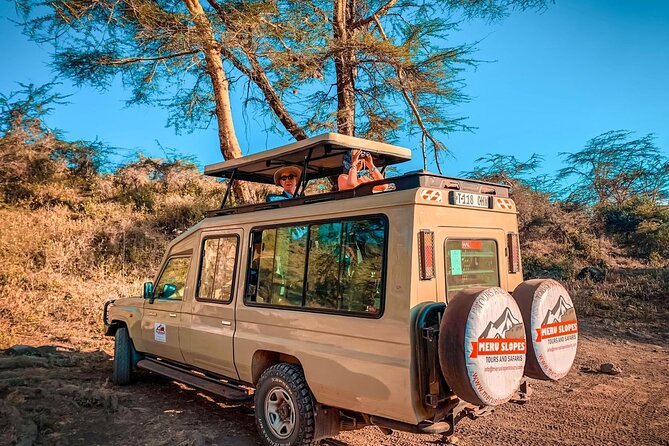
I like the small maximum group of six, since a safari vehicle feels far more comfortable when everyone has a good view. I also like the practical package: private transport, meals, drinking water, Wi-Fi in the vehicle, and AMREF Flying Doctors emergency rescue cover are included.
The main caution is the pace. You cover long distances on rough park roads, sleep in camps, and rise early. Also, the published meeting details mention Moshi, Arusha hotel pickup, and Kilimanjaro Airport, so confirm your exact pickup point before paying.
Key points at a glance
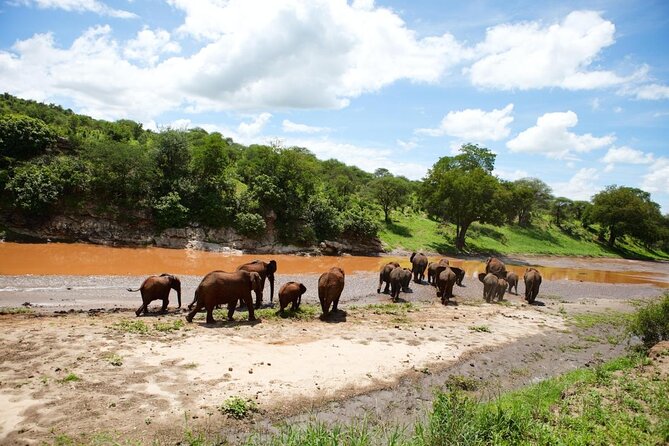
- Tarangire begins the wildlife story: Expect elephants, baobab trees, lions, leopards, and the Tarangire River on a full-day game drive.
- Two Serengeti days give you time: The central Seronera area offers a better chance to search for many species than a quick drive-through visit.
- Migration timing matters: June through September is presented as the strongest period for the main movement, while January through March is associated with wildebeest calving.
- Ngorongoro is a dramatic finale: The 610-meter-deep crater packs a large animal population into a compact area.
- Camping keeps the cost reasonable: You trade lodge comfort for a closer-to-the-ground safari feel and early starts.
- Mto wa Mbu adds a local view: Banana plantations, village activities, and community life provide a change from game drives.
Three famous parks, one demanding five-day route
At $1,280 per person, this is not a budget day trip, but it covers the three places many people most want to see in northern Tanzania. You are paying for park access, a private safari vehicle, transport between parks, a driver-guide, food, camping arrangements, and five days on the road.
The value comes from the amount of wildlife time. Tarangire gets a full day, the Serengeti gets two days, and Ngorongoro gets a full crater visit. That is a much stronger plan than trying to squeeze each park into a few hours.
You should still read the schedule honestly. Day four includes an early Serengeti game drive, breakfast, packing, another game drive toward Ngorongoro, and an overnight at Simba Campsite. Day five starts early again. This is an active safari, not a relaxed hotel holiday.
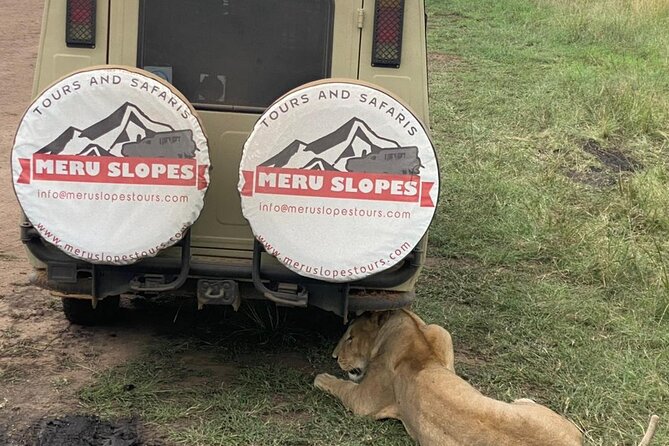
The vehicle carries no more than six people. That matters when you spend seven to ten hours in the car. It gives you a better chance of getting a window seat and makes it easier to stop for wildlife without a large group arguing over the best view.
More Volcano and Crater Tours in Tanzania
- 5-Day Highlights mid-Range Crater, Serengeti, Tarangire
★ 5.0 · 296 reviews - Private 6-Day Tarangire Manyara Crater and Serengeti with Mid-Range Lodges
★ 5.0 · 238 reviews - 5 Days Camping Tarangire, Serengeti & Ngorongoro crater & Visiting Maasai
★ 5.0 · 229 reviews
Day one: Tarangire’s elephants and giant baobabs
Pickup is listed for 8:00 a.m. from an Arusha hotel, followed by roughly three hours of driving to Tarangire National Park. The park is about 115 kilometers from Arusha and covers around 2,800 square kilometers.
The first full game drive gives you a strong opening act. Tarangire is known for large elephant numbers, and its namesake river draws animals to water. The scenery is also distinct from the Serengeti. Giant baobabs give the park a sculptural look, with thick trunks that can store large amounts of water.
The park is home to lions, leopards, and other wildlife. You may also see pythons associated with the park’s tree-climbing behavior, though sightings are never guaranteed. That is an important safari rule: the guide can search well, but no responsible operator can promise a particular animal.
A seven-hour game drive is a long first day, especially after the road journey. You then drive to Jambo Lodge for dinner and the night. The supplied details describe this as a lodge stop, while the overall trip is sold as camping, so ask exactly which nights use tents and which use lodge accommodation.
I like starting with Tarangire because it gives you elephants and unusual plant life before the wide open Serengeti. It also breaks up the route north. You will not spend the entire first day simply driving toward the next park.
Day two: Entering the Serengeti through the highlands
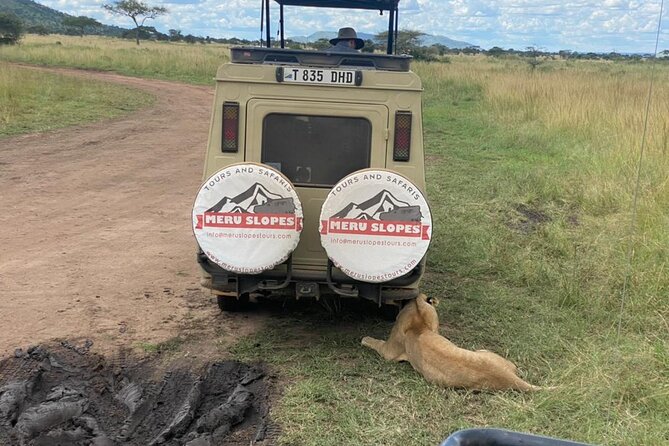
After breakfast, you head through the high farmland around Karatu and the Ngorongoro Conservation Area before descending toward the Serengeti. This transition is one of the most memorable parts of the route. The cultivated highlands give way to open grassland and long views.
The plan takes you toward central Serengeti and the Seronera area. The Seronera River provides water, so this part of the park supports many types of wildlife. You arrive around lunchtime, then spend the afternoon on a game drive until sunset.
That timing is useful. You are not merely crossing the Serengeti on the way to camp. The first afternoon already gives you several hours to search for wildlife, read the terrain, and get a sense of the enormous scale.
Two practical points matter here. First, the Serengeti is huge, so a drive to one area may not suit someone hoping to cover the whole park. Second, the roads can be tiring. Take the journey as part of the safari rather than expecting quick movement from one sighting to the next.
Sunset inside the park is one of the promised highlights. The combination of open plains, changing light, and animals settling for the evening can be more memorable than a checklist sighting. Your guide’s ability to read recent animal activity will shape how much you see.
Day three: The best full day for wildlife searching
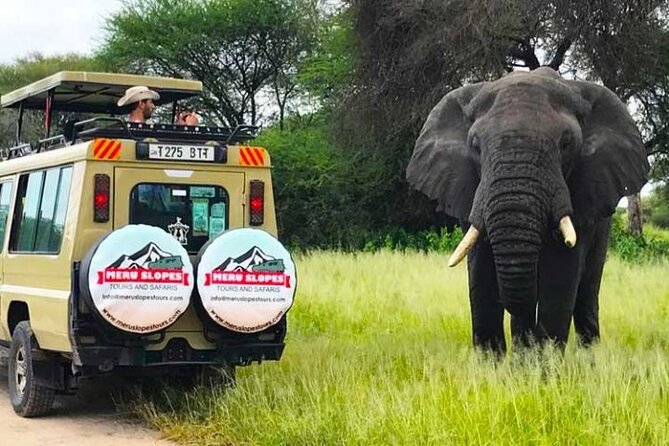
Day three is the core of the trip. You rise for breakfast, then spend a full day on game drives in the Serengeti. The guide aims for key areas and tracks the wildebeest movement when conditions allow.
This is where two Serengeti nights make a real difference. You have time to search rather than accept the first distant animal you spot. The supplied schedule gives roughly seven hours for the day’s game drive, although the exact rhythm can change with sightings, road conditions, and the group’s preference.
The Great Migration follows a broad annual pattern, but it does not run on a fixed timetable. June through September is listed as the best chance for the main movement, including possible northern Serengeti and Mara River crossings from July to September. January through March is associated with calving.
Do not book this trip solely for a river crossing. The migration is spread across a vast area, and weather can alter its timing. Even outside the main months, the Serengeti remains valuable for its plains, resident animals, birds, and predator sightings.
Past safari departures connected with this operator have included guides named Asanteali, Jacob, Dula, Mohammed, Patrick, Saleh, Nuru, Lobulu, Douglas, and others. Assignments can change, so do not book expecting a particular person unless the company confirms it. The strongest accounts emphasize patient driving, good animal spotting, clear communication, and chefs who prepared satisfying camp meals. Those qualities matter more than a guide’s name.
The camping setup is part of the appeal and part of the compromise. You get closer to the setting and keep the package price below many lodge-based safaris, but you should pack for basic conditions. One useful tip is to bring toilet paper. It is a small item, but you will be glad to have it at a campsite.
Same park country, a different day out:
- Serengeti Balloon Safari and authentic bush breakfast
★ 5.0 · 2,480 reviews - Balloon Safari & Bush Breakfast in Serengeti – Miracle Experience
★ 5.0 · 1,646 reviews - From Zanzibar: Mikumi Safari Day Trip with Flights and Meal
★ 4.7 · 1,470 reviews - From Zanzibar: Day Selous Game Reserve Safari with Flights
★ 4.7 · 1,025 reviews
Day four: A Serengeti sunrise before Ngorongoro
The fourth day begins around 5:45 a.m. with an early breakfast and sunrise inside the Serengeti. This is one of the most appealing details in the schedule, but it demands a willing alarm clock.
An early drive can reveal a different side of the park. Light is softer, temperatures are cooler, and animals may still be active. You continue until about 11:30 a.m., return to camp for a hot lunch, pack your belongings, and then continue with another Serengeti drive while heading toward Ngorongoro.
This is a full ten-hour day. You may be tired by the time you reach Simba Campsite for dinner and the night. Still, the route makes good use of your final Serengeti hours rather than cutting straight to the crater.
The overnight location matters because Ngorongoro begins with another early start. If you prefer slow mornings, this schedule may feel relentless. If you want maximum time in the parks, the early departures are exactly what you need.
Day five: Ngorongoro Crater and Mto wa Mbu
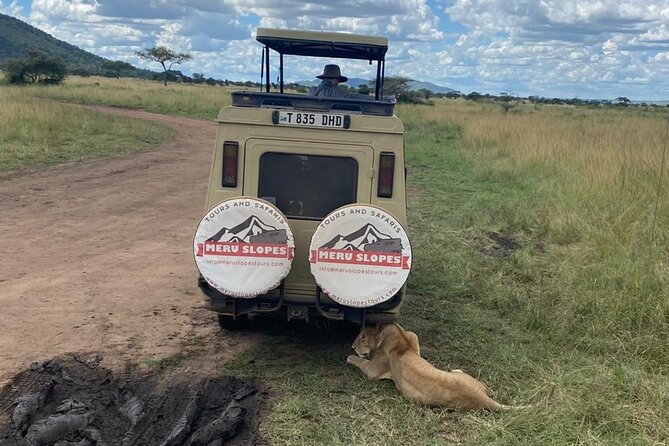
The final safari morning starts with a sunrise view from the crater rim, followed by breakfast and the drive down into Ngorongoro Crater. The crater is about 610 meters deep and covers roughly 260 square kilometers. It formed after a massive volcanic explosion millions of years ago.
The crater’s compact shape makes it one of Tanzania’s most reliable places for concentrated wildlife viewing. The supplied description gives an animal population of about 25,000 and lists wildebeest, zebra, gazelles, elephants, and more than 500 bird species.
You should think of Ngorongoro as a different experience from the Serengeti. The Serengeti gives you distance, open plains, and the feeling of watching movement across a vast ecosystem. Ngorongoro gives you a contained natural basin where many animals may be found in a shorter drive.
The descent is described as adventurous, so expect a rough and winding route rather than a smooth transfer. The crater visit lasts about eight hours in the wider schedule, including the time needed to view wildlife and leave the area.
After the crater, the tour visits Mto wa Mbu village. A local guide introduces you to community life, including banana plantations where more than 30 banana varieties are grown. You may choose from village activities and ask questions about local social and economic life.
This is a valuable change of pace. After several days of wildlife viewing, you get a human and agricultural setting. The schedule allows about an hour here before the drive to Arusha for the night.
One point needs clarification: the tour title mentions visiting Maasai, but the detailed day five plan specifically describes Mto wa Mbu and banana plantations. Ask the operator whether a Maasai visit is included on your departure. Do not assume that the village visit and a Maasai cultural visit are the same thing.
What the $1,280 price really covers
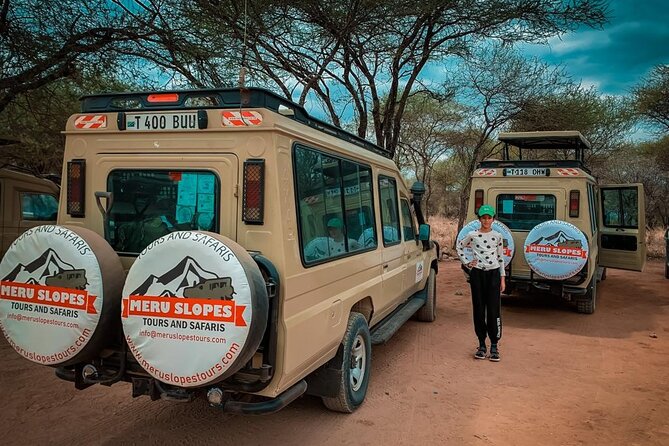
The price includes all fees and taxes, private transport, unlimited drinking water, Wi-Fi inside the safari vehicle, lunch, dinner, and breakfast for the stated number of days. AMREF Flying Doctors emergency rescue cover is also included.
That is a useful amount of coverage for a five-day safari. Meals alone remove a lot of planning, and Wi-Fi can help if you need to contact home or check arrangements between game drives. The rescue cover is reassuring, though it is not a replacement for ordinary travel insurance.
Tips, flights, and a visa are not included. Set aside money for gratuities, particularly if your guide and cook take good care of the group. Confirm the current tipping advice with the operator before departure.
Pickup information is not perfectly consistent. The experience is associated with Moshi, the itinerary refers to pickup from an Arusha hotel, and the meeting point is listed as Kilimanjaro Airport at 7:30 a.m. Confirm:
- Your exact pickup location
- The correct start time
- Whether an airport transfer is included
- Where you sleep each night
- Whether the final night in Arusha is included
- Whether the Maasai visit is part of your departure
The booking terms allow free cancellation up to 24 hours before the start time for a full refund. Changes or cancellations within 24 hours are not accepted or refunded.
Who this safari suits best
I would choose this trip if you want the classic northern Tanzania circuit and prefer to spend your money on park time rather than high-end rooms. It suits first-time safari visitors, couples, friends, and small groups who can handle early mornings and long drives.
It also suits anyone who wants more than a quick Serengeti snapshot. Two Serengeti days offer a proper chance to explore the Seronera area and search for wildlife at different times of day.
I would think twice if you need luxury accommodation, short transfer times, or a flexible sleep schedule. Camping, rough roads, early breakfasts, and back-to-back game drives are central to the experience.
The small group limit is helpful, but it does not turn the safari into a private two-person trip. Ask whether your booking is private or shared. Previous departures have sometimes ended up with only two people when others dropped out, but that cannot be guaranteed.
Should you book it?
Book this safari if your priority is seeing Tarangire, the Serengeti, and Ngorongoro in one well-filled five-day trip. The strongest reasons are the two Serengeti days, the full crater visit, small vehicle capacity, and practical inclusions such as meals, water, Wi-Fi, and emergency rescue cover.
Before booking, get the pickup point, accommodation style, and Maasai visit confirmed in writing. If you accept the early starts and basic camping, $1,280 can offer strong value for a first Tanzanian safari. If comfort matters more than coverage, look for a lodge-based itinerary with fewer long driving days.
FAQ
How long is the safari?
The experience lasts approximately five days.
How many people can join the safari?
The maximum group size is six people.
Where does the safari start?
The supplied details mention Moshi, pickup from an Arusha hotel, and Kilimanjaro Airport as the meeting point. Confirm the exact location and time with the operator before departure.
Which parks are included?
The route includes Tarangire National Park, Serengeti National Park, and Ngorongoro Conservation Area, including a crater tour.
When is the best time to see the wildebeest migration?
The strongest chance of seeing the main migration is listed as June through September. July through September may offer a chance to see crossings in the northern Serengeti. Wildebeest calving is associated with January through March.
Are meals included?
Yes. The package includes breakfast, lunch, and dinner for the stated schedule.
Is Wi-Fi available?
Unlimited Wi-Fi is listed as available inside the safari vehicle during the tour.
What is not included in the price?
Tips, flights, and a visa are not included.
Can I cancel for a full refund?
Yes, you can cancel at least 24 hours before the experience starts for a full refund. Cancellations or changes made less than 24 hours before the start time are not accepted or refunded.
More 5-Day Experiences in Tanzania
- 5 Days Tanzania Group Joining Safari, Tarangire/Serengeti/Ngorongoro Crater
★ 5.0 · 85 reviews - 5 day safari Tarangire Serengeti and Ngorongoro crater
★ 5.0 · 83 reviews - serengeti, ngorongoro & tarangire 5days private tour
★ 5.0 · 77 reviews - 5 Days Serengeti Camping Safari
★ 5.0 · 60 reviews
Just added around Tanzania
- Serengeti & Ngorongoro fly in safari★ 5.0 · 76 reviews
- serengeti, ngorongoro & tarangire 5days private tour★ 5.0 · 77 reviews
- 3 Days Private Safari – manyara, Ngorongoro & Tarangire★ 5.0 · 94 reviews
- 05 Days Tarangire, Serengeti, Ngorongoro and Lake Manyara★ 5.0 · 54 reviews
- day trip tarangire★ 5.0 · 46 reviews
- 5 days safari, hiking & culture (Serengeti & kilimanjaro)★ 5.0 · 27 reviews
- Tanzania safari with guide in Italian, the great Migration of the Serengeti★ 5.0 · 23 reviews
- 03 days Serengeti and Ngorongoro Crater group (camping)★ 5.0 · 75 reviews
Moshi National Park Tours, compared.
Serengeti, Ngorongoro and Tarangire 4 Days Safari
Read our review →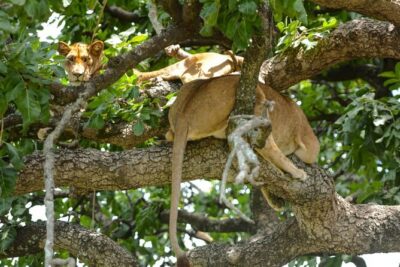
4 Days Group Joining Camping Safari to Tarangire Serengeti Ngorongoro Crater
Read our review →Browse the lists this tour appears in