
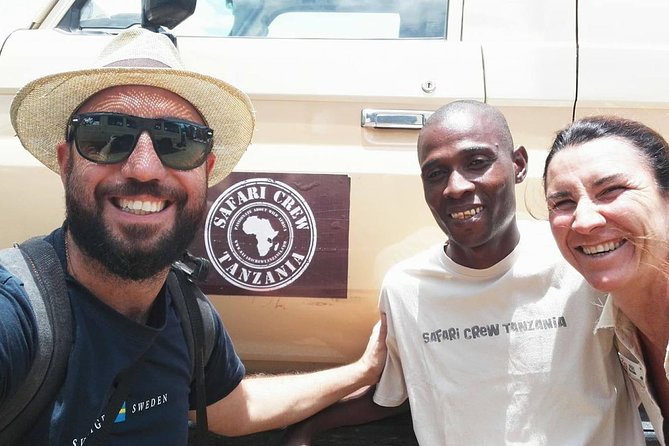
Review · ARUSHA
Tanzania safari with guide in Italian, the great Migration of the Serengeti
The main event here is the Great Migration, with huge herds of wildebeest and zebras moving through the Serengeti in search of grass and water. Between July and October, the route reaches the northern Serengeti and the Mara River, giving you a chance to see one of nature’s grandest movements.
I like the small group size, capped at six, and the fact that you can follow the trip in Italian. I also like the wide range of habitats: forest and marsh at Lake Manyara, open grassland in the Serengeti, volcanic scenery around Ngorongoro and Natron, and baobabs and elephants in Tarangire.
The main consideration is the pace. This is an ambitious eight-day circuit with long drives, early starts, rough tracks, and several park changes. It rewards curious, patient visitors more than anyone seeking a slow lodge holiday.
Key points to know before booking
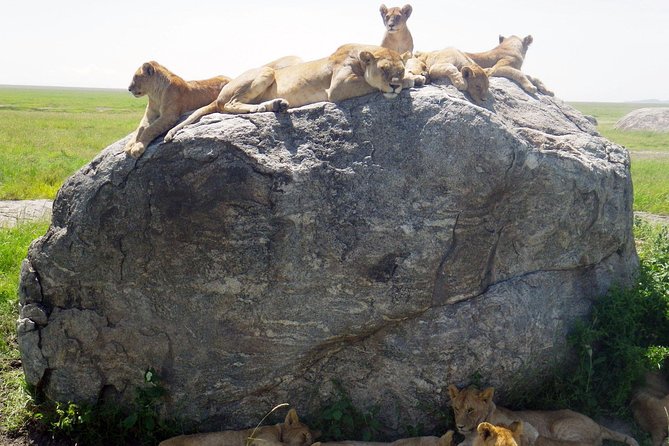
- The Mara River is the migration focus: The route reaches the northern Serengeti during the July to October migration period.
- Italian-speaking guiding: The company has used guides including Naftal, Jo, Mussa, Michael, Kahim, Omari, and Martini, though your assigned guide is not confirmed in advance.
- Small-group format: No more than six people share the safari vehicle.
- A full northern Tanzania circuit: You visit Lake Manyara, Ngorongoro Crater, Serengeti, Lake Natron, Oldoinyo Lengai country, and Tarangire.
- Most major costs are covered: Park fees, transfers, full board, bottled water on board, AMREF insurance, and taxes are included.
- The price reflects a private-feeling safari: At $4,100 per person, this is not a budget trip, but the small group and broad route add real value.
What $4,100 buys you on this Tanzania safari
At $4,100 per person, this is a serious safari investment. The price includes an eight-day 4×4 circuit, full board, park entry fees, transfers, water in the vehicle, AMREF insurance, and all listed taxes and fees.
International and local flights are not included. You also pay separately for the entry visa, drinks at the lodges, and personal extras. Those exclusions are normal for a safari, but you should add them to your trip budget before booking.
The strongest value comes from the scope of the route. You are not paying for one park with a quick game drive. You are crossing several major ecosystems, with the chance to see different animals and scenery each day. A group limit of six also gives the trip a more personal feel than a large coach-based tour.
The tradeoff is that the price does not guarantee a migration river crossing. Wildlife follows weather, water, and grazing conditions, not a printed schedule. The itinerary puts you in the right region at the right broad time, but nature makes the final decision.
More Safari Tours in Arusha
- Balloon Safari & Bush Breakfast in Serengeti – Miracle Experience
★ 5.0 · 1,646 reviews - 3 Days Serengeti & Ngorongoro Group Camping Safari
★ 5.0 · 574 reviews - 3-Day Classic Serengeti Safari
★ 5.0 · 263 reviews
Arrival in Arusha and the first practical details
Day one begins at Kilimanjaro International Airport or Arusha Airport. After entry formalities, you meet the guide and transfer to Arusha, a journey listed at about one hour.
This is a useful first day rather than a sightseeing day. You get settled, meet the person leading your safari, and prepare for the road ahead. Because airport pickup is included, you do not need to arrange your first transfer separately.
The booking process requires your mobile number, passport details, and arrival and departure flight information. Confirmation is sent within 48 hours, subject to availability. Ask for the exact accommodation plan before paying, since the supplied information identifies full board and lodge or tented-camp arrangements but does not list the properties by name.
Lake Manyara brings forest, marsh, and birds
The first full safari day goes to Lake Manyara National Park. The park is compact, but it packs several habitats into a small area beneath the Rift Valley escarpment.
You move through dense forest fed by springs, open grassland, and marsh near the lake. This variety is the point. In one day, you might look for elephants and giraffes, then shift your attention to monkeys, baboons, and birdlife.
Lake Manyara has about 380 recorded bird species. Pink flamingos gather here from December through March before moving toward Lake Natron between June and October. That timing matters if flamingos are high on your wish list.
The park is also a gentle introduction to safari. You are not yet facing the vast distances of the Serengeti, and the changing vegetation gives your guide plenty to explain. The day is listed at about eight hours, so expect a full outing rather than a quick stop.
Ngorongoro Crater packs wildlife into one dramatic bowl
On day three, you descend into Ngorongoro Crater for a game drive lasting about seven hours. The crater formed when an ancient volcanic cone collapsed about 2.5 million years ago, leaving a caldera roughly 16 to 20 kilometers across.
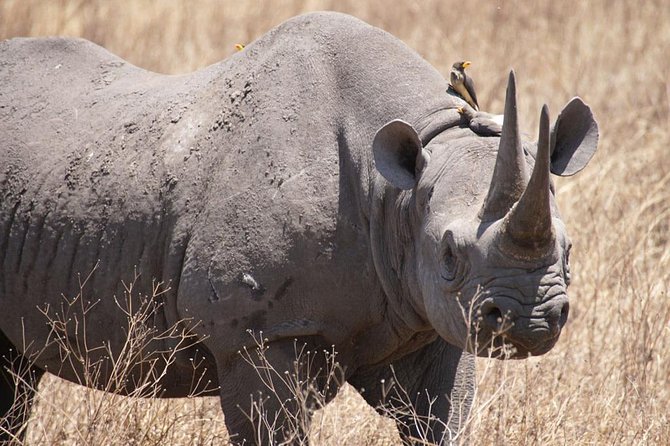
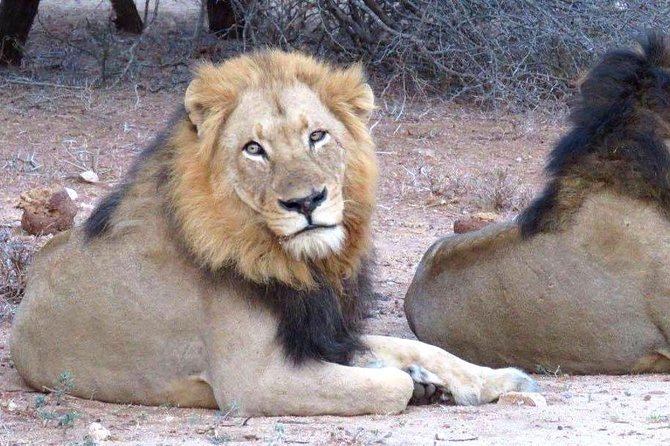
The crater floor is a natural enclosure with grassland, water, and woodland. More than 25,000 large animals live inside it, and the park contains most of the region’s typical species. Giraffes are the notable exception because the steep crater walls and available food do not suit them.
Ngorongoro is valuable for a simple reason: you can see a great range of animals in a relatively concentrated area. It also gives you a sharp change in elevation and scenery from the low plains. The crater rim reaches about 2,300 meters, so the air can feel cooler than you might expect.
The drawback is pressure on time and roads. A crater visit is a major highlight, but it is only one day in a packed itinerary. You will not have endless hours to wait for every possible sighting.
More Safari Tours in Tanzania
- 10-Day Serengeti Wildebeest Migration Safari from Arusha
★ 5.0 · 218 reviews - 4-Day Safari from Arusha: Tarangire, Serengeti and Ngorongoro
★ 5.0 · 173 reviews - 8 Day Spectacular Migration Serengeti mid -Range Tanzania Safari
★ 5.0 · 161 reviews - 7 Days Tanganyika Wilderness Safari
★ 5.0 · 159 reviews
The Serengeti is the heart of the trip
Day four takes you into the Serengeti, with the Seronera area listed as the main stop. This is where the safari begins to feel truly vast.
The Serengeti National Park covers about 15,000 square kilometers and forms only part of the larger Serengeti ecosystem. The area supports around 1.5 million wildebeest, about 300,000 zebras, and roughly 500,000 Thomson’s gazelles, along with lions, leopards, cheetahs, elephants, giraffes, ostriches, hippos, crocodiles, and more than 400 bird species.
Those figures explain why the Serengeti can feel different from the smaller parks. You are not simply driving from one animal enclosure to another. You are scanning huge open spaces, following tracks, and relying on the guide’s judgment.
The guide matters greatly here. Past Italian-language departures have included guides such as Jo, Naftal, Mussa, Michael, Kahim, Omari, and Martini. Names are not assigned in advance, but the company’s Italian-speaking guide service is central to the experience. A good guide can explain animal behavior, adjust the day around sightings, and make the long drives more meaningful.
The Mara River and the moving herds
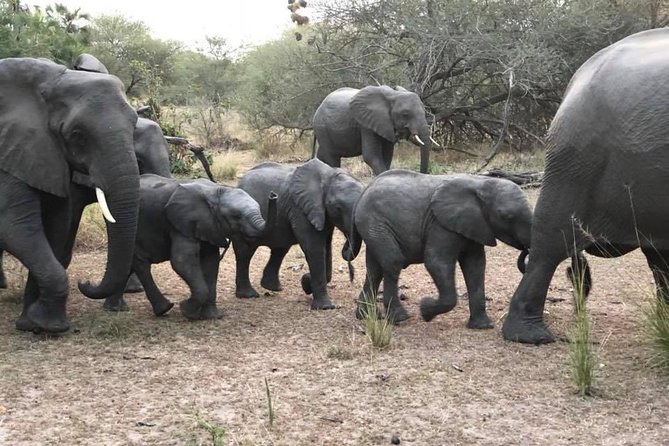
Day five focuses on the Mara River, the most important migration stop on this route. From July through October, wildebeest and zebras move through the northern Serengeti as they search for water and fresh pasture.
A river crossing is thrilling, but it is not guaranteed. Herds may gather for hours, turn back, cross at another point, or arrive after your vehicle has moved on. You should think of this day as a chance to be in migration country, not as a promise of a staged event.
That uncertainty is part of the value. The migration is a living process, not a performance. Even without a crossing, you may see enormous herds spread across the plains, with predators nearby and constant movement across the horizon.
The day is scheduled for about eight hours. Bring patience. A long wildlife day can involve periods of waiting, and the rough track may be tiring. In return, you get one of the strongest chances on this itinerary to see the Serengeti in its most famous season.
Lake Natron shows a harsher side of Tanzania
On day six, you take a final game drive in the northeastern Serengeti before leaving the park on a rough route toward Lake Natron. The journey itself is part of the experience, with broad views and a more remote feel than the main park roads.
Lake Natron is an alkaline lake in a Rift Valley depression. It measures about 50 kilometers from north to south and about 25 kilometers across. The surrounding area is dry, volcanic, and rugged, with a stark appearance that contrasts with the green grazing areas of the Serengeti.
The lake is known for pink flamingos, which feed on cyanobacteria in the water. The highest concentrations are generally associated with the dry season from June through October. That makes the timing useful for anyone hoping to see large numbers of flamingos, though exact conditions vary.
The Natron portion is not another standard game drive. It shifts the trip toward walking and scenery, so pack shoes suitable for uneven ground and be ready for a hotter, more exposed setting.
Oldoinyo Lengai country and the walking excursion
Oldoinyo Lengai is sacred to the Maasai people, who regard it as the home of the god Lengai. At almost 3,000 meters, it is the only volcano in the world known for natro-carbonatitic lava.
The itinerary does not include a summit climb. The 2007 and 2008 eruption made the route much harder, removing the temporary path and small resting areas, and organized climbs are no longer offered.
Instead, you take a walking excursion in the Engare area. This is a welcome change after several days seated in a 4×4. It also gives you a closer look at the volcanic terrain and local setting around Natron.
Do not expect a polished visitor center or an easy paved walk. The description points to a rugged, almost lunar setting. That is appealing if you want variety, but less so if your only goal is big mammals.
Tarangire finishes with elephants and baobabs
Day seven combines a morning walk near Lake Natron with a drive toward Tarangire National Park. A late-afternoon game drive follows, then day eight begins with one final early drive before the return to Arusha.
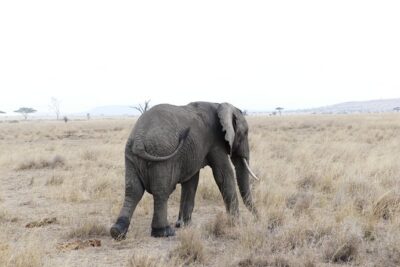
Tarangire covers about 2,600 square kilometers and has a character all its own. Large baobabs give the park its shape, while elephants gather around the Tarangire River and Silale Marsh. During the dry season, these water sources become especially important and draw many animals into the area.
You may also look for lions, leopards, buffaloes, wildebeest, zebras, antelopes, gazelles, and an exceptional range of birds. About 500 bird species are recorded here, including resident and migratory species.
I like Tarangire as a finale because it gives you a different visual rhythm after the Serengeti. Instead of endless grassland, you get giant trees, thicker vegetation, and a strong focus on elephants. The final morning drive is listed at about four hours, followed by lunch in Arusha and airport transfer.
Food, vehicles, and daily comfort
Full board is included, covering breakfast, lunch, and dinner for the listed safari days. Water is provided on board, but drinks at the lodges are extra.
The vehicle is a 4×4 safari vehicle, suited to park tracks and rough roads. The itinerary includes several long drives, including the transfer from the Serengeti area toward Lake Natron and the journey onward to Tarangire. You should be comfortable spending many hours seated and should expect dust and uneven roads.
The group maximum of six is a real advantage. It limits crowding inside the vehicle and gives each person a better chance to see out. It also matters for photography, conversation, and asking questions in Italian without competing with a large busload of people.
Past departures have included spotless accommodation, comfortable lodges, and tented camps, but the exact properties are not named here. Ask for those details before booking if room style, location, or amenities matter to you.
Who should book this safari
I would choose this trip if you want the major northern Tanzania parks in one well-organized route and prefer to travel with an Italian-speaking guide. It suits couples, families, honeymooners, and small groups who want full board and a planned safari rather than arranging each transfer themselves.
It can also work for families, since the company has handled trips with children and teenagers. Still, the pace is demanding. Eight days includes early drives, long road transfers, rough tracks, and limited downtime.
You should think twice if you need luxury details confirmed in advance, dislike long drives, or want a slow stay in one place. You should also understand that the Great Migration is seasonal and unpredictable. The route gives you a strong chance to reach the right area, not a guaranteed river crossing.
Should you book this Italian-language Tanzania safari?
Book it if your priorities are the Serengeti, the July to October migration season, an Italian-speaking guide, and a small group of no more than six. The route covers an impressive amount of northern Tanzania, and the included park fees, meals, transfers, water, and insurance make the price easier to assess.
Before committing, confirm your travel dates, accommodation names, guide assignment if possible, and the exact airport transfer plan. If you accept the long drives and the uncertainty of wildlife, this is a strong choice for a first Tanzania safari with a clear focus on the Serengeti and the Mara River.
FAQ
How long is the safari?
The safari lasts approximately eight days, beginning with arrival and transfer to Arusha and ending with a return to Arusha and airport transfer.
Where does the safari begin?
You can arrive at Kilimanjaro International Airport or Arusha Airport. Entry formalities are followed by a meeting with the guide and transfer to Arusha.
Is an Italian-speaking guide included?
Yes. The safari is designed for a small group of up to six participants with an Italian-speaking guide.
What is the maximum group size?
The maximum is six travelers.
Which parks and areas are included?
The route includes Lake Manyara, Ngorongoro Crater, Serengeti National Park, the Mara River area, Lake Natron, Oldoinyo Lengai country, and Tarangire National Park.
When does the route reach the northern Serengeti and Mara River?
The northern Serengeti migration period described for this route is from July through October.
Is a Great Migration river crossing guaranteed?
No. The itinerary takes you to the Mara River during the migration season, but wildlife movement and river crossings cannot be guaranteed.
What meals are included?
Full board is included. The listed package provides breakfast for eight days, lunch for seven days, and dinner for seven days.
Are park fees and transfers included?
Yes. Park fees, transfers, all listed taxes and fees, and water on board are included.
Are flights and visas included?
No. International and local flights, the entry visa, lodge drinks, and personal extras are not included.
Just added around Arusha
- Serengeti & Ngorongoro fly in safari★ 5.0 · 76 reviews
- 3 Days Private Safari – manyara, Ngorongoro & Tarangire★ 5.0 · 94 reviews
- serengeti, ngorongoro & tarangire 5days private tour★ 5.0 · 77 reviews
- 05 Days Tarangire, Serengeti, Ngorongoro and Lake Manyara★ 5.0 · 54 reviews
- day trip tarangire★ 5.0 · 46 reviews
- 5 days safari, hiking & culture (Serengeti & kilimanjaro)★ 5.0 · 27 reviews
- 03 days Serengeti and Ngorongoro Crater group (camping)★ 5.0 · 75 reviews
- 4 Days Private Safari – Tarangire, Serengeti & Ngorongoro Crater★ 5.0 · 28 reviews
Arusha National Park Tours, compared.
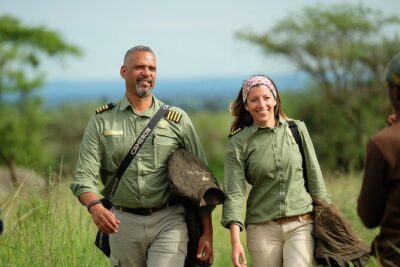
Balloon Safari & Bush Breakfast in Serengeti – Miracle Experience
Read our review →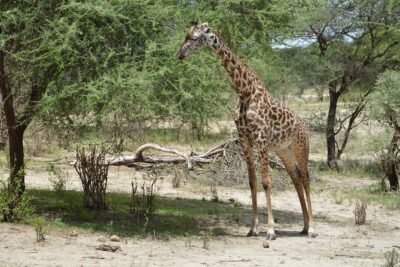
3 Days Serengeti & Ngorongoro Group Camping Safari
Read our review →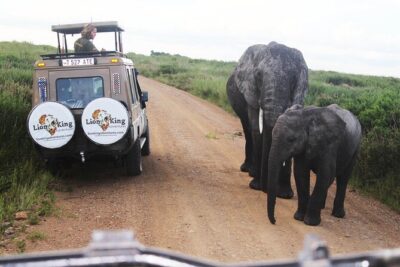
5-Day Highlights mid-Range Crater, Serengeti, Tarangire
Read our review →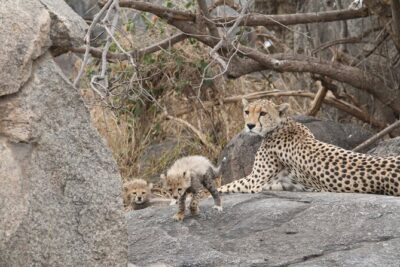
Private 6-Day Tarangire Manyara Crater and Serengeti with Mid-Range Lodges
Read our review →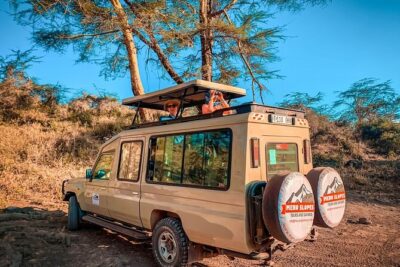
5 Days Camping Tarangire, Serengeti & Ngorongoro crater & Visiting Maasai
Read our review →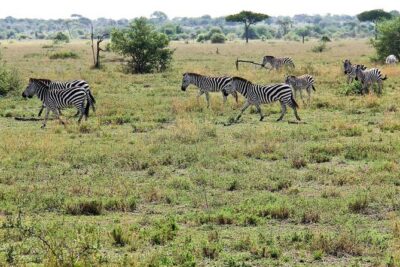
4 Days Join Group tour Tarangire Serengeti and Ngorongoro crater
Read our review →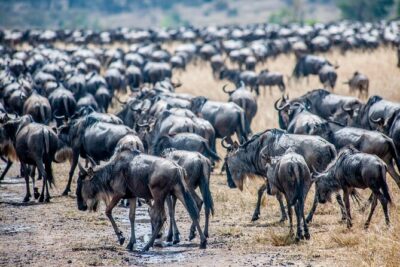
10-Day Serengeti Wildebeest Migration Safari from Arusha
Read our review →Browse the lists this tour appears in