
Review · SOFIA
Sofia: Rila Monastery & Boyana Church – Audio guided tour
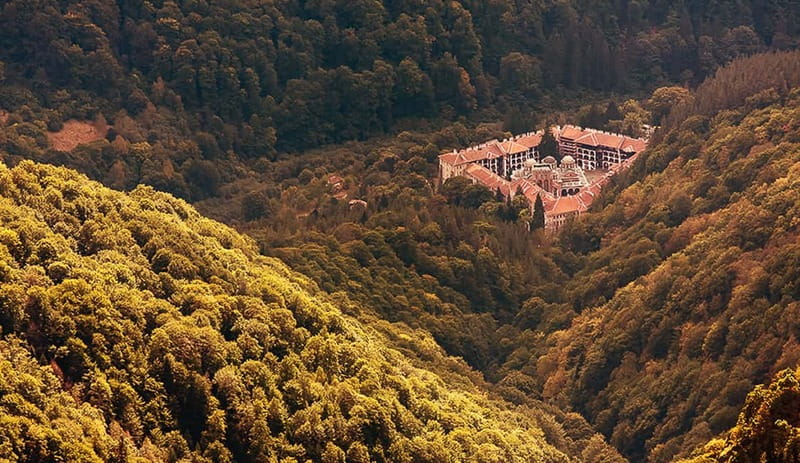
Rila Monastery is the main event here: a grand Orthodox complex tucked into Bulgaria’s pine-covered Rila Mountains, with striped arcades, bright domes, painted walls, and a quiet founder’s cave nearby. The setting feels remote and purposeful, not like a quick city museum stop.
I like the small group of up to seven and the easy multilingual audio guide, which lets you explore at your own pace without trying to hear a guide over a crowd. I also like the pairing with Boyana Church, where 1259 frescoes offer an intimate look at medieval Bulgarian art. The main drawback is time: about two hours at Rila Monastery and only 30 minutes at Boyana Church may feel tight if you want to see every museum room.
Key points at a glance
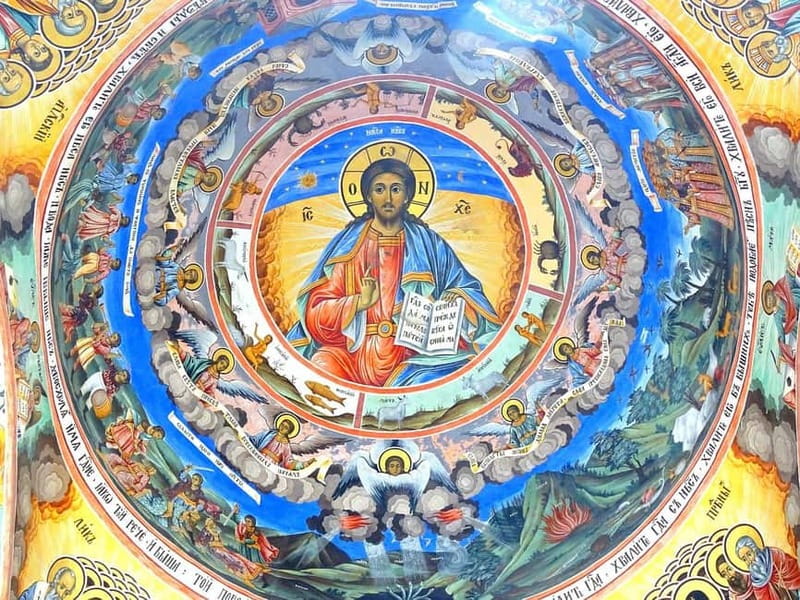
- Rila Monastery gives you Bulgaria’s grandest sacred stop, with domes, striped colonnades, icons, woodcarving, and Saint Ivan Rilski’s cave.
- Boyana Church is small but artistically important, especially for its 1259 wall paintings.
- The minibus carries no more than seven participants, so the ride should feel more personal than a large coach excursion.
- Audio commentary comes in six languages, including English, Spanish, Italian, French, German, and Russian.
- The two-hour Rila visit requires choices, since the monastery grounds, museums, church, and cave cannot all receive equal attention.
- Optional admission costs extra, with 8 leva for the Rila Monastery museums and 12 leva for Boyana Church.
Why these two monuments belong on one day
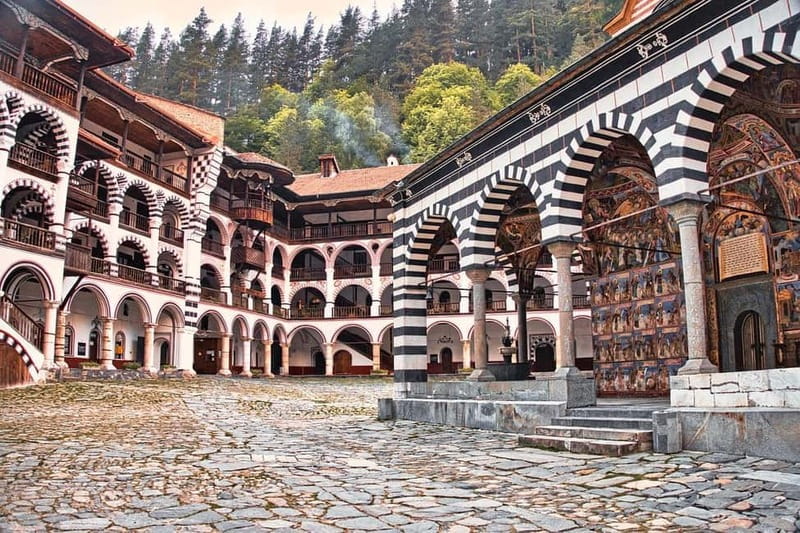
This outing links two very different religious sites. Rila Monastery is large, dramatic, and tied to Bulgaria’s national identity. Boyana Church is compact, restrained, and prized for its medieval paintings.
That contrast is useful. At Rila, you get the full sense of a functioning Orthodox monastery complex, even during a short visit. At Boyana, the focus narrows to architecture and wall painting. One stop gives you scale and mountain setting. The other gives you close access to art that rewards careful looking.
The tour lasts eight hours, but much of that day is spent traveling between Sofia and the Rila Mountains. That is the trade-off for seeing Rila Monastery without arranging your own transport. You get a direct route, a set departure, and a driver who handles the road while you listen to the audio material or watch the scenery.
A few more park trips around Sofia worth a look
- From Sofia: The Seven Rila Lakes Full-Day Self-Guided Tour
★ 4.9 · 33 reviews - Split: Self-Guided Plitvice Lakes Day Tour with Boat Ride
★ 4.9 · 1,519 reviews - Joshua Tree National Park Self-Guided Driving Audio Tour
★ 4.5 · 762 reviews
Starting near Ancient Serdika in central Sofia
The meeting point is on the sidewalk beside the Archaeological Park at Ancient Serdika. This is a practical central location, and the tour also offers two listed starting options connected with the ЦУМ, or Central Universal Store, meeting area.
Check the exact meeting instructions carefully when you book. The host or greeter speaks English, while the sightseeing commentary is supplied through the audio guide. That distinction matters: you can expect help with the basic operation of the day, but the historical explanation comes mainly through your selected language track.
The vehicle is a comfortable minibus, with space for a maximum of seven participants. That small size is one of the tour’s strongest features. It can feel almost private when only two or six people book, as happened on some departures. One participant described having the whole minivan to the group, while another had a private-feeling outing with only one other person.
If you are bringing children, write this in your booking details. Every child must have a seat on the bus. This is not a lap-child arrangement.
Boyana Church and its remarkable painted walls
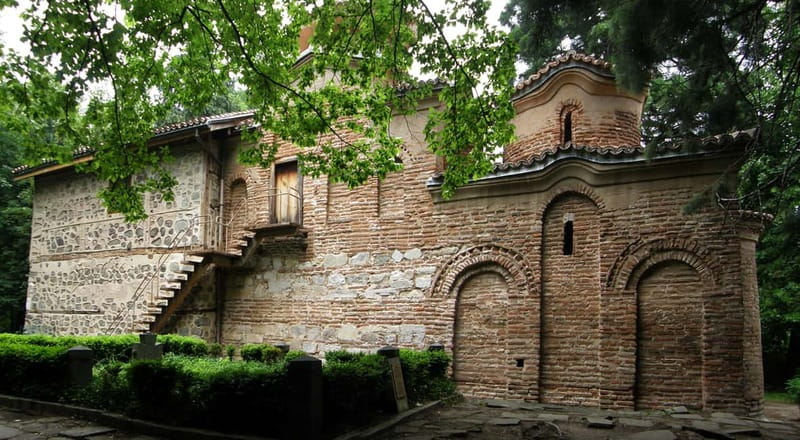
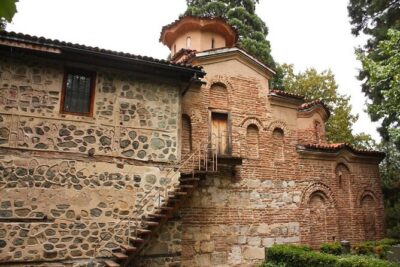
Boyana Church comes first, with about 30 minutes set aside for the visit. The church sits on the outskirts of Sofia and is protected as a UNESCO World Heritage Site. Its Greek cross plan, domes, and Byzantine design give it a different character from Rila’s open courtyards and grand arcades.
The real reason to pay close attention is inside. The walls carry paintings from several periods, including the 11th, 13th, 15th, 16th, 17th, and 19th centuries. The 1259 frescoes are the artistic high point. Their figures and faces are often discussed as an early expression of a style that resembles the Renaissance, even though the paintings came much earlier.
Thirty minutes is enough for a focused visit, but not for a slow one. You will need to move in with a plan: listen to the audio explanation, examine the best-known frescoes, and note the layers of painting rather than trying to study every image at length.
The entrance fee is not included. Admission is listed at 12 leva per person, paid on site, and a participant reported that Boyana Church accepted cards. Bring a little extra time for the entry process, since your allotted sightseeing period is short.
The clothing rules are strict and worth taking seriously. Shorts, short skirts, sleeveless shirts, and see-through clothing are not allowed. Long pants are specifically recommended. Comfortable shoes are also a good idea, since this is a full-day outing with walking at both monuments.
The road to Rila Monastery
After Boyana Church, the minibus continues toward the Rila Mountains. The journey is a major part of the day, but it is also what makes Rila Monastery feel so different from Sofia’s urban sights. The monastery lies among dense pine forests, far from the capital’s streets and central buildings.
The audio guide helps fill the travel time and gives you context before arrival. You can choose English, Spanish, Italian, French, German, or Russian. The audio is described as clear, and one Italian-speaking participant found the Italian version easy to follow.
The driver may not provide a long live lecture. Basic English communication is available, and one participant specifically appreciated a patient driver who was on time and spoke enough English for practical conversation. That arrangement suits you if you prefer independence rather than a running commentary from a guide.
The road portion also explains the eight-hour length. This is not a quick half-day outing squeezed between city attractions. You are trading a full day for access to Bulgaria’s most important monastery without having to manage the route yourself.
More Audio Guides in Sofia:
- Ultimate Acadia National Park Self-Guided Driving Audio Tour
★ 4.0 · 521 reviews - Arches National Park Self-Guided Driving Audio Tour
★ 4.5 · 288 reviews - Self-Guided GPS Audio E-Bike Tour Hawaii Volcanoes National Park
★ 4.5 · 131 reviews - Bryce Canyon National Park Self-Guided Driving Audio Tour
★ 4.5 · 71 reviews
Rila Monastery’s courtyards, domes, and arcades
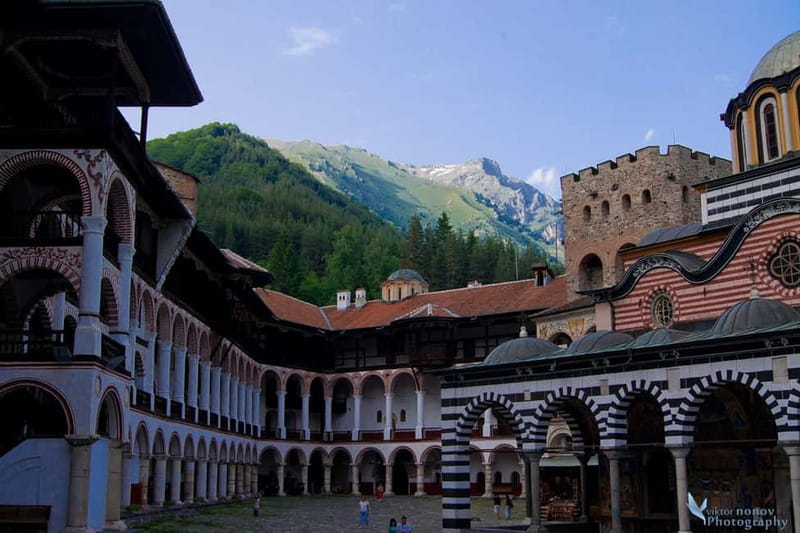
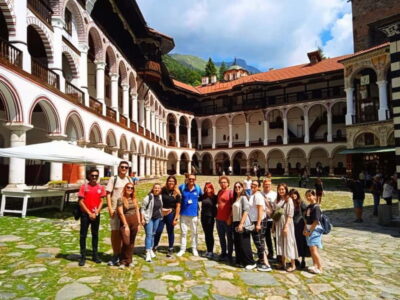
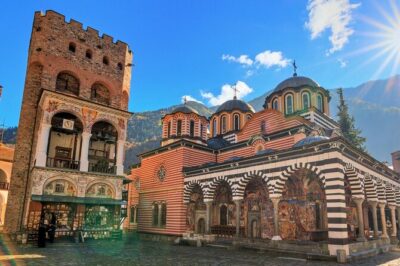
Rila Monastery is Bulgaria’s largest and most important Orthodox cloister. UNESCO added it to the World Heritage List in 1976, but its importance goes beyond the official designation. Since the Middle Ages, the monastery has been closely tied to Bulgarian religious and national identity.
Your first impression comes from the central complex. The domes, painted surfaces, and striped colonnades create a bold courtyard scene. The design is decorative without feeling delicate. Dark and light bands on the arcades give the buildings a strong rhythm, while the domes draw your eye upward.
You have about two hours here for sightseeing, walking, and free time. That is enough to see the main courtyard, enter the church if it is open as scheduled, take in the painted details, and visit selected museum areas. It is not enough for a leisurely examination of everything.
I would use the time in this order:
- Begin with the central courtyard and the main church exterior.
- Look closely at the painted arcades and domes before going inside.
- Visit the church interior and focus on the icons and wall decoration.
- Choose the museum areas that interest you most.
- Leave time for Saint Ivan Rilski’s cave if it is part of your planned route.
The complex is a place for looking upward and then slowing down. The strongest details are not always the largest ones. You might find a carved wooden element or a small painted icon more memorable than the broad courtyard view.
Saint Ivan Rilski’s cave
The monastery’s founder, Saint Ivan Rilski, lived and was buried in a cave near the monastery. He is revered as a miracle worker, and the cave is considered sacred.
This stop adds a personal layer to the grand buildings. Instead of seeing only a monumental institution, you get a reminder of the solitary religious life that inspired the monastery. The contrast is sharp: the complex is large and highly decorated, while the cave is linked to a much simpler existence.
Because the visit to Rila is limited to two hours, ask the driver or use the audio instructions to understand how much time the cave requires. Do not let the museum absorb your entire visit if reaching this sacred site matters to you.
Museum tickets and what the price really covers
The tour costs $58 per person. For a full-day trip from Sofia in a small minibus, that is a reasonable package if you value convenience and do not want to rent a car or arrange separate transport.
The price includes transport and the audio guide. It does not include the optional entrance fees. The Rila Monastery museums cost 8 leva per person, paid on site, while Boyana Church costs 12 leva per person. One useful detail is that the monastery itself may be free to enter, with the museum requiring the ticket. Another participant reported that the museum accepted cash only, so carry Bulgarian currency even if you plan to use a card elsewhere.
The extra fees are modest, but they affect your choices. If you want only the monastery courtyard and church areas, you may spend less. If you want the museum displays of icons and woodcarving, budget for the 8 leva ticket. At Boyana, the church admission is the key expense because the interior frescoes are the main reason for the stop.
The value here is strongest for people who want a straightforward day trip with transport included. It is less appealing if you want a long, unhurried museum visit or a live historian beside you at every step.
The audio guide and the small-group setup
The audio guide gives you control. You can pause, replay, and move at your own pace, which is helpful in a church where you may want to stand quietly in front of a fresco rather than keep up with a group.
It also makes the tour accessible to people who do not want English commentary. The six choices are English, Spanish, Italian, French, German, and Russian. Clear sound matters in a place where the visual details compete for your attention, and the audio format avoids the problem of hearing a guide in a crowded courtyard.
The small group adds flexibility. With no more than seven people, boarding and leaving the minibus should be less cumbersome than on a large coach. The experience may even feel private when demand is low. A full minivan, however, would offer less personal space than a two-person departure, so keep your expectations realistic.
This setup is best for you if you enjoy self-guided sightseeing but still want the route and transport organized. If you expect a guide to explain every icon in person, this may feel too hands-off.
Practical limits you should know before booking
This tour is not suitable for wheelchair users. The clothing rules also make it less casual than a standard sightseeing day. Wear long pants and a sleeved top, and choose comfortable shoes for walking around the monastery grounds and reaching the cave area.
Smoking is not allowed, and pets are not permitted except for assistance dogs. These rules are especially relevant because the tour lasts much of the day and there are long stretches between stops.
The two-hour stop at Rila is the biggest planning issue. One participant felt that two hours was a little short to enjoy the monastery without rushing. I agree that you will need to choose between a broad overview and a detailed museum visit.
The 30-minute Boyana stop has the same limitation in a different form. The church is small, so the time can work, but you need to focus. If you like to photograph every architectural detail or sit quietly with the frescoes, you may want a longer independent visit on another day.
Free cancellation up to 24 hours before departure and the option to reserve now and pay later make the booking less risky. Still, confirm the starting time and meeting point before the day of departure, since availability determines the exact schedule.
Who will enjoy this Sofia day trip
I would recommend it to you if you have limited time in Sofia and want to see two major Bulgarian sacred monuments in one organized day. It is especially suitable for solo visitors, couples, and small families who prefer a minibus to a large tour coach.
The tour also fits independent-minded people. You can listen in your own language, choose what to inspect, and avoid being tied to a long live lecture. The small group and comfortable transport add ease without turning the day into a fully scripted show.
You may want another option if you need extensive wheelchair access, dislike long road transfers, or want a slow museum day. You should also think twice if a two-hour Rila visit feels too short. The tour gives you a strong first look, but it does not offer unlimited time.
Should you book it?
Book this tour if your priority is efficient access to Rila Monastery and Boyana Church, with a small vehicle, clear audio in your language, and little planning on your part. The strongest points are the intimate group size, the excellent pairing of a grand monastery with a small fresco-filled church, and the chance to visit Saint Ivan Rilski’s cave.
Before paying, set aside extra money for the entrance fees and bring cash for the Rila museum. Wear long pants, arrive at the Ancient Serdika meeting point early, and accept that two hours at Rila means making choices.
For a first visit to Sofia, I think the $58 price offers solid value. You see two major monuments in one day and avoid the trouble of arranging mountain transport yourself. Just book it for a focused overview, not an unhurried study of every room and painting.
FAQ
How long does the tour last?
The tour lasts about eight hours, including transport from Sofia to Boyana Church, onward to Rila Monastery, and back to Sofia.
Where does the tour start?
The meeting point is on the sidewalk beside the Archaeological Park at Ancient Serdika. Two listed starting options are connected with ЦУМ, the Central Universal Store, and the Serdika meeting point.
Which languages are available for the audio guide?
The audio guide is available in English, Spanish, Italian, French, German, and Russian.
Are entrance fees included?
No. The Rila Monastery museum costs 8 leva per person, and Boyana Church costs 12 leva per person. These fees are optional and paid on site.
How much time do you get at each monument?
The scheduled visit to Boyana Church lasts about 30 minutes. You get about two hours at Rila Monastery for sightseeing, walking, and free time.
Is the tour suitable for wheelchair users?
No. The experience is not suitable for wheelchair users. You should also wear long pants and avoid shorts, short skirts, sleeveless shirts, and see-through clothing.
Just added around Sofia
- Sofia: Seven Rila Lakes Snowshoe Walk & Thermal Spring Pools★ 3.9 · 79 reviews
- From Sofia: Struma River Rafting and Rila Monastery Visit★ 4.5 · 51 reviews
- Seven Rila Lakes Day Trip from Sofia Guided Hike Lunch & Spa★ 5.0 · 21 reviews
- Seven Rila Lakes – Full Day Hiking Trip in the Rila Mountain★ 4.9 · 108 reviews
- Rila Monastery and Boyana Church: Small Group Tour★ 4.8 · 39 reviews
- From Sofia: The Seven Rila Lakes Full-Day Self-Guided Tour★ 4.9 · 33 reviews
- From Sofia: Rila Monastery Day Tour★ 4.6 · 162 reviews
- From Sofia: Rila Monastery and Optional Museum, Cave or Spa★ 4.6 · 270 reviews
Sofia National Park Tours, compared.
Must-See Rila Monastery & Boyana Church Day Tour
Read our review →
7 Rila Lakes and Rila Monastery Extended Trip
Read our review →
Rila Monastery & Optional St. Ivan Cave Day Tour
Read our review →Browse the lists this tour appears in