
Review · BIG ISLAND
Self-Guided GPS Audio E-Bike Tour Hawaii Volcanoes National Park
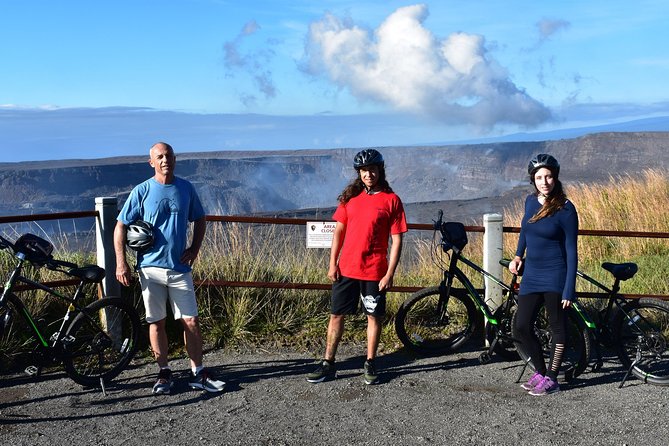
The best part of this self-guided e-bike tour is the freedom. You ride from the Volcano area into Hawaii Volcanoes National Park, stopping when a crater, steam vent, fern forest, or photo view catches your eye. Most of the route is paved, level, or downhill, so you cover far more ground than you would on foot without being boxed into a coach schedule.
I like the easy access to places cars cannot reach, especially Keanakakoi Crater Overlook and its two-mile bike trail. I also like the practical setup: secure parking, a restroom, helmet, lock, bike orientation, and live staff support are included. The main drawback is the technology. The GPS map and audio app require your own working smartphone, and the audio may take some fiddling to open while the map drains battery quickly.
Key points to know before you book
- Mostly downhill and paved: This is a relaxed ride, but you still need to steer, balance, shift, and handle both paved and gravel surfaces.
- Bike-only viewpoints: The route reaches areas near Keanakakoi Crater that are not open to ordinary car traffic.
- Weather changes fast: Kīlauea’s summit sits around 4,000 feet, where it can be chilly, windy, misty, or rainy even when the coast feels warm.
- Your phone is essential: Download and prepare the GPS app before arrival, then bring a fully charged phone and, ideally, a backup battery.
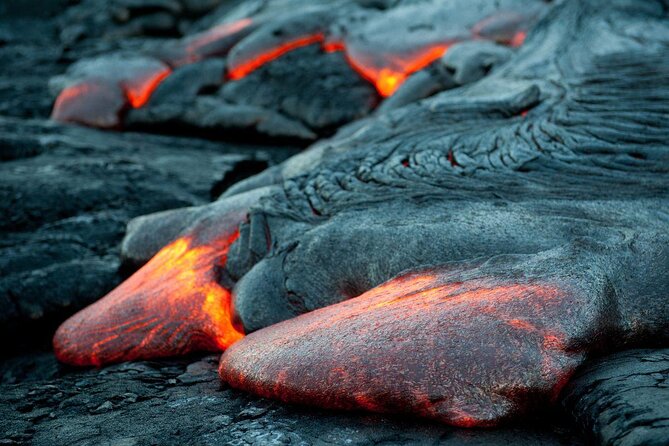
- Active lava is not guaranteed: Volcanic activity changes, and lava views depend on current conditions and park access.
- Good value for independent explorers: At $159 per person, the tour costs more than a simple bike rental but includes the e-bike, gear, route support, and a full half-day in the park.
Why an e-bike works so well at Kīlauea
Hawaii Volcanoes National Park covers a large area, and the main sights are spread along roads, crater rims, forest paths, and volcanic fields. Walking between them would take too long for most people, while driving can mean dealing with crowded parking areas and a less direct connection to the surroundings.
The e-bike solves both problems. You can pedal when you want exercise and use electric assistance when the road tilts upward or your legs need a break. The route is designed to make the ride manageable, but this is not a completely effortless cruise. You must be comfortable steering and balancing, and the supplied information specifically advises against booking if you are a beginner cyclist.
You start at Bike Volcano on Old Volcano Road, about a mile from the park’s bike trail entrance. The morning pickup is listed for 9:30 a.m. An afternoon departure at 12:30 p.m. is available with a minimum of four riders. The full experience takes about four and a half hours, leaving time for dinner, another park stop, or a drive elsewhere on the island.
The ride is private to your group, but the route itself is self-guided. Staff provide the equipment briefing and safety talk, then the GPS app guides you through the park. This is a good fit if you like choosing your own pace. Stop for ten minutes or thirty. Take a short walk. Skip a viewpoint. You are not waiting for a group to finish every photo stop.
More Volcano and Crater Tours in the USA
- Hilo Shore Excursion: Volcanoes National Park & Black Sand Beach
★ 4.5 · 2,338 reviews - Big Island: Fat Tire E-Bike Tour through Volcanoes National Park
★ 5.0 · 546 reviews - Big Island, Hawaii: Volcanoes National Park Safari
★ 4.5 · 545 reviews
Getting set up at Bike Volcano
The staging area has a canopy, parking, restrooms, and space for the equipment orientation. You receive an electric comfort hybrid bicycle, helmet, and lock. Staff also provide live help for safety and park questions during the day.
Arrive ready to ride rather than expecting a long equipment-shopping session. Give the operator your name and height when booking so the right bike size can be prepared. One useful tip from the experience is especially important for taller riders: request a large frame clearly before setting off.
You also need a credit card and identification for the $1,500 equipment deposit authorization per party. That is not the price of the tour, but it is a substantial hold to understand before you arrive.
Your phone must be fully functional, charged, and able to use the GPS audio app. Download the app before reaching the meeting point if possible. The map is useful, but it can drain a phone battery quickly, and the audio may open through a separate link at some stops. A portable charger is a sensible addition, even though it is not listed as included.
The company can rent a backpack for $5. Rain jackets are not included, although one may be purchased at the Kīlauea General Store. Water is also available for purchase there. Bring your own bottle if you prefer not to make an extra stop.
Riding through the rainforest and crater country
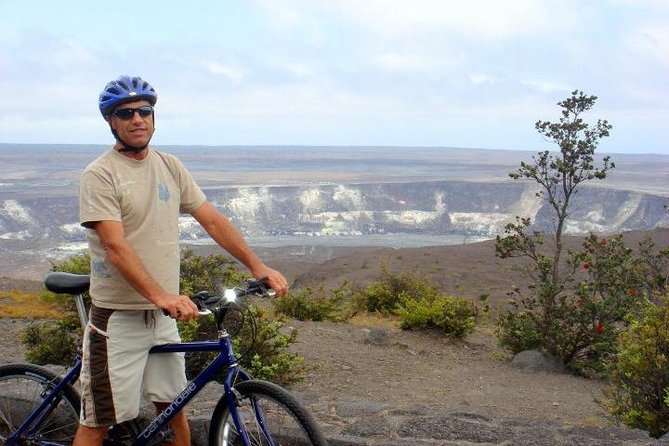
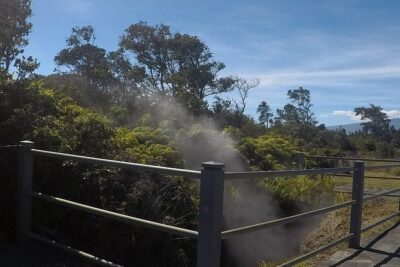
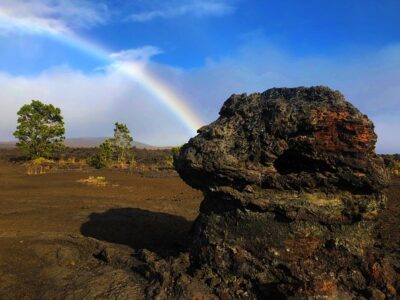
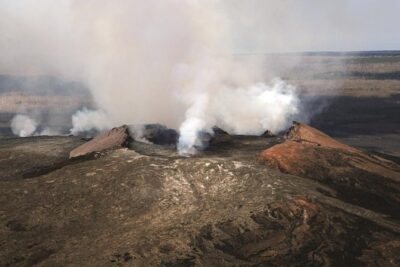
After the short ride to the park entrance, you begin moving through a striking series of changes. Native Hawaiian fern forest gives way to steaming vents, exposed lava, crater views, and broad volcanic fields. On a bike, you feel the temperature shift around steam vents and notice details that are easy to miss from a car window.
The GPS narration covers geology, Hawaiian mythology, local ecology, and cultural connections to Pele. That added context matters here. A black volcanic field can look empty at first, but the audio helps you understand how lava moved, cooled, fractured, and slowly made room for plants.
The route follows scenic, less-used trails along the crater rim. Some of these paths are closed to most guided vehicle tours, which gives the bike format a real advantage. You can pause without searching for a parking space, secure the bike, and walk a short distance to a viewpoint.
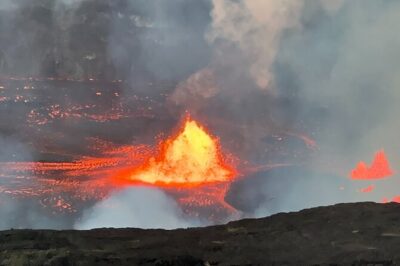
The park’s volcanic activity changes frequently. Depending on the current eruption and access rules, you might see steam, glow, lava fountains, or active lava flowing toward the sea. The advertised possibility of fountains higher than 1,000 feet is dramatic, but it should never be treated as a promise. Check current conditions, closures, and viewing rules before your visit.
Thurston Lava Tube and Nāhuku Crater
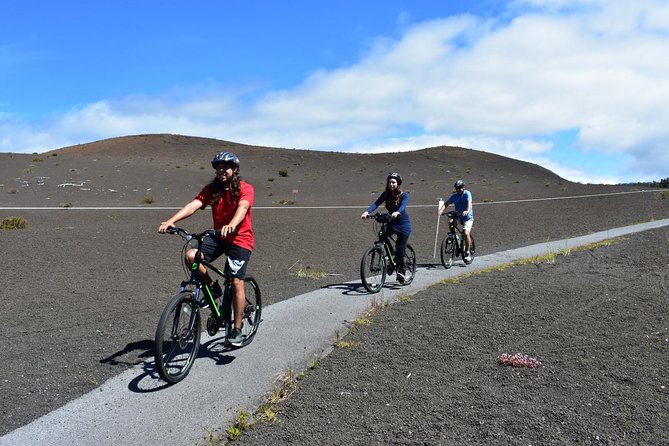
One of the most atmospheric stops is Nāhuku, also called Thurston Lava Tube. The visit begins with a short 15-minute loop walk through native rainforest and around a roughly 500-year-old pit crater filled with tall hāpuʻu ferns and other plants.
This is a good place to slow down. The first GPS audio lecture explains the plant life and cultural meaning of the area, then a second segment accompanies you into the lava tube. The cave was formed when the outside of a lava flow cooled while molten rock continued moving below. Once the flow drained, it left a tunnel with smooth walls and an unusual, cool interior.
The walk is short, but it is not part of the cycling itself, so wear proper shoes. Closed-toe shoes are required for the tour. The lava tube is a well-known park attraction and can feel busier than the quieter bike trails, but the rainforest approach makes it more than a quick photo stop.
More Volcano and Crater Tours in Big Island:
- Small-Group Big Island Tour: Hawaii Volcanoes National Park and Kona Coffee Farm
★ 5.0 · 343 reviews - Volcano National Park Adventure From Kona
★ 5.0 · 339 reviews - Private Tour: Hawaii Volcanoes National Park Eco Tour
★ 5.0 · 276 reviews - Volcano National Park Adventure from Waikoloa
★ 5.0 · 216 reviews
Kīlauea Visitor Center for context and safety
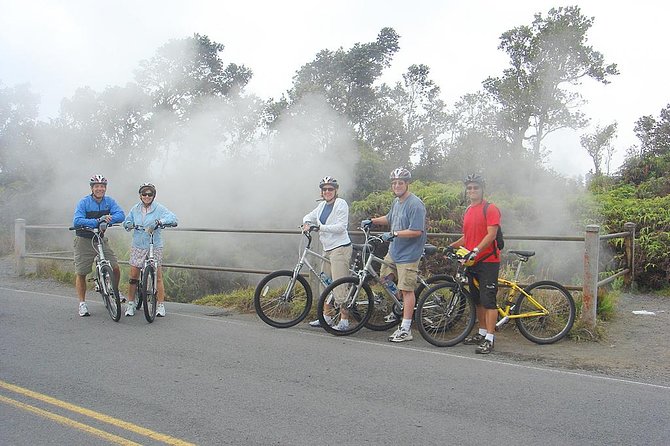
The Kīlauea Visitor Center is a useful pause in the middle of the ride. Exhibits explain volcanic activity, native wildlife, and the Hawaiian cultural connection to Pele. Maps and displays help you make sense of the terrain you have already crossed.
Rangers can provide current safety information and advice about park conditions. This matters because volcanic areas change, and a route or viewpoint that was open earlier may be restricted later. The center also has a bookstore and gift shop, useful if you want a map, a field guide, or a small reminder of the park.
Allow about 15 minutes here in the listed plan, though your self-guided format gives you some flexibility. If the weather turns wet, this is also a practical place to regroup before continuing.
Keanakakoi Crater Overlook and the bike-only advantage
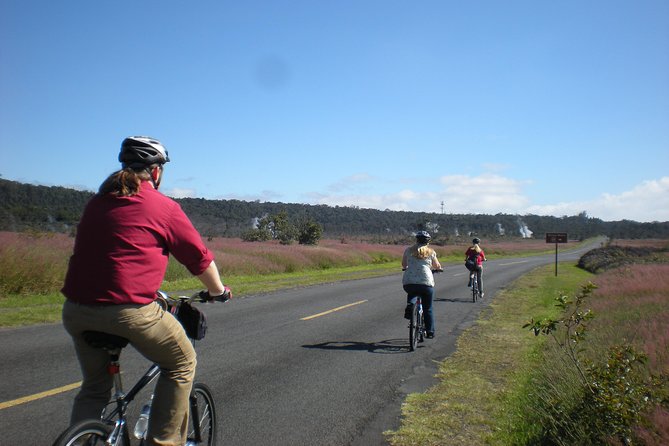
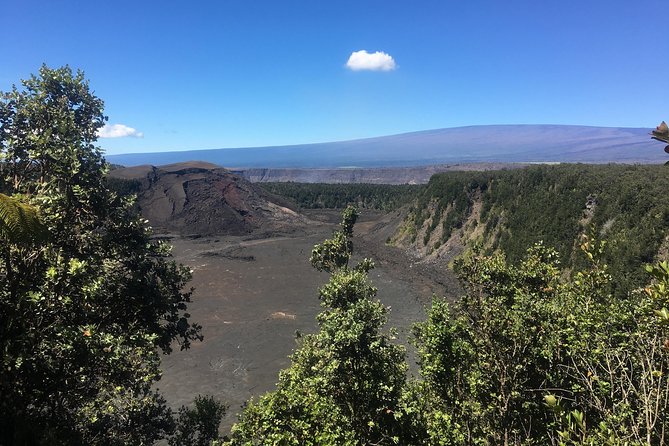
The strongest reason to choose this experience over a standard driving visit is the Keanakakoi section. The overlook is reached by bike or on foot, not by ordinary car traffic, and the route includes about two miles through koa and ʻōhiʻa forest.
From the overlook, you can see toward sacred Halemaʻumaʻu Crater, the volcanic home associated with Pele. The route also approaches a major lava viewing area. Again, what you see depends on the volcano’s current activity, but the access itself is the special part. You can get closer to the volcanic setting without spending much of the day walking there.
The GPS narration adds geology, ecology, and stories about ancient Hawaiian basalt quarrying. This is where the audio guide earns its place. Without context, you are looking at a powerful but unfamiliar setting. With the explanation, the forest, crater, rock, and steam become connected parts of one active volcanic system.
Follow every posted park rule. Bike paths and walking trails are not interchangeable, and park staff may remind cyclists where bikes are allowed. Stay on permitted routes, control your speed, and give walkers room.
Weather, clothing, and riding comfort
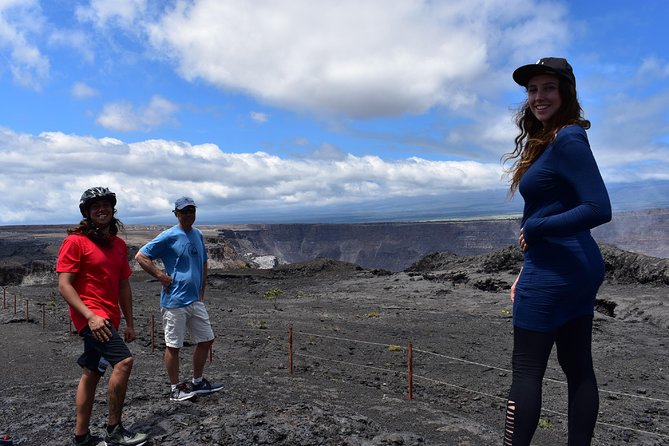
Kīlauea’s summit can be 12 to 15 degrees cooler than sea level. Conditions may be rainy, windy, misty, and chilly at any time of year, even if your morning began in sunny Hilo.
Wear layers that you can remove as the temperature shifts. A suggested combination is a T-shirt, shorts or long pants, and a jacket or sweatshirt. Closed-toe shoes and protective eyewear are required. Add sunscreen, a hat, and a camera.
Wet pavement deserves extra care. One past guided outing had crashes after rain made the road slick, which is a useful warning for every cyclist here. Keep your speed down on wet curves, brake early, and do not assume an electric bike handles like a dry-road bicycle.
The tour is not recommended for anyone weighing over 270 pounds, and riders must be at least 15 years old. You should have moderate physical fitness and enough cycling skill to manage gravel and paved surfaces. The electric motor reduces effort, but it does not replace balance or attention.
Price, park fees, and what you receive
The tour costs $159 per person. You also pay the Hawaii Volcanoes National Park entrance fee separately, listed here as $15 per person. That makes the basic outing closer to $174 per person before optional purchases such as a backpack or rain jacket.
That is not a bargain-priced bike rental. The value comes from the full setup: a quality e-bike, helmet, lock, parking, restroom access, equipment instruction, GPS route, audio content, and live support. You also save time by reaching bike-accessible viewpoints without hunting for a parking place.
I would consider the price reasonable if you want to see a broad section of the park in half a day and prefer independent exploring. It is less compelling if you already have a car, plan to visit only the visitor center and Thurston Lava Tube, or want a hard cycling workout. The route is intentionally fairly gentle, with most of the riding downhill or level.
The tour has a 4.7 rating from 131 ratings, with 92 percent recommending it. The strongest praise centers on comfortable bikes, easy handling, the chance to avoid parking trouble, and the unusual views reached by bicycle. The main cautions are the smartphone setup, battery drain, changing weather, and the fact that the audio interface is not always as simple as the ride itself.
Who should book this volcano bike tour?
Book it if you enjoy being outside, can ride a bicycle confidently, and want more independence than a conventional guided excursion provides. Families with older children, couples, and active adults can all make good use of the format, provided every rider meets the age, weight, and cycling requirements.
It is especially useful for anyone with only half a day in the park. You can see rainforest, a lava tube, steam vents, crater country, and bike-only routes without spending the whole day walking between distant sights.
Choose another option if you dislike using phone apps, are uncomfortable cycling in rain, or expect a strenuous downhill-to-sea ride. Despite the dramatic title, this is primarily a relaxed park exploration, not a technical cycling challenge. Also remember that lava activity is never guaranteed.
If you book, prepare the phone first, arrive with layers and rain protection, request the correct frame size, and leave room in your schedule for pauses. Those small steps make the experience much smoother.
FAQ
Where does the e-bike tour start and finish?
It starts and ends at Bike Volcano, 19-3972 Old Volcano Road, Volcano, Hawaii 96785. The activity returns to the same meeting point.
What time does the tour begin?
The morning tour begins at 9:30 a.m. An afternoon departure is listed for 12:30 p.m., and the afternoon option requires at least four riders.
How long does the experience take?
The complete experience lasts approximately four hours and 30 minutes.
Is the national park entrance fee included?
No. The listed park entrance fee is $15 per person and must be paid separately.
Do I need to bring a smartphone?
Yes. A fully functioning smartphone is required for the GPS audio app. You should arrive with the app prepared and enough battery for the ride.
What equipment is included?
You receive an electric comfort hybrid bicycle, helmet, and lock. Secure parking, restroom access, a covered staging area, safety instruction, the GPS audio app, and live operator assistance are also included.
What should I wear?
Wear layered clothing, closed-toe shoes, and protective eyewear such as sunglasses or prescription glasses. Bring sunscreen, a hat, and rain protection because summit weather can be cool and wet.
Is the tour suitable for beginner cyclists?
It is not recommended for beginner cyclists. You need to steer, balance, shift, and ride on both paved and gravel surfaces. Riders should have moderate physical fitness.
What is the cancellation policy?
You can cancel at least 24 hours before the start time for a full refund. If poor weather cancels the experience, you can choose another date or receive a full refund.
More E-Bikes in Big Island
- Monterosso al Mare: Cinque Terre National Park E-Bike Tour
★ 4.8 · 214 reviews - eBike and Hike Banff to Johnston Canyon small group guided program
★ 5.0 · 197 reviews - Bryce Canyon E-bike Tour
★ 5.0 · 147 reviews - Lanzarote E-Bike Tour: Volcano Craters & Scenic Vineyards
★ 4.9 · 140 reviews
More Cycling Tours in Big Island
- Fat Tire E-Bike Rental – Volcanoes National Park
★ 4.5 · 26 reviews - Self-Guided Ebike Tours of Acadia National Park Carriage Roads
★ 5.0 · 427 reviews - Guided Ebike Tour of Acadia National Park Carriage Roads
★ 5.0 · 408 reviews - Tenerife: Guided Quad Bike Tour to Teide National Park
★ 4.7 · 263 reviews
Just added around Big Island
- Hawaii Volcanoes National Park Experience Departing From Maui★ 4.5 · 30 reviews
- Private Tour: Hawaii Volcanoes National Park Eco Tour★ 5.0 · 276 reviews
- Private Guide Meet In Hawaii Volcanoes National Park★ 5.0 · 181 reviews
- Volcano National Park Adventure from Waikoloa★ 5.0 · 216 reviews
- Big Island – Hawaii Volcanoes National Park Driving Tour★ 4.0 · 95 reviews
- Hawaii Volcanoes National Park Self-Guided Driving Audio Tour★ 4.5 · 29 reviews
- Hawaii Volcano National Park Shore Excursion★ 5.0 · 117 reviews
- Hilo Cruise Ship Excursion: Volcanoes National Park Rainbow Falls★ 4.5 · 130 reviews
Big Island National Park Tours, compared.
Hilo Shore Excursion: Volcanoes National Park & Black Sand Beach
Read our review →
Big Island, Hawaii: Volcanoes National Park Safari
Read our review →
Small-Group Big Island Tour: Hawaii Volcanoes National Park and Kona Coffee Farm
Read our review →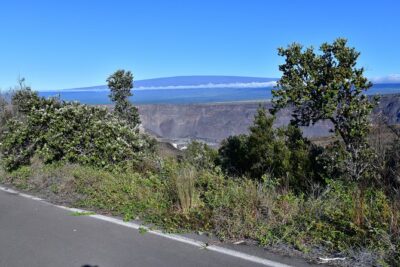
Private Tour: Hawaii Volcanoes National Park Eco Tour
Read our review →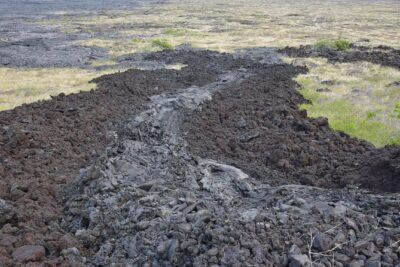
Hilo Cruise Ship Excursion: Volcanoes National Park Rainbow Falls
Read our review →Browse the lists this tour appears in