
Review · USA
Yellowstone Winter Wildlife Safari from Bozeman
Northern Yellowstone in winter is a wildlife theater of wide valleys, snowy peaks, steaming springs, and animals easier to spot against the pale ground. This 10 to 11 hour safari from Bozeman puts you in the hands of a naturalist guide who knows where to pause, how to use a spotting scope, and how to explain what you are seeing.
I like the small maximum group of eight people, which gives you room to ask questions and share the optics without fighting a busload of sightseers. I also like the care put into the food: local snacks, drinks, and a seasonal picnic lunch make a long day on the road much easier. The catch is the early start, long drive, and $20 Yellowstone entrance fee that comes on top of the $350 tour price.
I especially value the guides’ role. Guides such as Alan, Gary, Gabrielle, Adam, Elizabeth, Zak, Grant, and Kelsey have helped guests find wolves, bears, moose, bison, eagles, and other wildlife. Still, this is a wildlife search, not a zoo visit. You may see an extraordinary range of animals, or spend stretches of time scanning quietly and enjoying the view.
Key points to know before booking
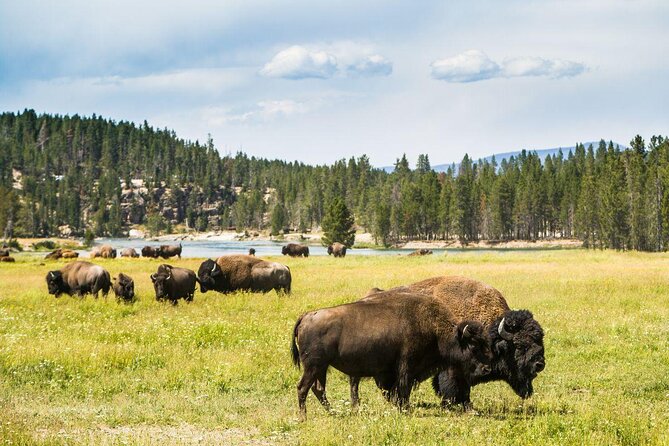
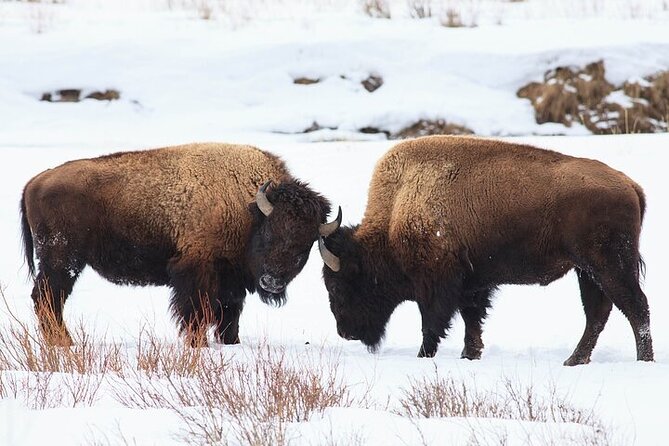
- Winter concentrates wildlife: Snow and cold often bring animals into open valleys, including Lamar Valley and the Yellowstone River corridor.
- The group is limited to eight: That makes questions, viewing scopes, and guide attention easier to manage.
- Professional optics are included: You receive the use of UHD binoculars and spotting scopes, useful for animals at a safe distance.
- Food is handled well: Expect a locally sourced seasonal picnic, organic snacks when possible, and non-alcoholic drinks.
- The day covers northern Yellowstone: Stops include Mammoth Hot Springs, Tower Fall, Petrified Tree, Lamar Valley, Roosevelt Arch, and Paradise Valley.
- Plan for a full day: The meeting point is a café on East Main Street in Bozeman at 7 a.m., and you return there after the tour.
Why winter is a smart time for a wildlife safari
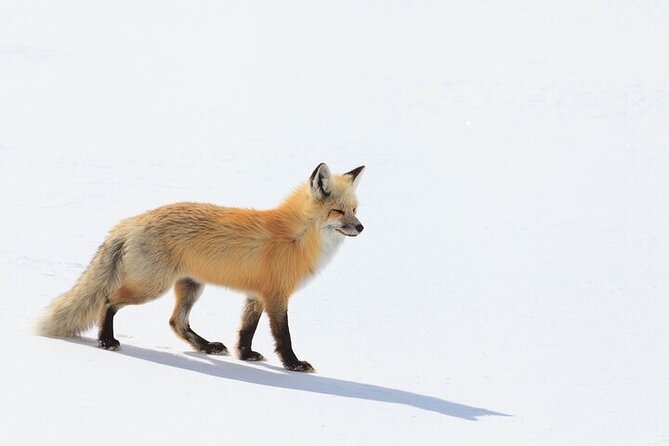
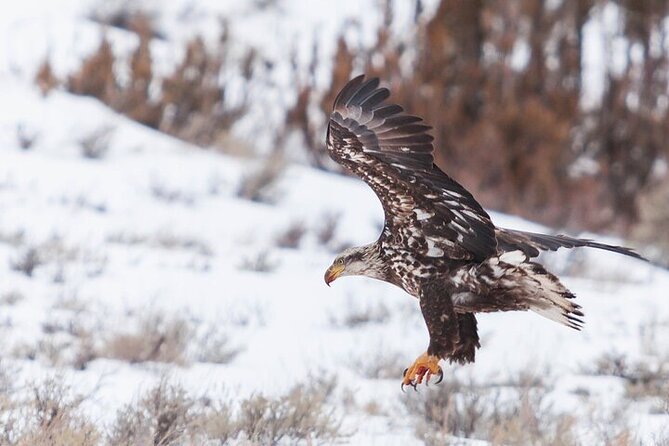
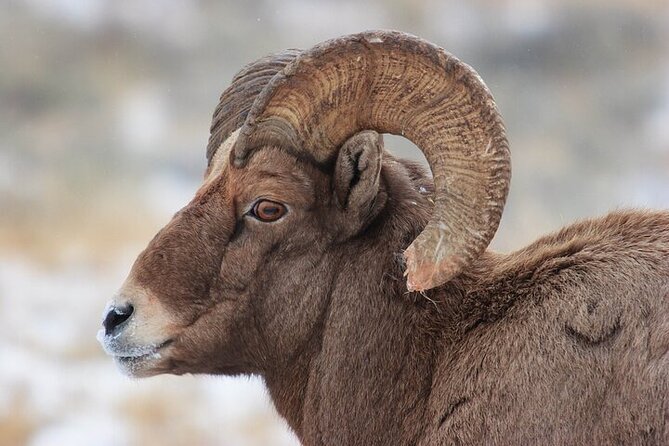
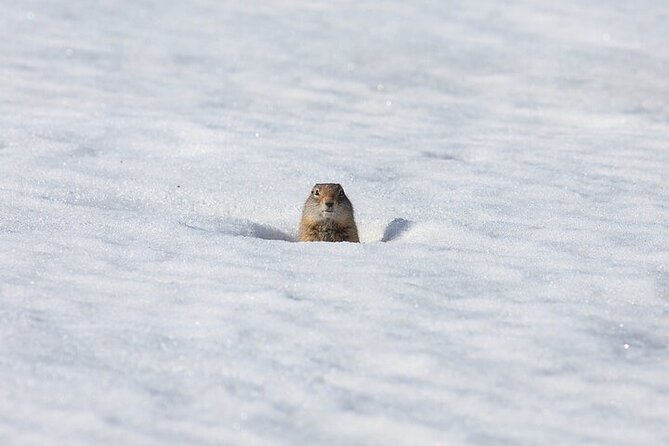
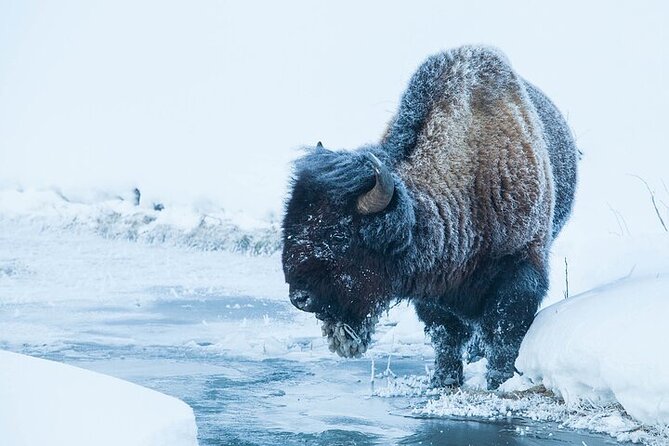
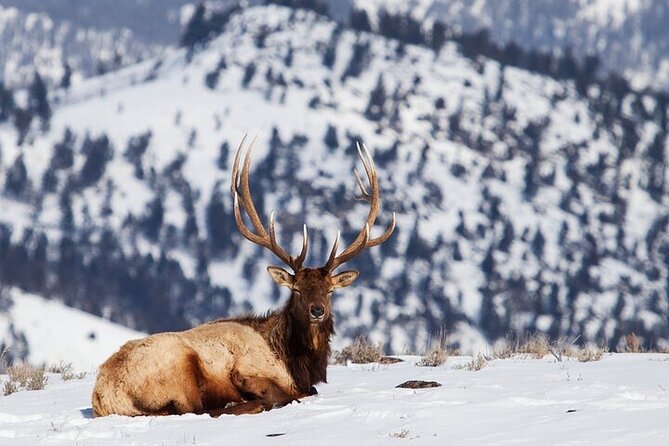
Yellowstone changes character in the cold months. The northern section offers open country, mountain views, and several areas where animals can be easier to scan from the road. Bison, elk, deer, coyotes, wolves, moose, foxes, pronghorn, bighorn sheep, and bald eagles have all been spotted on outings like this.
Bears are possible, but you should not book this expecting a guaranteed bear sighting. Some outings have included a mother bear and two cubs, or a bear den with a mother briefly showing her head. Those are rare treats, not promises. The same goes for wolves and moose, though the winter setting gives you a fair reason to hope.
The guide matters enormously. A trained eye may notice a small movement, tracks, a shape near a creek, or a distant animal that you would drive past. Guides also set up the spotting scopes and help you locate what you are looking at. Some guides have shared scope photos or short videos afterward, a useful extra if your own camera cannot capture a distant wolf or eagle.
More Safari Tours in the USA
- Miami: Everglades Safari Park Airboat Tour
★ 4.4 · 1,267 reviews - Grand Teton Wildlife Safari in a Enclosed or Open-Air Vehicle (season dependent)
★ 5.0 · 1,212 reviews - Everglades Airboat Safari Adventure with Transportation
★ 3.0 · 956 reviews
A small group makes the long day better
The tour caps participation at eight people. That is a strong feature for a day built around wildlife watching. You can ask questions about animal behavior, geology, park history, and the route without waiting for a microphone or shouting across a large vehicle.
The small group also helps at the scope. If your guide spots wolves across the valley, each person should have a reasonable chance to look. Guides have also adjusted the pace for different needs, including helping an older family member while still allowing another participant a short walk to a viewpoint.
This is not a private tour, so you will share the vehicle and schedule with other people. Still, eight is a practical limit. Families, couples, and solo visitors can all fit comfortably into the format, and children age eight and older may participate. If a child needs a booster or car seat, you must bring it with you.
The Bozeman start and the $350 price
Meet at Café M, 777 East Main Street in Bozeman, at 7 a.m. The safari ends back at the same meeting point. Hotel pickup and drop-off are not included, so you need to arrange your own way to the café.
The $350 price is not bargain transportation, but it includes much more than a ride into the park. You receive a professional naturalist guide, UHD binoculars, spotting scopes, lunch, snacks, and non-alcoholic drinks. For a full day with a group limited to eight, the cost can make sense, especially if you have only one day available for Yellowstone and do not own good wildlife optics.
You also pay a separate $20 Yellowstone National Park entrance fee per person. Add that to the tour cost when comparing options. The price is easiest to justify if you care about animal tracking and interpretation, not simply seeing the park from a vehicle window.
Mammoth Hot Springs brings geology into the day
The first major park stop is Mammoth Hot Springs, near Yellowstone’s north entrance. Its travertine terraces form as mineral deposits build up over time, creating pale shelves and flowing shapes. Algae in the pools adds brown and red tones.
This stop gives the day a useful change of pace. You are not only looking for animals. Your guide can explain how the terraces formed, why the colors vary, and how the area fits into Yellowstone’s volcanic story. The planned visit is about an hour.
Mammoth can also help you get your bearings. After leaving Bozeman early, you begin the park portion with a clear sense of place and a chance to stretch. The drawback is that geothermal features may appeal less to people who booked mainly for wildlife, though the variety keeps the day from feeling one-note.
Same park country, a different day out:
- Grand Canyon West, Hoover Dam Stop and Optional Lunch and Skywalk
★ 5.0 · 19,535 reviews - Grand Canyon West, Hoover Dam Stop, Breakfast, Lunch & Skywalk
★ 5.0 · 12,194 reviews - From Miami: Everglades Airboat, Wildlife Show & Bus Transfer
★ 4.2 · 8,622 reviews - Miami: Everglades National Park Airboat Tour & Wildlife Show
★ 4.5 · 7,296 reviews
Petrified Tree and the old volcanic Yellowstone
The 30-minute stop at Petrified Tree reveals a very different side of the park. A petrified redwood seems surprising here, but it reflects a much older Yellowstone, shaped by volcanic activity and conditions unlike those of today.
You will not spend a long time here, and that is appropriate. The value comes from the explanation. A guide can connect the fossilized tree to the region’s ancient past, giving context to the mountains and thermal features around you.
This is a quick stop, not a hike or a major wildlife viewing station. If animal sightings are your sole goal, you may prefer the longer periods in Lamar Valley and along the Yellowstone River.
Tower Fall and the Yellowstone River
Tower Fall is named for the rock pinnacles near the top of the waterfall. Erosion is slowly pushing the falls upriver, though the change is far too gradual to see during your visit. The planned stop lasts about 30 minutes.
It is a scenic pause with a simple geological lesson. You can look at the waterfall, the dark rock formations, and the surrounding country while your guide explains how erosion shapes the area. In winter, weather and access can affect what you see, so treat this as a stop for views and interpretation rather than a guaranteed long walk.
The Yellowstone River stop also lasts about 30 minutes, but the focus shifts to wildlife. The river begins in the Absaroka Range, crosses the Continental Divide region, runs through Yellowstone and Paradise Valley, and eventually joins the Missouri River. Its tributaries support fish and a broad range of animals.
Keep your eyes open here for birds and mammals along the river corridor. Your guide will help you scan the banks and nearby slopes. The waterway gives wildlife a reason to remain in the area, making it more than just a pretty photo stop.
Slough Creek and Lamar Valley are the wildlife core
Slough Creek is a tributary of the Lamar River, flowing out of the Absaroka Range. The area supports varied plant and animal life, and the safari makes multiple stops to search for wildlife. The listed stop time is 30 minutes, though the overall route through this part of the park is part of the larger wildlife search.
Lamar Valley receives the biggest block of time, about two hours. That is where the safari’s purpose becomes clearest. The broad open valley lets you scan long distances, and winter animals may be easier to pick out against snow or bare ground.
Bring patience. A guide may stop, study a slope, set up a scope, and wait. You might see bison close to the road, elk, mule deer, coyotes, foxes, pronghorn, wolves, or bald eagles. You might also spend time looking at what appears to be an empty hillside before the guide points out a shape you missed.
Past outings have included large numbers of moose, wolves, coyotes, bison, elk, and several bird species. One particularly strong wildlife day included a mother grizzly with two cubs, along with bison, wolves, elk, a moose, bighorn sheep, a bald eagle, and pronghorn. Again, that is a reminder of what can happen, not a schedule of promised sightings.
Albright Visitor Center adds park history
The Albright Visitor Center occupies a historic building that once housed cavalry troops assigned to protect Yellowstone before the National Park Service existed. The safari allows about an hour here.
This stop gives you a warmer, more human pause after hours outside. It also explains how Yellowstone was managed in its early years. Your guide can connect the building to the park’s past, which adds depth to the scenery and wildlife you have been seeing.
The timing may appeal to families and anyone who wants a break from cold viewing stops. If you prefer to spend every possible minute scanning for animals, an indoor visit may feel like a tradeoff. On a 10-hour winter day, though, a scheduled pause can be welcome.
Roosevelt Arch and Yellowstone’s north entrance
At the north entrance in Gardiner, Montana, the Roosevelt Arch provides a clear link to Yellowstone’s early public identity. Built in 1903 from hexagonal blocks of columnar basalt, the arch rises 52 feet.
The original idea was to create a grand entrance to the world’s first national park. Later changes were not completed, and the official entrance shifted south of Gardiner, but the arch remains and is listed on the National Register of Historic Places.
The safari allows about an hour here, including the North Entrance area. This is a good place to understand the connection between the park and the nearby Montana communities. It also makes a fitting closing point for the Yellowstone portion before the return through Paradise Valley.
Paradise Valley finishes the route with open views
Paradise Valley runs between Livingston and Gardiner, bordered by the Gallatin Range on one side and the Absaroka Range on the other. The Yellowstone River passes through it, and the valley supports wildlife as well as geological features.
The planned stop lasts about 90 minutes and focuses on wildlife. You may get another chance to scan for deer, elk, birds, or other animals before returning to Bozeman. The valley also gives you broad views that contrast with the tighter spaces around thermal features and waterfalls.
Because this is near the end of a long day, fatigue may be part of the experience. That is one reason the included food and drinks matter. You will have spent hours outside and on the road, so a filling lunch and steady snacks are not minor extras.
Food, optics, and guide service
Lunch is a locally sourced picnic built around seasonal ingredients. It is packaged with recyclable and compostable materials. Snacks are sourced locally, with organic choices when possible, and non-alcoholic beverages are included.
The menu is not specified, so you should not book based on a particular dish. The practical value is clear: you do not need to pack a full day of food or lose time finding a meal during the route. If you have dietary restrictions, tell the provider ahead of time. One outing accommodated special dietary needs successfully, but the supplied details do not promise a specific menu.
The UHD binoculars and spotting scopes are important. Wildlife in Yellowstone must be watched from a safe distance, and many of the best sightings may be far away. A scope can turn a tiny movement into a wolf, eagle, or moose you can actually study.
The guide service is the heart of the tour. Alan has been praised for going out of his way to make the day special. Gary has helped locate moose, wolves, coyotes, bison, and other animals. Gabrielle has offered individualized attention, while Adam has been praised for patience, route knowledge, and careful scouting. Elizabeth, Zak, Grant, Kelsey, Nate, Elaina, and Zach have also led outings with strong attention to animal behavior, park history, and guest needs.
Weather, cancellation, and practical limits
This experience requires good weather. If poor conditions cancel the outing, you can choose another date or receive a full refund. The same option applies if the minimum number of participants is not met.
You can cancel for a full refund up to 24 hours before the start time. Changes or cancellations inside that 24-hour window are not accepted for a refund. The cut-off uses local time.
Dress for a full winter day outdoors, though the supplied information does not specify a clothing list. You should be ready for cold, changing weather and long periods of watching from roadside stops. Bring any required child booster or car seat, and remember that participation is limited to children age eight and older.
Who should book this Yellowstone safari?
I would book this for a first Yellowstone visit, a short Bozeman stay, or anyone who wants help finding wildlife without buying expensive optics or planning the route alone. It is also a good fit for families with older children, couples, solo visitors, and anyone who values interpretation as much as photographs.
I would think twice if you dislike early starts, long vehicle days, or uncertain results. The tour cannot control animal behavior, road conditions, or weather. You are paying for skilled searching, equipment, food, and access to a carefully planned northern route, not a guaranteed list of sightings.
Should you book it?
Book the Yellowstone Winter Wildlife Safari if seeing animals is a main goal and you want a guide to handle the searching, route, optics, and meals. The small group and strong guide service make the $350 price easier to defend, especially for a one-day visit.
Skip it if you want a slow, independent park day or if the separate $20 entrance fee pushes the cost too high. For most people with limited time in Bozeman, though, this is a practical way to reach northern Yellowstone and give yourself a real chance at wolves, bison, moose, elk, eagles, and perhaps a bear.
FAQ
How long does the Yellowstone winter safari last?
The experience lasts approximately 10 to 11 hours. It begins at 7 a.m. and ends back at the meeting point in Bozeman.
Where does the safari begin?
You meet at Café M, 777 E Main Street, Bozeman, Montana 59715. Hotel pickup and drop-off are not included.
How much does the tour cost?
The listed price is $350 per person. Yellowstone National Park admission costs an additional $20 per person.
Is the Yellowstone entrance fee included?
No. The $20 Yellowstone National Park entrance fee is separate from the tour price.
What is included in the tour?
The experience includes a professional naturalist guide, UHD binoculars, spotting scopes, a locally sourced seasonal picnic lunch, snacks, and non-alcoholic drinks.
How many people can join the tour?
The maximum group size is eight travelers.
Can children participate?
Children age eight and older may participate. If your child needs a booster or car seat, you must bring it.
Can I cancel for a refund?
Yes. You can cancel up to 24 hours before the experience start time for a full refund. If poor weather or an insufficient minimum group cancels the tour, you are offered another date or a full refund.
More Winter Activities in the USA
- Rocky Mountain National Park and Estes Park Tour from Denver Winter and Spring
★ 5.0 · 511 reviews - From Denver: Rocky Mountain National Park Winter/Spring Tour
★ 4.9 · 148 reviews - Jackson: Grand Teton and National Elk Refuge Winter Day Trip
★ 4.8 · 140 reviews - Private Yellowstone Winter Wolf Watching and Wildlife Safari
★ 5.0 · 26 reviews
More Wildlife Watching in the USA
- Wilderness, Wildlife, Glacier Experience from Anchorage
★ 5.0 · 3,004 reviews - Everglades Airboat, Wildlife Show, and Roundtrip Bus From Miami
★ 4.5 · 1,886 reviews - Florida Everglades Airboat Adventure and Wildlife Encounter
★ 4.5 · 1,791 reviews - Kenai Fjords National Park Glacier & Wildlife Cruise
★ 5.0 · 1,756 reviews
Just added around the USA
- Yosemite National Park Self Guided Driving Audio Tour Guide★ 4.5 · 47 reviews
- Self-Guided Audio Driving Tour in Sequoia and Kings Canyon★ 4.5 · 29 reviews
- Bryce Canyon National Park Self-Guided Driving Audio Tour★ 4.5 · 71 reviews
- Bryce Canyon Hiking Challenge★ 5.0 · 92 reviews
- Bryce Canyon E-bike Tour★ 5.0 · 147 reviews
- Private Yellowstone Winter Wolf Watching and Wildlife Safari★ 5.0 · 26 reviews
- Yellowstone Wildlife Safari from Bozeman – Private Tour★ 5.0 · 140 reviews
- Yellowstone Wildlife Safari in Lamar Valley from Bozeman★ 5.0 · 35 reviews
USA National Park Tours, compared.
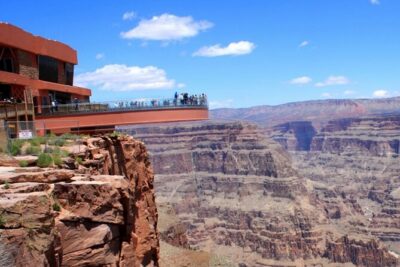
Grand Canyon West, Hoover Dam Stop and Optional Lunch and Skywalk
Read our review →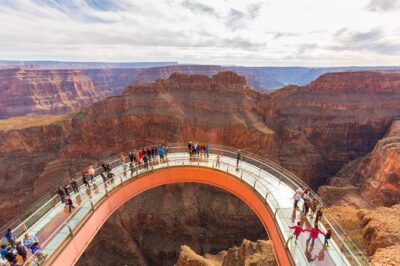
Grand Canyon West, Hoover Dam Stop, Breakfast, Lunch & Skywalk
Read our review →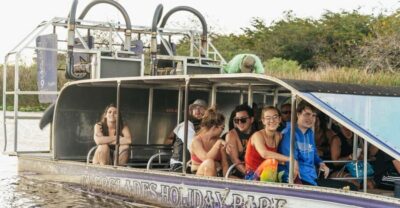
Everglades Airboat, Wildlife Show & Bus Transfer
Read our review →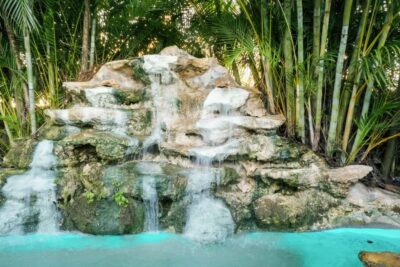
Everglades National Park Airboat Tour & Wildlife Show
Read our review →
Grand Canyon West Bus Tour with Hoover Dam and Optional Skywalk
Read our review →
Clear Kayak Tour of Shell Key Preserve and Tampa Bay Area
Read our review →
Grand Canyon, Hoover Dam, Lunch/Skywalk Options, WiFi
Read our review →
Grand Canyon + Hoover Dam View + WiFi (Skywalk/lunch options)
Read our review →Browse the lists this tour appears in