
Review · FRANCE
Climbing Discovery Session in the Calanques near Marseille
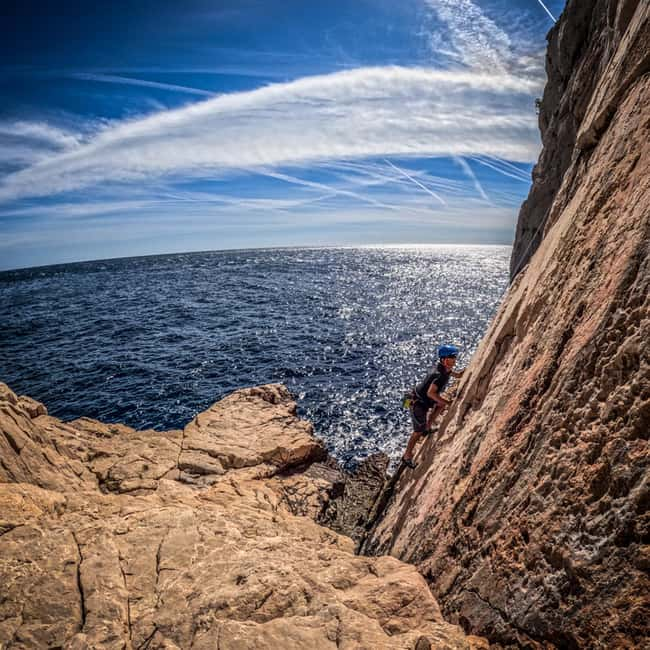
The rock cliffs of the Calanques Natural Park make a striking classroom. You’ll climb above clear Mediterranean water, learn the basics of outdoor climbing, and work in a small group of no more than eight people. I like the careful, step-by-step teaching from Fred, and I like that the routes can be adjusted for beginners rather than forcing everyone onto the same climb.
The main drawback is that you must reach the meeting point in Marseille on your own, and the approach to the cliffs requires a reasonable level of fitness. You also need to carry at least 1.5 liters of water, suitable shoes, and weather protection. This is an active morning, not a casual sightseeing stop.
Key points to know before booking
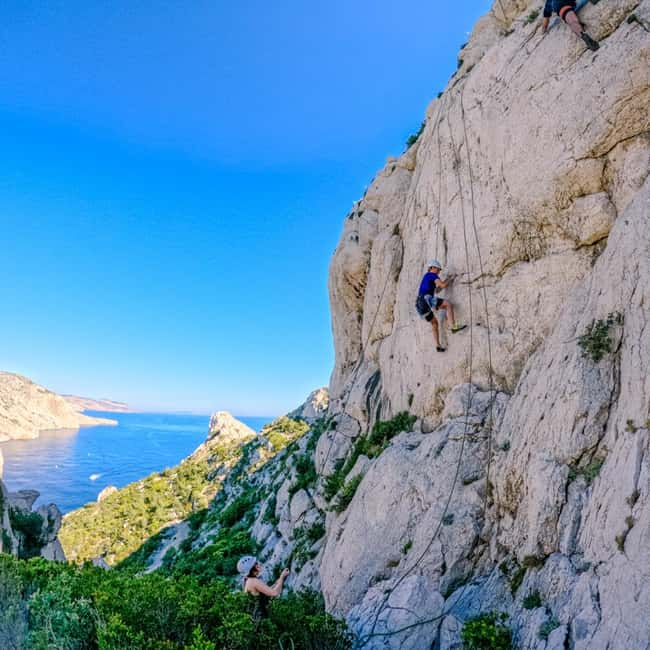
- A real outdoor climbing introduction: Learn knots, belaying, rope handling, footwork, and movement on rock.
- Routes matched to your ability: The instructor can choose sectors around Marseille, Cassis, or La Ciotat for beginner through expert levels.
- A small group of eight maximum: You get closer supervision and more time to ask questions.
- Fred’s teaching is a major strength: He explains clearly, takes time with each person, and keeps safety in view.
- The setting is part of the reward: Climb beside the Mediterranean with the Calanques as your backdrop.
- Gear and photos are included: Helmet, harness, rope systems, and other technical equipment are supplied, with climbing shoes available to borrow if needed.
Climbing above the Mediterranean in the Calanques
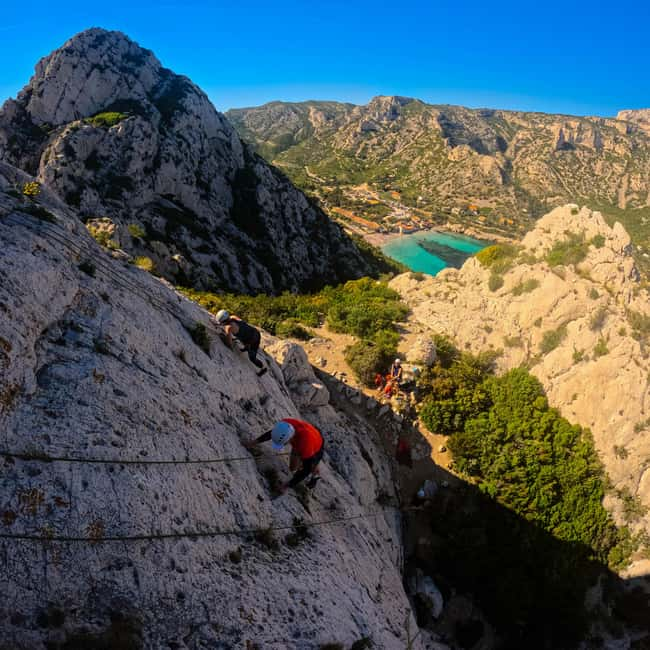
The appeal here is simple: you learn a new skill in one of southern France’s most dramatic outdoor settings. The Calanques are known for pale cliffs, narrow coastal inlets, and clear sea views. Instead of practicing indoors on colored holds, you’ll place your feet on real limestone and look out toward the Mediterranean as you climb.
The setting has been used for climbing since the 1970s. That matters because the area offers many sectors and routes, not just one standard wall. Your instructor can select a place suited to your physical level and experience, from first-time climber to a more practiced participant looking for a stronger route.
The activity lasts 210 minutes, or three and a half hours. That gives you enough time for safety instruction, equipment setup, practice, and several climbs without turning the session into an all-day commitment. You still need to allow time to get to the meeting point and walk from the vehicle to the climbing area.
Other park trips people book around France:
- Ajaccio/Porticcio: Scandola Nature Reserve Guided Boat Tour
★ 4.3 · 1,375 reviews - From Marseille: Iconic Calanques Boat Tour with Swimming
★ 4.7 · 1,017 reviews - From Ota: Scandola Nature Reserve Eco-Friendly Boat Tour
★ 4.5 · 932 reviews
Meeting at Bonneveine and reaching the rock
The meeting point is the parking lot at the Decathlon store in Bonneveine, on Chemin du Roy d’Espagne in Marseille’s 9th arrondissement. Transport to this point is not included, so plan that part of your day before booking.
From there, the exact climbing sector may vary. The provider works around the Calanques massif of Marseille, Cassis, and La Ciotat, choosing sites that fit the group and the conditions. If the outing goes to Sormiou Calanque, a €10 parking fee is included in the activity price, which saves you from paying it separately.
You should arrive ready to walk. Bring low-cut hiking shoes, trail shoes, or sturdy sneakers for the approach. Climbing shoes may be loaned if necessary, but your approach footwear still needs to be comfortable and secure on uneven ground.
The precise route and sector are not fixed in advance, so this is not the best choice if you want a guaranteed viewpoint or a particular Calanque. The benefit is flexibility. A qualified instructor can choose a suitable area rather than sending a beginner group onto a route that does not fit its ability.
Your first lesson: knots, helmets, and belaying
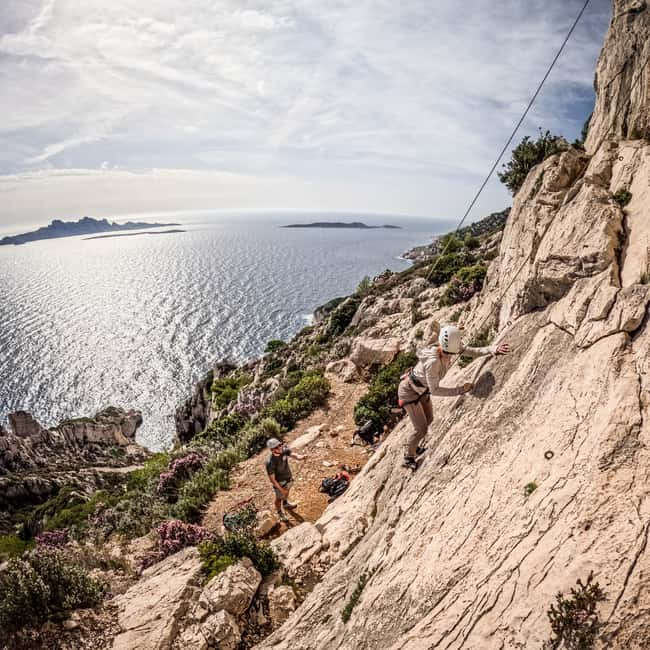
The first part of the session focuses on safety and basic equipment. You’ll be fitted with a helmet and harness, learn how the belay system works, and practice the knots needed for climbing. The technical equipment is supplied, including ropes, lanyards, belay devices, harnesses, and helmets.
Belaying is the skill that lets one person manage the rope while another climbs. It requires attention and clear communication, so the instructor will not simply hand you a harness and point at the wall. You’ll work in pairs under supervision, with the group learning how to support one another safely.
This is one of the strongest reasons to choose an instructor-led session instead of trying to arrange an independent climb as a beginner. You can focus on learning the system correctly from the start. Fred has more than 26 years of professional supervision and more than 36 years of climbing practice, according to the activity information.
The group limit is eight people. That is small enough for the instructor to watch technique and answer questions, although the exact amount of climbing time you receive will depend on the group’s pace and experience. If everyone is completely new, expect more time spent on instruction and less time moving quickly between routes.
Learning how to move on real rock
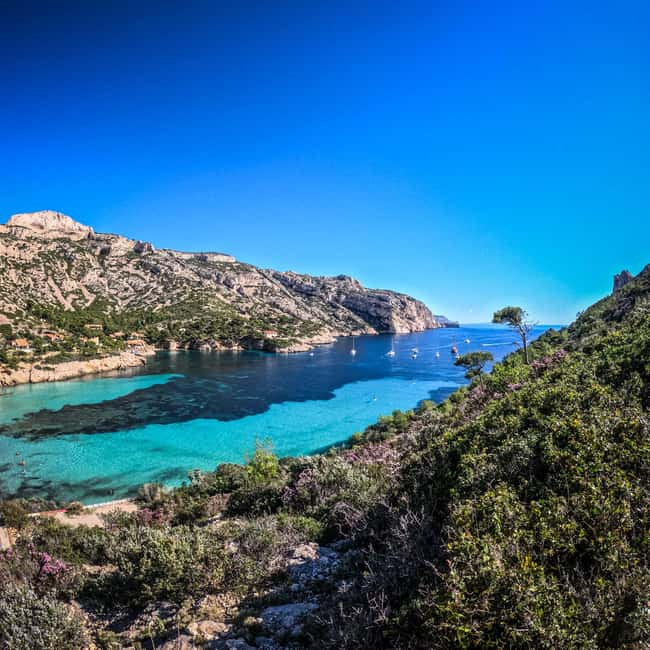
Once the safety basics are covered, the focus shifts to movement. You’ll learn to use your feet well, place your body against the rock, and choose efficient handholds. Beginners often try to pull themselves upward with their arms. Good instruction helps you understand that balance and foot placement matter just as much.
The routes are selected according to the group’s ability. You might work on easier climbs that build confidence, while stronger participants can be offered more demanding lines. The supplied information does not promise a particular grade or number of routes, so you should book this as a guided introduction rather than a fixed climbing challenge.
That flexibility also helps couples and mixed-ability groups. You can learn at your own pace while the instructor adjusts the session around the people present. The activity is described as suitable from beginner to expert, but everyone still needs to be in good physical condition.
People who are nervous about heights should think carefully before booking. The session is not suitable for anyone with vertigo. Climbing outdoors also involves exposure and physical effort, even on a route chosen for beginners.
Same park country, a different day out:
- Marseille: Côte Bleue Calanques Half-Day Kayak Tour
★ 4.7 · 877 reviews - Cannes: 2.5-Hour Esterel Calanques Boat Excursion
★ 4.8 · 808 reviews - From Sagone/Cargèse: Scandola Calanques Piana Girolata Swimming
★ 5.0 · 670 reviews - Marseille: Côte Bleue Calanques Boat Tour with Swimming
★ 4.5 · 663 reviews
Fred’s teaching style and the small-group feel
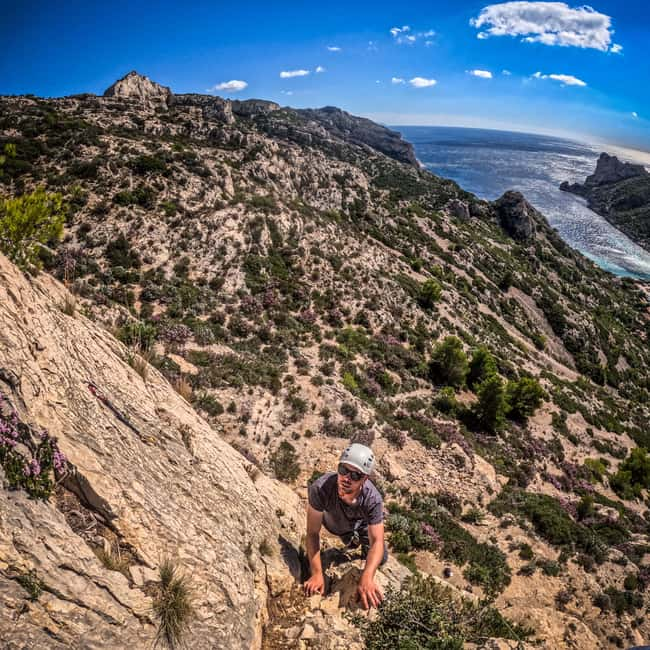
Fred is the instructor named in the activity details and in the participant feedback. His strongest qualities are clarity, patience, and attention to safety. He explains the basics step by step, gives each person time to understand the method, and keeps an eye on the group while people climb.
That approach is especially useful if this is your first outdoor climbing experience. Indoor climbing and outdoor climbing do not feel exactly the same. You need to read natural rock, manage a rope system, and move with more care. Clear explanations can make the difference between feeling overwhelmed and enjoying the challenge.
The session is offered in English, French, Spanish, and Catalan. That range is useful in an international area like Marseille, though you should select or confirm your preferred language when arranging the activity.
The small group also creates a more personal atmosphere than a large excursion. You may work with one partner while Fred supervises the wider group. The tradeoff is that you will not have constant one-to-one instruction, but the eight-person maximum keeps the session manageable.
The Calanques view is not just decoration
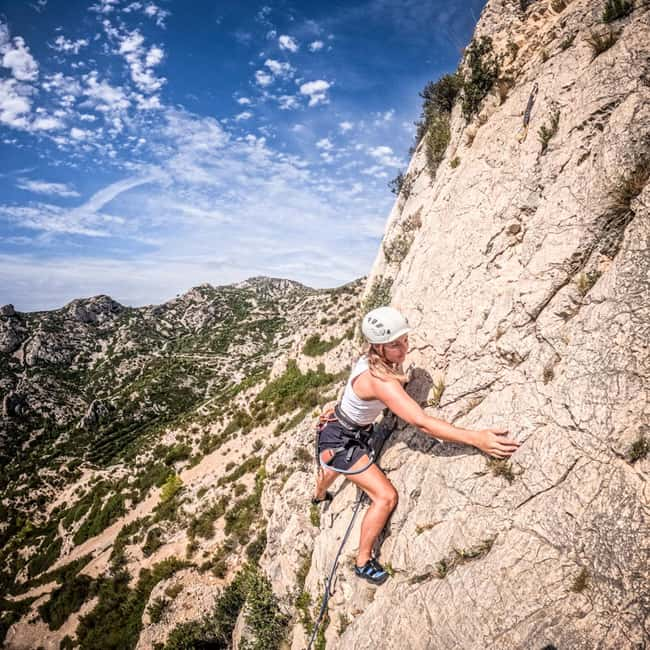
The scenery gives this activity its special character. From the cliffs, you can admire the Mediterranean and the clear water below while focusing on your route. The view changes the feeling of the lesson. You are not only repeating exercises; you are learning a skill in a place that feels closely tied to Provence’s outdoor culture.
The area is also useful for climbers because it offers many different sectors. The provider describes the Calanques around Marseille, Cassis, and La Ciotat as having routes for a wide range of levels. That variety makes the experience more adaptable than a single fixed rock face.
Conditions still matter. The instructor notes that it can be possible to climb in winter in sheltered areas protected from the Mistral, the strong regional wind. You should not read this as a promise of perfect conditions in every season. Bring a windproof jacket, and be prepared for the chosen sector to depend on weather and local conditions.
In summer, pack a swimsuit. It may be useful after the activity, but swimming is not listed as a guaranteed part of the program. Bring sunscreen and sunglasses as well. Exposed pale rock can make the sun feel stronger than it does in town.
What to pack for three and a half hours
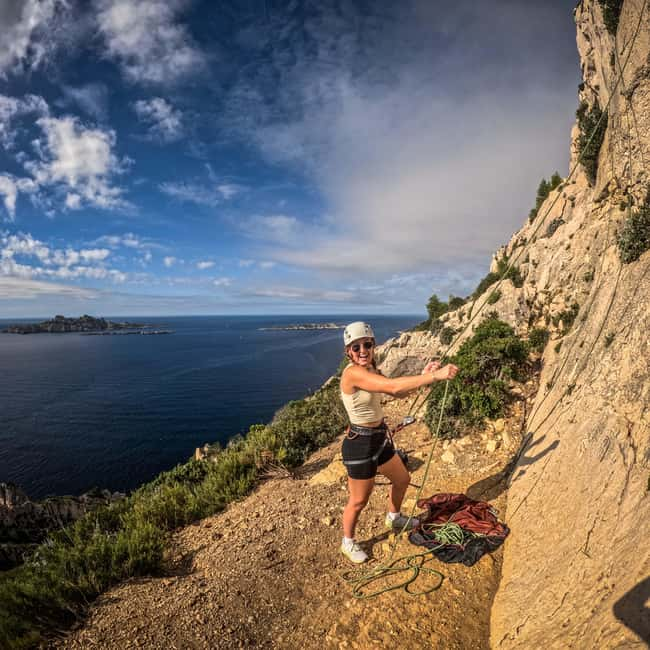
You need practical sports clothing that lets you move freely. Add a windproof jacket, even during a warmer season, because the Mistral can affect the coast and temperatures can shift around exposed rock.
Pack at least 1.5 liters of water per person. This is not optional advice for a hot day. The activity involves walking and climbing, and drinks are not included. You should also bring a snack or picnic, since food is not supplied.
Your day bag should contain:
- Low-cut hiking shoes, trail shoes, or sneakers for the approach
- Sports clothing
- A windproof jacket
- At least 1.5 liters of water
- Sunglasses and sunscreen
- A snack or picnic
- A swimsuit in warmer weather
Technical gear is included. You receive the helmet, harness, lanyard, belay system, ropes, and backpack loan when available. Climbing shoes may also be borrowed if needed, so you do not have to own a full climbing kit to participate.
Is $69 a fair price?
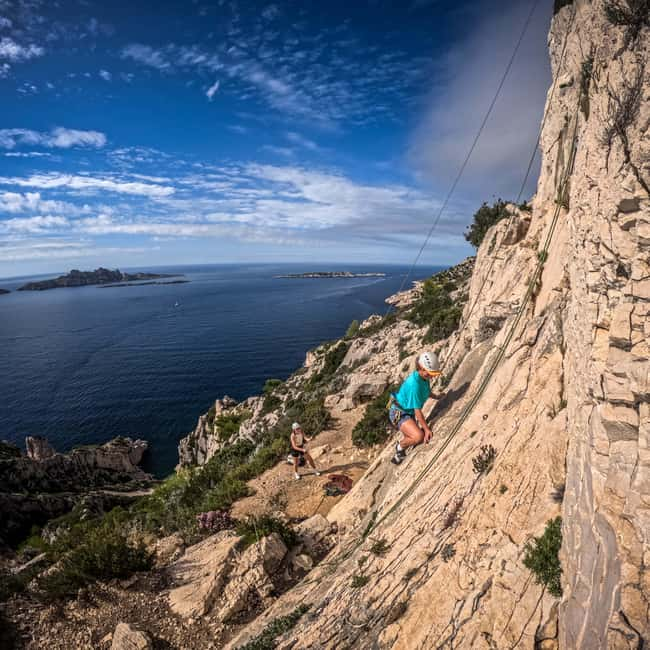
At $69 per person, the price is reasonable for a three-and-a-half-hour guided outdoor session, especially because the technical equipment and instructor are included. You are paying for supervised access to a climbing area, safety training, route selection, and instruction, not simply for a walk to a scenic viewpoint.
The included photos add a nice practical benefit. You can concentrate on climbing instead of asking a companion to document every attempt. The photos are offered after the session, so check how they will be delivered and keep your expectations realistic about how many images you will receive.
There are extra costs to consider. Transport to Bonneveine is not included, and if the group goes to Sormiou, the €10 parking charge is part of the activity cost but may still be relevant when comparing your total day’s budget. Food and drinks are also your responsibility.
For a first outdoor climbing session, the value is strongest if you would otherwise need to rent equipment and arrange a private instructor. If you are already an experienced climber with your own gear, you may find the introductory structure less useful unless you want local guidance in the Calanques.
Who should book this climbing session?
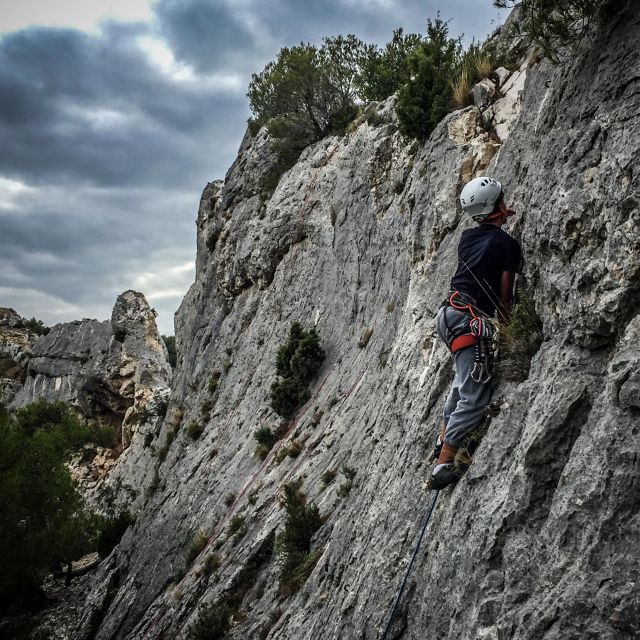
This suits adults and older children who are active, curious, and open to learning a new physical skill. Children under six cannot participate. Pregnant women and people with vertigo should not book this activity.
The maximum weight is 110 kilograms because the belt harness is available up to size XL. If you are near that limit, confirm the harness fit before paying. The activity information also says you must be in good physical condition, so it is not a good match if you are looking for a low-effort coastal outing.
I would recommend it for:
- First-time outdoor climbers
- Couples wanting an active half-day near Marseille
- Small groups with mixed climbing experience
- Visitors who value instruction as much as scenery
- Climbers who want routes selected by someone familiar with Provence
I would skip it if you dislike heights, want a fixed timetable and location, or prefer a passive sightseeing trip. The route and sector can change to match the group and conditions, which is helpful for safety but less predictable for strict planners.
Should you book the Calanques climbing session?
Book it if you want more than a coastal photo stop. The combination of proper instruction, supplied equipment, a small group, and dramatic Mediterranean views gives you a useful introduction to outdoor climbing without requiring you to own gear.
The best reason to choose this session is the teaching. Fred’s clear explanations and patient approach matter most when you are learning belaying, knots, and rope handling for the first time. The photos are a welcome extra, but the real value is leaving with a better understanding of how to climb safely on real rock.
Before booking, make sure you can reach the Bonneveine meeting point, handle a three-and-a-half-hour active outing, and bring enough water and suitable shoes. If those details work for you, this is a strong choice for an active morning in the Calanques.
FAQ
Where does the climbing session meet?
You meet at the parking lot of the Decathlon store in Bonneveine, on Chemin du Roy d’Espagne, 13009 Marseille.
How long does the activity last?
The session lasts 210 minutes, or three and a half hours. Starting times vary, so you need to check availability when booking.
What is included in the price?
The price includes supervision by the climbing instructor and the technical equipment needed for the activity. This includes a helmet, harness, lanyard, belay system, ropes, and a backpack loan when available. Climbing shoes may also be borrowed if necessary.
Are photos included?
Yes. Photos from the climbing session are offered as part of the experience.
Is transport to the meeting point included?
No. You are responsible for reaching the Bonneveine meeting point in Marseille.
Do I need to bring climbing equipment?
No. The main technical equipment is supplied. You should bring suitable shoes for the approach walk, such as low-cut hiking shoes, trail shoes, or sneakers.
What should I bring?
Bring sports clothing, a windproof jacket, at least 1.5 liters of water, sunglasses, sunscreen, and a snack or picnic. A swimsuit can be useful in summer.
Can beginners participate?
Yes. The session teaches basic climbing techniques and offers routes suited to different physical levels, including beginners.
What languages does the instructor speak?
Instruction is available in English, Catalan, Spanish, and French.
Can I cancel the booking?
You can cancel up to 24 hours in advance for a full refund. The activity also offers reserve-now, pay-later booking.
Just added around France
- Aquatic Hike Grand Canyon du Verdon★ 5.0 · 27 reviews
- Cassis: Three Calanques Tour by Electric Mountain Bike★ 5.0 · 26 reviews
- Cassis National Park E-Mountain Bike Experience with Virtual Guide★ 5.0 · 52 reviews
- Cassis : Two Calanques Tour by Electric Mountain Bike★ 5.0 · 20 reviews
- Cassis: Stand UP paddle in the creeks national park★ 4.5 · 21 reviews
- From Cargèse : The Calanques of Piana★ 4.8 · 52 reviews
- Marseille: stand-up paddle tour – discover the calanques★ 4.7 · 33 reviews
- Calanques National Park Snorkel and Scuba Dive★ 4.8 · 27 reviews
France National Park Tours, compared.
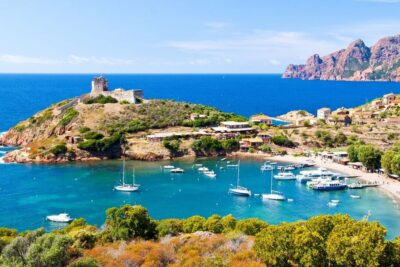
Ajaccio/Porticcio: Scandola Nature Reserve Guided Boat Tour
Read our review →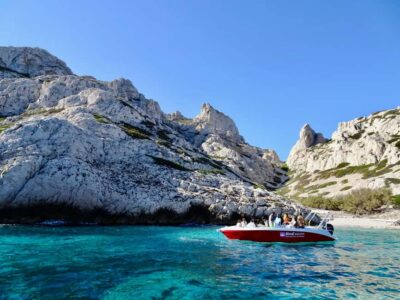
From Marseille: Iconic Calanques Boat Tour with Swimming
Read our review →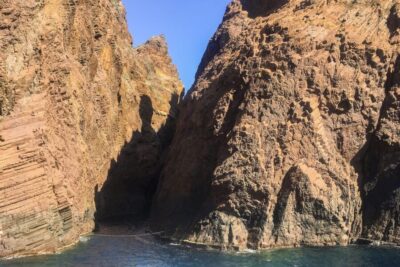
From Ota: Scandola Nature Reserve Eco-Friendly Boat Tour
Read our review →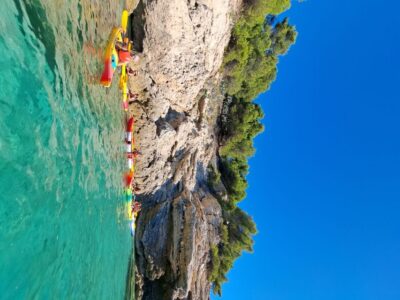
Marseille: Côte Bleue Calanques Half-Day Kayak Tour
Read our review →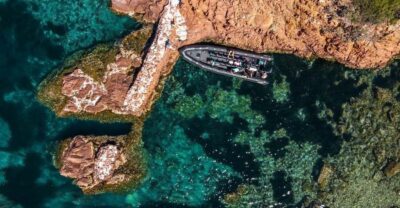
Cannes: 2.5-Hour Esterel Calanques Boat Excursion
Read our review →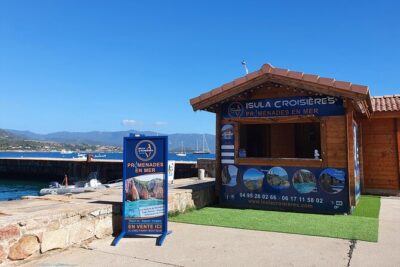
From Sagone/Cargèse: Scandola Calanques Piana Girolata Swimming
Read our review →
Marseille: Côte Bleue Calanques Boat Tour with Swimming
Read our review →
Fréjus : Esterel Calanques Cruise (Comfort Boat) + Swim Stop
Read our review →Browse the lists this tour appears in