
Review · ARUSHA
9-Day Serengeti Migration Footsteps Tanzania Safari
The main draw is four nights in the Serengeti, timed around the Great Migration. In August, the route heads north toward the Mara River, where wildebeest gather in huge numbers before attempting one of nature’s most dramatic crossings. I like the mix of migration viewing and classic safari stops, especially elephant country in Tarangire and the concentrated wildlife of Ngorongoro Crater.
I also like that this is a private trip, so your group travels with its own vehicle and guide rather than following a fixed bus schedule. Guides such as Enock, Mwita, Gilbert, and Yusuph have earned especially strong praise for spotting animals, explaining what you see, and taking good care of families and older travelers. The main drawback is the price, $4,539 per person, plus international flights and gratuities, and migration sightings can never be promised.
Key points to know before booking
- Four Serengeti nights: You get more than a quick pass through the park, with time in the central and northern regions.
- Mara River timing: The northern route is aimed at July to November, while Ndutu is the target from December to March.
- Private touring: Only your group participates, with private transportation throughout the safari.
- Strong guide focus: Enock, Mwita, Gilbert, Yusuph, and other Lion King guides are praised for animal spotting and personal care.
- Big Five potential: Tarangire, Serengeti, and Ngorongoro give you several good settings for lion, leopard, elephant, buffalo, and rhinoceros sightings.
- Nine days, many drives: You cover a lot of ground, so this suits you if wildlife matters more than slow hotel time.
Why the Serengeti migration is the heart of the trip
The Great Migration is not a single event that happens on a fixed date. It is a moving cycle shaped by rain, grass, and animal instinct. That matters here because the route changes by season.
From December through March, the migration is found around Ndutu, on the southern edge of the Serengeti and near the Ngorongoro Conservation Area. From July through November, the focus shifts north, toward the remote Serengeti and the Mara River. The itinerary is especially geared toward the northern route, with two days set aside for possible river-crossing action.
That wording is important: you may see a crossing, but no safari company can schedule one. Wildebeest can gather for hours, then turn away. Or one animal may suddenly enter the water and trigger a rush behind it. Crocodiles, steep banks, dust, noise, and confusion make the scene powerful, but also unpredictable.
I like that this trip gives you more than a single morning in the migration zone. Day 4 takes you north from Seronera, Day 5 keeps you in the Mara area, and Day 6 returns toward central Serengeti. That creates several chances to find moving herds, resident predators, and other wildlife even if the river remains quiet.
More Safari Tours in Arusha
- Balloon Safari & Bush Breakfast in Serengeti – Miracle Experience
★ 5.0 · 1,646 reviews - 3 Days Serengeti & Ngorongoro Group Camping Safari
★ 5.0 · 574 reviews - 3-Day Classic Serengeti Safari
★ 5.0 · 263 reviews
Day 1: A soft landing in Arusha
Your Lion King representative picks you up from the airport and takes you to your Arusha accommodation. The day is deliberately light, giving you time to rest and prepare for the safari.
This is useful after a long international flight. You are not expected to begin with a park drive or a long road transfer. The exact accommodation is not specified in the details provided, so confirm its name and what is included before you pay.
Arusha is the practical starting point for northern Tanzania safaris. The listed meeting point is in Arusha, and the activity ends back there on Day 9. The published start time is 8:30 a.m., although several days require an early breakfast or early departure.
Day 2: Baobabs and elephants in Tarangire
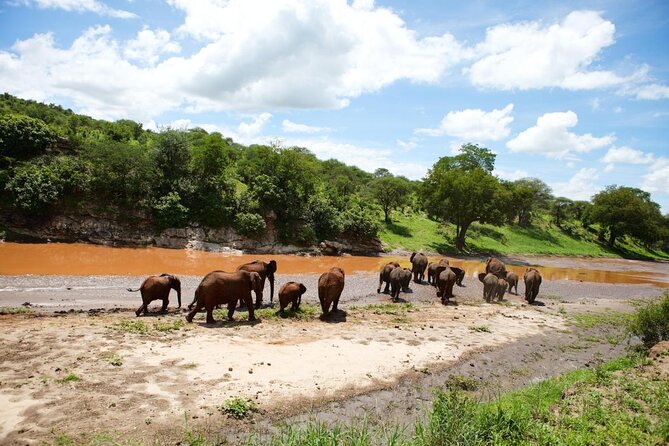
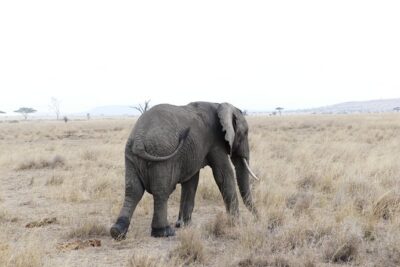
After breakfast, you head to Tarangire National Park for a full-day game drive. This park is known for its huge elephant population, old baobab trees, and the Tarangire River, which draws animals through a series of dry and green zones.
The scenery changes more than you might expect. Nine vegetation zones are noted along the route, and the baobabs give the park a strong sense of place. Elephants feeding beneath trees that tower over them are often the visual highlight.
Tarangire also gives you a broad first look at safari wildlife. You may see lion, leopard, buffalo, zebra, giraffe, antelope, and many bird species. The trip description places particular emphasis on watching elephant families interact, so this is a good day for you if elephants are high on your list.
The drawback is that Tarangire adds another full day of driving at the beginning of a long circuit. I think it earns its place because it is not simply a warm-up for the Serengeti. The baobabs, river, and elephant activity give it a distinct character.
Day 3: Through the highlands and into Serengeti
The road continues through fertile highlands where the Iraqw people grow wheat and corn. You then pass through the Ngorongoro Conservation Area, including misty rainforest where baboons, elephants, and perhaps leopards may appear in the thick vegetation.
You also get a first view of Ngorongoro Crater before continuing toward Serengeti National Park. The contrast is part of the appeal: cultivated highlands, forest, crater views, and then the open plains of the Serengeti.
The Serengeti is Tanzania’s largest national park and includes grasslands, swamps, lakes, and other habitats. You are expected to reach the park around midday, followed by wildlife viewing as you continue toward your accommodation.
This is a scenic transfer, but it is still a transfer. You should expect a long day in the safari vehicle, with wildlife stops along the way rather than a short hop between lodges. The reward is that you reach the Serengeti with several days still ahead.
More Safari Tours in Tanzania
- 10-Day Serengeti Wildebeest Migration Safari from Arusha
★ 5.0 · 218 reviews - 4-Day Safari from Arusha: Tarangire, Serengeti and Ngorongoro
★ 5.0 · 173 reviews - 8 Day Spectacular Migration Serengeti mid -Range Tanzania Safari
★ 5.0 · 161 reviews - 7 Days Tanganyika Wilderness Safari
★ 5.0 · 159 reviews
Days 4 and 5: North to the Mara River
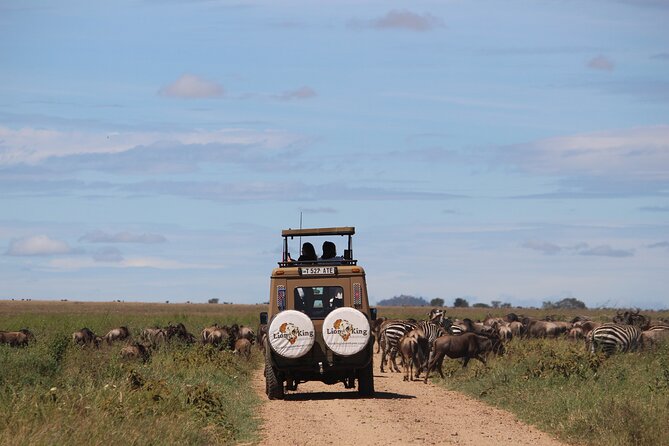
Day 4 takes you from the Seronera area toward northern Serengeti. The route covers rolling country, small rivers, occasional hills, and rocky outcrops such as Lobo Kopje. The northern region is farther from the main southern entrance and generally sees fewer vehicles than central Serengeti.
That lower visitor density can make the journey feel more remote. It also means the day is built around distance. You are not staying in one small area waiting beside a river. You are making an en route game drive over a broad part of the park.
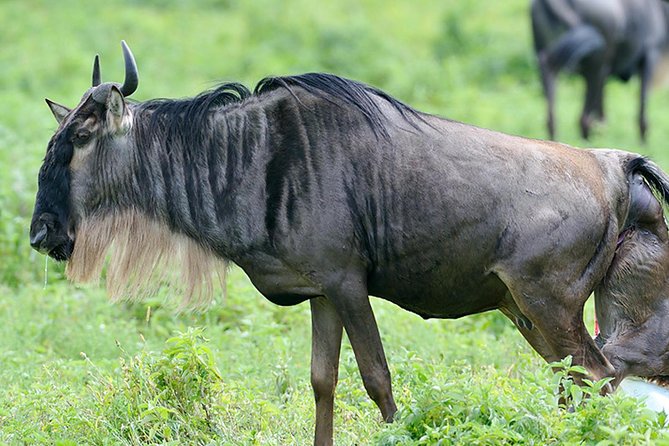
Day 5 begins after an early breakfast, with the main goal of finding wildebeest near the Mara River. Hundreds of thousands may gather along the banks, but the animals do not follow a timetable. You might see them hesitate, bunch together, move away, or finally rush through the water.
A crossing can be difficult to watch. Crocodiles wait in the river, and the wildebeest face steep banks, strong currents, and panic within the herd. If a crossing happens, it can be an unforgettable sight. If it does not, the gathering herds, open country, and other wildlife still make the day worthwhile.
The itinerary refers to the Mara grasslands on the far side of the river, but this is the Tanzanian side of the migration route. The animals move between the Serengeti and Kenya’s Masai Mara. Ask your guide about the exact viewing area and daily driving plan, since conditions change quickly.
Day 6: Returning through Seronera
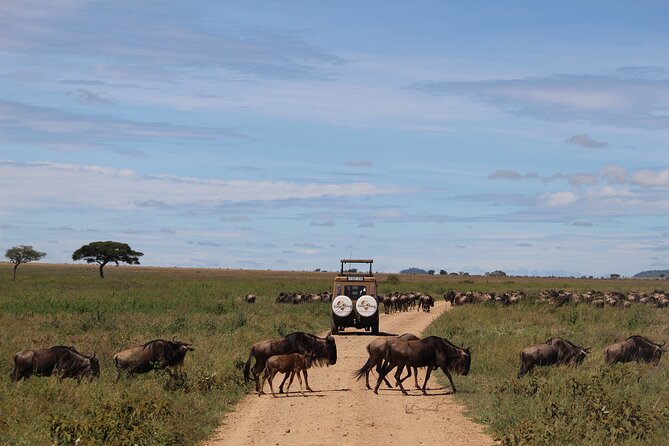
After breakfast, you return toward Seronera for another full day of wildlife viewing. This is a useful change of pace after the long northern push.
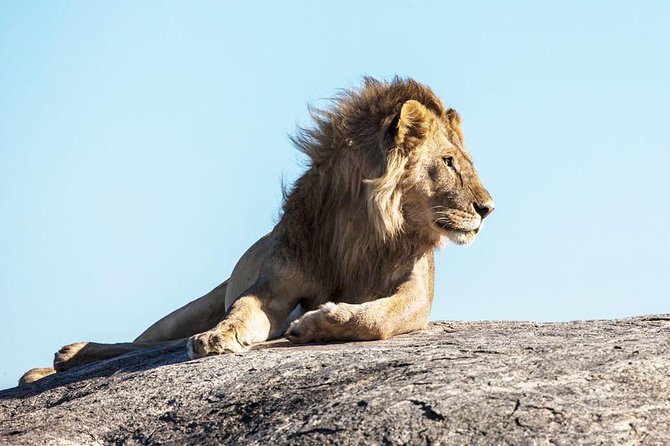
The central Serengeti is known for its resident predators as well as migrating herds. You may look for leopard, cheetah, and lion, with your guide reading tracks, animal behavior, and recent sightings to decide where to go.
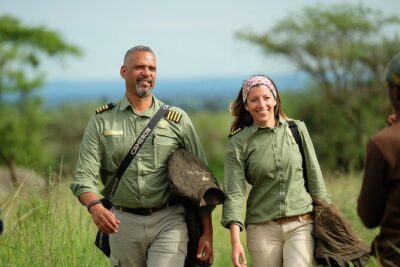
This is where a good guide matters most. Guides named Enock, Mwita, Gilbert, and Yusuph are repeatedly praised for sharp eyes, safe driving, clear explanations, and care with families. Gilbert, in particular, is praised for spotting animals and responding quickly to questions, while Mwita is described as having grown up in the Serengeti.
You finish the day at your accommodation, with dinner and time by the fire. That evening pause matters. A safari can become tiring when every day is only road time and camera work. A quiet meal under the stars gives you a chance to think back over the animals and scenes from the day.
Day 7: From Serengeti to the Ngorongoro rim
You have another Serengeti game drive after breakfast before traveling to Ngorongoro Crater. In the afternoon, you reach accommodation near the crater rim and get your first view down into the caldera.
This transition is one of the trip’s best visual shifts. The Serengeti feels open and endless, while Ngorongoro is enclosed by a steep volcanic wall. From the rim, you can see streams, open grassland, and animals spread across the crater floor.
The day is another long one, so you should not think of it as a relaxed hotel transfer. It is designed to give you one last Serengeti drive and position you for an early descent the next morning.
Day 8: Wildlife concentrated inside Ngorongoro Crater
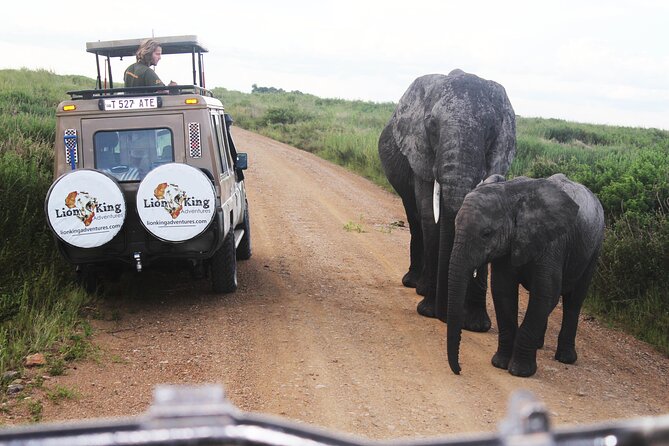
You leave very early after breakfast and descend onto the crater floor. Ngorongoro is a caldera formed about three million years ago after a huge volcanic explosion. The crater is about 610 meters deep and covers roughly 260 square kilometers.
Because the crater is enclosed, wildlife viewing can feel especially concentrated. You may see lion, elephant, buffalo, zebra, wildebeest, and other animals across the grassland. Ngorongoro is also considered one of the better places in Africa to search for the Big Five.
The crater is not a guarantee of every animal. It is a living ecosystem, not a wildlife park with scheduled appearances. Still, the combination of open viewing areas, water sources, and the crater walls gives you a strong chance of seeing a wide range of animals in one day.
The early start is worth taking seriously. You will be up before a leisurely breakfast schedule, and the day involves substantial driving and wildlife viewing. For families, older travelers, or anyone who prefers a slower pace, discuss comfort needs with the operator ahead of time. One guide, Shafino, was specifically praised for taking extra care of older family members.
Day 9: Birdlife and woodland at Lake Manyara
The final park is Lake Manyara National Park, about 120 kilometers west of Arusha. The shallow salt lake can cover around 70 percent of the park, depending on seasonal water levels, and it attracts flamingos and a reported 500 bird species.
The park is small compared with Serengeti and Ngorongoro, but its habitats change quickly. You may pass through open grassland, woodland filled with monkeys, cliffs dotted with baobabs, and areas where giraffe, zebra, wildebeest, buffalo, and elephant feed.
There is also a chance to see lions resting in trees, one of the park’s better-known possibilities. As always, treat this as a possibility rather than a promise.
After lunch, you return to Arusha in the late afternoon. This makes the tour practical if you need to continue from Arusha, although an international flight on the same day would require careful planning. The listed end point is back at the meeting point in Arusha.
What the $4,539 price really covers
At $4,539 per person, this is a major purchase. The price makes more sense when you consider the nine-day length, private vehicle, park access, multiple national parks, four Serengeti nights, and the staff needed to operate a long northern circuit.
Included meals are listed as nine breakfasts, eight lunches, and seven dinners. Parking fees and private transportation are also included. Accommodation is part of the itinerary, but the supplied details do not provide a complete accommodation list or clearly itemize its cost, so ask for the exact lodges or camps before booking.
International flights are not included. Gratuities are also listed separately, so include them in your real budget. The trip offers group discounts, which could improve the value if you are booking with family or friends.
The private format is a key part of the price. You are not simply buying park entry. You are paying for a vehicle, route planning, a guide, long-distance driving, and the chance to adjust the search for animals around your group’s interests.
Who will enjoy this safari most
I would choose this trip if your top goal is the Great Migration and you want a full northern Tanzania circuit around it. It suits you if you are happy with long road days, early breakfasts, and several hours in a safari vehicle.
It is also a good match for families. Past bookings have included teenagers and younger children, and guides such as Enock and Shafino have been praised for patience and personal attention. Couples and honeymooners may also like the combination of tented camps or lodges, crater views, and evenings by the fire, although you should confirm the exact accommodation category.
This is less suitable if you want a slow, luxury-focused holiday with little time on the road. You also should not book it solely for a guaranteed river crossing. The migration is wild, and the best moments depend on weather, grass, herd movement, and timing.
The tour is private, but the exact maximum group size is not stated. Ask how many people will share the vehicle and whether your group gets a window seat arrangement. Those details can affect comfort on long driving days.
Booking details worth checking
Pickup is offered, and the starting point is Arusha. Airport pickup is specifically described for Day 1. The tour ends back in Arusha after Lake Manyara.
You receive confirmation at booking, and a mobile ticket is available. Most people can participate, but the itinerary contains early starts and long drives, so raise any mobility or medical concerns before booking rather than assuming the standard pace will fit you.
Free cancellation is available if you cancel at least 24 hours before the local start time. Changes or cancellations made inside that window are not accepted for a refund. If the minimum number is not reached and the operator cancels, you are offered another date or experience, or a full refund.
Should you book the 9-Day Serengeti Migration Footsteps safari?
Book it if you want a serious wildlife trip built around several days in the Serengeti, not a quick park sampler. The strongest reasons are the private setup, the four Serengeti nights, the seasonal route toward either Ndutu or northern Serengeti, and guides such as Mwita, Enock, Gilbert, and Yusuph who are praised for finding animals and looking after their groups.
Think twice if your budget is tight or if you need guaranteed sightings. At $4,539, the trip costs real money, and the Mara crossing may not happen. But you get a broad, well-paced northern Tanzania route with Tarangire elephants, Serengeti predators, Ngorongoro wildlife, and Lake Manyara birdlife. For someone who values time in the parks over a short, cheap safari, that is a strong case.
FAQ
Where does the safari start?
The safari starts in Arusha, Tanzania. Airport pickup by a Lion King representative is provided on the first day.
Where does the safari end?
The tour returns to Arusha after visiting Lake Manyara National Park on Day 9.
How long does the safari last?
The experience lasts approximately nine days.
Is this a private tour?
Yes. Only your group participates, and private transportation is included.
When and where can I see the Great Migration on this route?
The migration is described around Ndutu from December through March and in the remote northern Serengeti from July through November. The northern route is intended to provide opportunities near the Mara River.
Is a Mara River crossing guaranteed?
No. The itinerary describes a chance to see the animals cross the river, but crossings depend on herd movement and natural conditions.
What meals are included?
The package lists nine breakfasts, eight lunches, and seven dinners.
Are international flights included?
No. International flights are not included in the price.
What is the cancellation policy?
You can cancel for a full refund if you do so at least 24 hours before the experience start time. Cancellations or changes made less than 24 hours before the start are not accepted for a refund.
Just added around Arusha
- Serengeti & Ngorongoro fly in safari★ 5.0 · 76 reviews
- 3 Days Private Safari – manyara, Ngorongoro & Tarangire★ 5.0 · 94 reviews
- serengeti, ngorongoro & tarangire 5days private tour★ 5.0 · 77 reviews
- 05 Days Tarangire, Serengeti, Ngorongoro and Lake Manyara★ 5.0 · 54 reviews
- day trip tarangire★ 5.0 · 46 reviews
- 5 days safari, hiking & culture (Serengeti & kilimanjaro)★ 5.0 · 27 reviews
- Tanzania safari with guide in Italian, the great Migration of the Serengeti★ 5.0 · 23 reviews
- 03 days Serengeti and Ngorongoro Crater group (camping)★ 5.0 · 75 reviews
Arusha National Park Tours, compared.
Balloon Safari & Bush Breakfast in Serengeti – Miracle Experience
Read our review →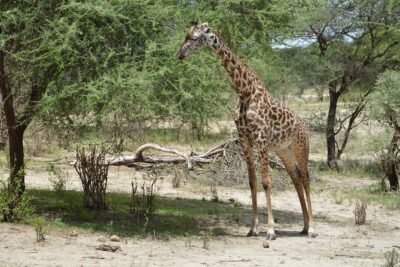
3 Days Serengeti & Ngorongoro Group Camping Safari
Read our review →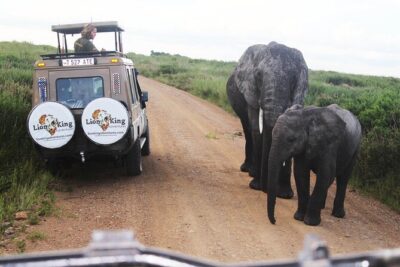
5-Day Highlights mid-Range Crater, Serengeti, Tarangire
Read our review →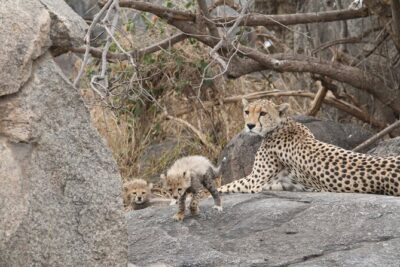
Private 6-Day Tarangire Manyara Crater and Serengeti with Mid-Range Lodges
Read our review →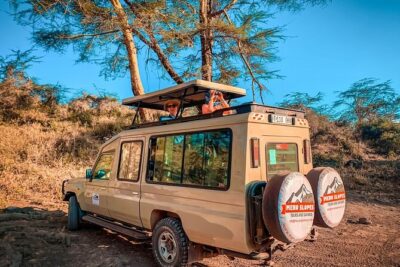
5 Days Camping Tarangire, Serengeti & Ngorongoro crater & Visiting Maasai
Read our review →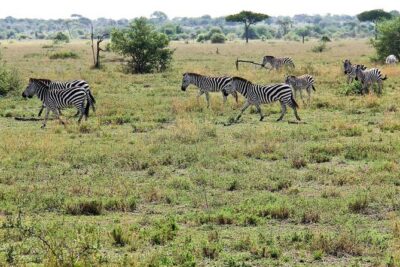
4 Days Join Group tour Tarangire Serengeti and Ngorongoro crater
Read our review →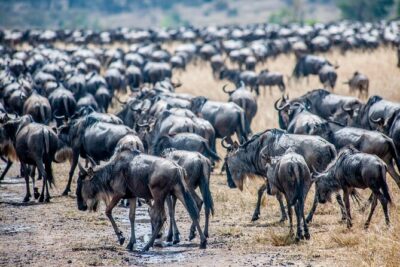
10-Day Serengeti Wildebeest Migration Safari from Arusha
Read our review →Browse the lists this tour appears in