

Review · BIG ISLAND
Hawaii Volcanoes National Park Self-Guided Driving Audio Tour
Hawaiʻi Volcanoes National Park is best understood from behind the wheel. The park’s main route covers volcanic craters, steaming vents, lava tubes, petroglyphs, and a sea arch, and this self-guided tour fills the drive with more than 43 audio stories. You start at the Entrance Station and finish at Holei Sea Arch, about 24.5 miles later.
I like two things right away: the price is per car, not per person, and the GPS narration lets you stop, hike, eat, or take photos without waiting for a group. I also like that the audio works offline, an important feature in a park where cell service can be weak.
The main drawback is setup. You must download the Action Tour Guide app and tour content while you have strong Wi-Fi or cellular service. A small number of users have found the app confusing, so do this before reaching the park, not in the parking lot.
Key things to know before you go
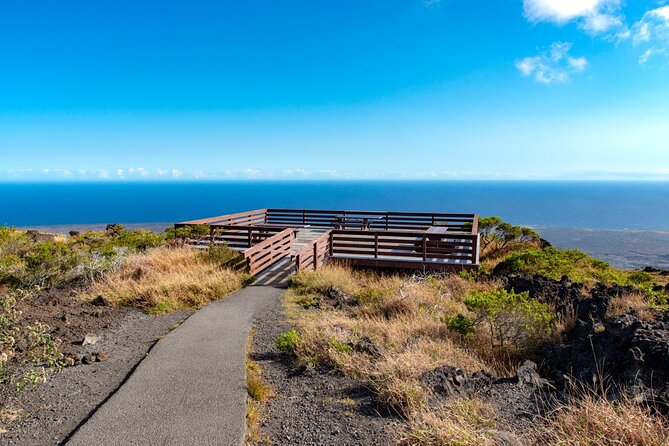
- The route covers 24.5 miles: Plan roughly two to three hours for the drive itself, with extra time for trails and stops.
- The narration starts by GPS: Stories play as you reach each point, so you can keep your phone out of your hand while driving.
- The route ends at Holei Sea Arch: The long drive to the coast is one of the tour’s best payoffs.
- The tour costs $16.99 per group: Up to four people can use one purchase, making it far cheaper than a per-person bus tour.
- The route works best in one direction: Start at the Entrance Station and follow the suggested path. It is not designed as well for reverse travel.
- You still pay the park entrance fee: The audio tour is separate from admission, reservations, and any other park charges.
Why this driving tour works well in Hawaiʻi Volcanoes National Park
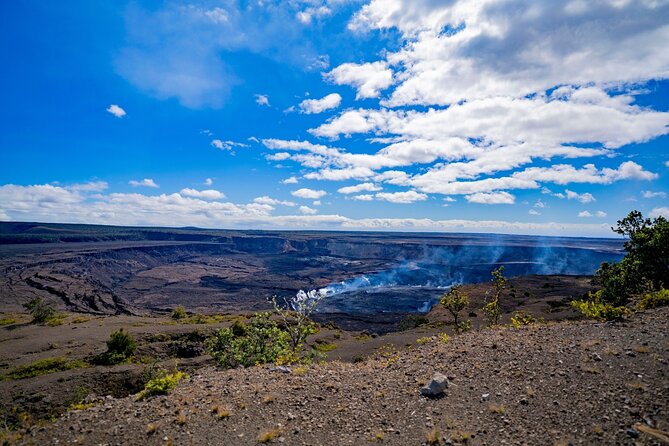
Hawaiʻi Volcanoes National Park can feel like a string of unrelated pullouts if you do not know what you are seeing. One stop shows a smoking vent. The next shows a crater filled with plants. Farther along, a lava tube opens beneath the road. The audio guide gives these places a thread, explaining how heat, lava, collapse, weather, and new growth shape the park.
The format is simple. You download the separate Action Tour Guide app, enter the password sent by email and text, and load the tour before you arrive. Once you reach the starting point, the first story begins automatically. The next stories play as you drive along the route.
You can connect your phone to the car stereo by Bluetooth, USB, or AUX. Apple CarPlay is supported for audio playback, while Android Auto support is still listed as coming soon. An iPhone with iOS 15 or later, an Android device with version 9 or later, or an iPad or tablet with GPS and cellular service is recommended.
The narration is one of the strongest parts. It covers geology, Hawaiian mythology, military history, and the park’s plant life without forcing you to read a screen while driving. You can repeat a story if the road gets busy or the next location triggers before you finish listening.
One practical tip matters: drive at the posted speed limit. The stories are timed for the route. Going too fast can cause the next stop to begin before you have heard everything.
More Volcano and Crater Tours in the USA
- Hilo Shore Excursion: Volcanoes National Park & Black Sand Beach
★ 4.5 · 2,338 reviews - Big Island: Fat Tire E-Bike Tour through Volcanoes National Park
★ 5.0 · 546 reviews - Big Island, Hawaii: Volcanoes National Park Safari
★ 4.5 · 545 reviews
Starting at the Entrance Station and Kīlauea Military Camp
The tour begins at the Entrance Station in Volcano, Hawaii. No guide meets you there, and there is no set departure time. That freedom is useful if you are fitting the park into a larger Big Island day.
Your first major stop is Kīlauea Military Camp. Today, it serves as a recreation facility for military personnel, but its past includes a difficult chapter. During World War II, the site was used as an internment camp for prisoners of war and Japanese citizens who had not been accused of wrongdoing.
This is a valuable early stop because it reminds you that the park’s story is not only about eruptions. People lived, worked, trained, and suffered here. Give the narration your full attention, since this is the sort of historical detail easy to miss when you simply follow the road.
Steam Vents and the smelly Sulphur Banks Trail
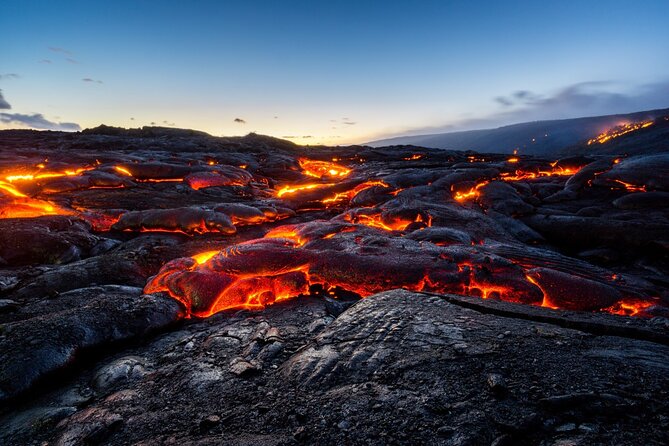
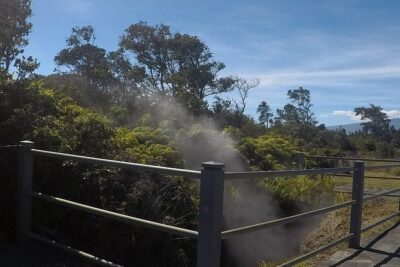
At Steam Vents, groundwater meets the heat stored below Kīlauea. The water turns to vapor and rises through cracks in the ground. The steam gives you a visible clue that volcanic heat remains active below the surface.
The stop is brief, but it helps explain why this part of the park looks and smells different. You may also notice how the guide links what you see at ground level to activity beneath your feet.
Nearby, the short Sulphur Banks Trail offers an easy chance to walk. The name tells you what to expect. Sulfurous gases create a strong odor, so this is not a sweet-smelling stroll despite the pretty vegetation and unusual colors.
I would treat this as a quick walk rather than a major hike. If you have only a short visit, listen to the story and decide how much time the smell deserves.
Kīlauea Overlook and the scale of the crater

Kīlauea Overlook is one of the first major scenic stops. The view reaches across the broad Kīlauea crater, which may not look like the classic cone-shaped volcano you picture from a textbook.
That difference is part of the lesson. Kīlauea is among the world’s most active volcanoes, yet its form can seem wide, open, and surprisingly restrained from the overlook. The audio helps you read the view instead of simply taking a photograph and moving on.
This is a good place to pause the tour, look carefully, and let anyone in your car catch up. The GPS format handles breaks well. Restart the app when you are ready, and you can continue without the pressure of a group schedule.
More Volcano and Crater Tours in Big Island:
- Small-Group Big Island Tour: Hawaii Volcanoes National Park and Kona Coffee Farm
★ 5.0 · 343 reviews - Volcano National Park Adventure From Kona
★ 5.0 · 339 reviews - Private Tour: Hawaii Volcanoes National Park Eco Tour
★ 5.0 · 276 reviews - Volcano National Park Adventure from Waikoloa
★ 5.0 · 216 reviews
Kīlauea Iki Trail and Thurston Lava Tube
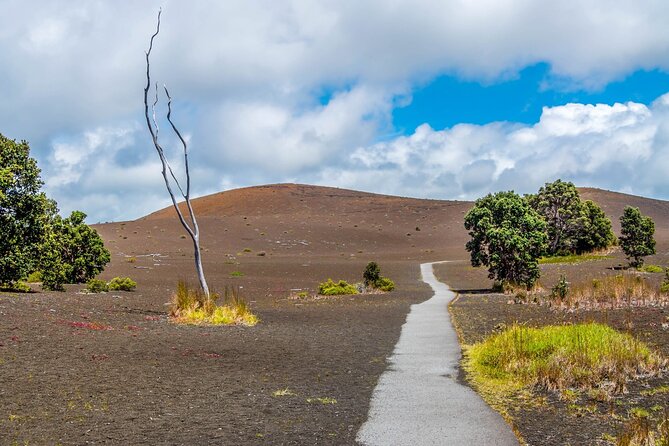
The Kīlauea Iki Trailhead marks one of the park’s most rewarding optional walks. The loop crosses the Kīlauea Iki Crater and covers 3.3 miles. It takes about three hours and includes an elevation change that can feel strenuous.
The audio tour does not turn this into a guided hike. Instead, it points out the trailhead and gives you the context to decide. If you have a full day and suitable shoes, this can be a major addition. If your park visit is limited to two or three hours, simply noting the trailhead may be the sensible choice.
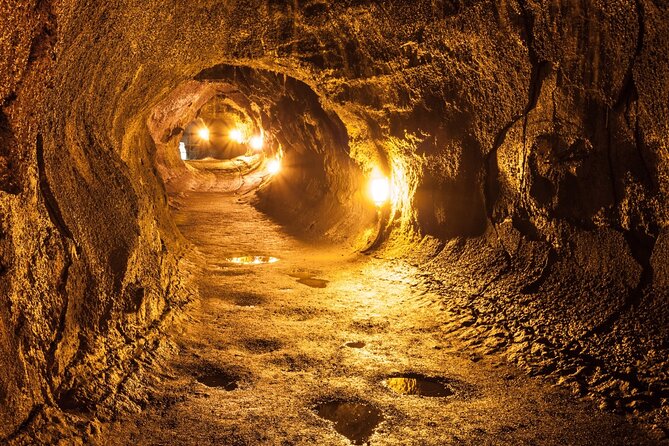
Next comes Nahuku, also called Thurston Lava Tube. The tube formed more than 500 years ago when molten lava moved through the area. The outside cooled and hardened while lava continued flowing inside, leaving a tunnel that you can explore today.
This stop gives you a close look at how lava behaves. From overlooks, volcanic activity can seem huge and abstract. Inside a lava tube, the process becomes easier to picture. Plan for a short walk and remember that the tour’s listed ten-minute stop time is an orientation, not a limit.
Luamanu, Puhimau, and Pauahi Craters
The route then moves through several crater stops, each showing a different result of volcanic activity.
Luamanu Crater was once covered by dense forest. That changed in a single day, a sharp reminder of how quickly an eruption can replace living growth with fresh volcanic ground. The audio story helps you imagine the before-and-after instead of seeing only a quiet depression beside the road.
Puhimau Crater offers another view of volcanic formations. It is a good example of why the narration matters here. Some craters are visually subtle, and a short explanation gives the feature a clear place in the park’s larger story.
Pauahi Crater is more dramatic in shape. It is a steep-sided pit crater about 330 feet deep and 1,000 feet wide. Look for lava spatter deposits and fumaroles, which release steam and gases.
These stops are close enough in theme to blur together if you rush. I would keep the audio on, but take a moment at each pullout to notice the differences in color, depth, vegetation, and surface texture.
Cinder cones and the life of a kipuka
At Puʻu Huluhulu Trailhead, you see a cinder cone similar to Puʻupuaʻi. The Hawaiian name means hairy hill, a reference to the low shrubs that give the cone a fuzzy look from a distance.
It is a small detail, but a memorable one. Place names often make more sense once you know what they describe, and the audio adds that layer without requiring you to stop and read a sign.
Kipuka Puaulu Trail shows the park’s biological side. A kipuka forms when lava flows around an older patch of vegetation, leaving an island of life surrounded by newer lava. The isolated area can develop its own soil, moisture, and plant mix.
This is one of the tour’s best changes of pace. You move from craters and steam to the way plants survive and continue growing after volcanic destruction. The trail can take more time than the audio stop, so pause the tour if you decide to walk.
Mauna Ulu Lookout and Puʻu Loa Petroglyphs
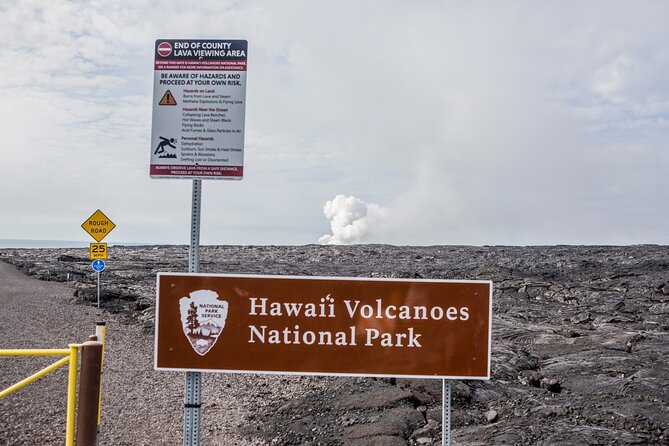
Mauna Ulu Lookout offers a broad view of the Mauna Ulu lava flow. Much of the surface looks flat and gray, but the audio directs your eye toward toadstool-shaped formations.
This is a classic example of useful narration. Without a hint, you might photograph a field of rough lava and move on. With a hint, you start looking for the odd shapes created as molten rock cooled around obstacles and openings.
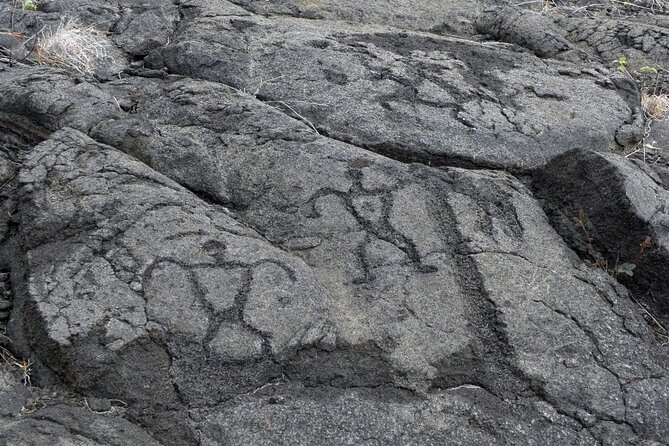
Puʻu Loa Petroglyphs adds a human record to the volcanic one. More than 23,000 ancient petroglyphs are etched into hardened lava here. The site is not just another scenic stop. It shows how Native Hawaiian people marked and used this volcanic ground long before modern roads crossed the park.
Stay on the established path and respect the carvings. The value of the site comes from its age and number, but its meaning is not something to treat casually.
Reaching Holei Sea Arch on Chain of Craters Road
The final major stop is Holei Sea Arch, reached along Chain of Craters Road. The arch formed naturally in a sea cliff, creating one of the most recognizable views on the route.
This is also where the tour earns its long drive. You travel from the park’s interior volcanic features to the coast, with the scenery changing as the road descends. If your schedule allows only part of the tour, you can still gain useful information from the early stops, but I would try to reach the sea arch if conditions and time permit.
The tour officially ends here. That makes planning easy: start at the Entrance Station, follow the route, and use the sea arch as your finish line. The road and stop sequence are designed for that direction, so do not count on an equally smooth experience if you begin at the coast and drive back.
Volcano Art Center Gallery near the visitor center
The Volcano Art Center Gallery is a small building near the visitor center. It gives the tour a cultural and creative finish, especially if you enjoy fine art.
It is not one of the park’s volcanic formations, and that is precisely why it is a useful addition. The gallery reminds you that people continue to respond to this place through art, not only through geology or outdoor recreation.
You can treat it as an optional stop. The audio tour allows you to skip it, pause, or return later if you are spending more than one day in the park.
Timing, cost, and overall value
The advertised route takes about two to three hours, but that means driving through the route with short stops. Add time for Kīlauea Iki, Kipuka Puaulu, Sulphur Banks, photos, meals, and unexpected closures.
At $16.99 per group of up to four, the cost is easy to justify for a family or small group. Four people pay less than $4.25 each before the park entrance fee. Even for one or two people, it costs far less than a conventional guided excursion priced per person.
The biggest value is not just saving money. You control the pace. You can pause for a hike, repeat a story, take a break, or skip a stop that does not interest you. One afternoon is enough to cover the major points if you keep moving, while a longer visit lets you use the same tour as a flexible background guide.
The audio tour includes offline maps, GPS-triggered stories, hands-free playback, and lifetime access with no expiry. You can use it on another trip to the Big Island, though park conditions and routes can change, so check current information before setting out.
Who should use this tour?
I would choose this for first-time visitors who want context but do not want to join a bus group. It also suits families, couples, and friends who need different amounts of time at each stop.
It is especially useful if you have not planned every park activity in advance. The narration points you toward the major sights and gives enough background to make quick decisions.
You may prefer a different option if you want a live guide, detailed hiking instruction, or a tour that works equally well in reverse. The free National Park app is another option for people comfortable reading information on their phone, but this paid tour adds spoken narration and GPS-triggered audio.
The most important preparation is technical. Download the app, enter the password, and load the tour while you have strong service. Do not wait until you are inside the park. Also check official park updates before your visit, especially during possible government shutdowns or volcanic changes.
Should you book the Hawaii Volcanoes audio tour?
Book it if you want an affordable, flexible way to understand the park while driving your own car. The strongest reasons are the clear narration, the useful historical and geological stories, the offline operation, and the route to Holei Sea Arch.
Skip it if you are happy using a free app, prefer to read rather than listen, or need a reverse route. For most small groups, though, $16.99 is a modest price for several hours of structure and context. Set it up before you arrive, follow the route from the Entrance Station, and leave enough time for the coast.
FAQ
How much does the Hawaii Volcanoes National Park audio tour cost?
The tour costs $16.99 per group of up to four people. The Hawaii Volcanoes National Park entrance fee is separate and is not included.
How long does the tour take?
The driving route takes approximately two to three hours. Extra time is needed for hikes, photos, meals, and longer visits at stops such as Kīlauea Iki Trail or Kipuka Puaulu.
Where does the tour begin and end?
It begins at the Entrance Station in Volcano, Hawaii, and ends at Hōlei Sea Arch on Chain of Craters Road.
Is the tour guided by a person who meets you at the park?
No. This is a self-guided activity. No guide meets you at the starting point, and the narration plays through the Action Tour Guide app.
Does the audio tour work without cell service?
Yes, after you download the tour and maps while you have strong Wi-Fi or cellular service. The content is designed to work offline afterward.
What phone or device do I need?
An iPhone running iOS 15 or later, an Android device running version 9 or later, or an iPad or tablet with GPS and cellular connectivity is recommended.
Can I use the tour on another day?
Yes. The tour offers lifetime access with no expiry, so you can use it on another trip and pause or restart it as needed.
Can I cancel for a full refund?
You can cancel at least 24 hours before the experience start time for a full refund. Cancellations or changes made within 24 hours are not refundable.
More Self-Guided Tours in Big Island
- Self-Guided GPS Audio E-Bike Tour Hawaii Volcanoes National Park
★ 4.5 · 131 reviews - Split: Self-Guided Plitvice Lakes Day Tour with Boat Ride
★ 4.9 · 1,519 reviews - Self-Guided Ebike Tours of Acadia National Park Carriage Roads
★ 5.0 · 427 reviews - Arches National Park Self-Guided Driving Audio Tour
★ 4.5 · 288 reviews
More Self-Guided Driving Tours in Big Island
- Big Island – Hawaii Volcanoes National Park Driving Tour
★ 4.0 · 95 reviews - Joshua Tree National Park Self-Guided Driving Audio Tour
★ 4.5 · 762 reviews - Ultimate Acadia National Park Self-Guided Driving Audio Tour
★ 4.0 · 521 reviews - From Moab: Half-Day Arches National Park 4×4 Driving Tour
★ 4.8 · 440 reviews
Just added around Big Island
- Hawaii Volcanoes National Park Experience Departing From Maui★ 4.5 · 30 reviews
- Private Tour: Hawaii Volcanoes National Park Eco Tour★ 5.0 · 276 reviews
- Private Guide Meet In Hawaii Volcanoes National Park★ 5.0 · 181 reviews
- Self-Guided GPS Audio E-Bike Tour Hawaii Volcanoes National Park★ 4.5 · 131 reviews
- Volcano National Park Adventure from Waikoloa★ 5.0 · 216 reviews
- Big Island – Hawaii Volcanoes National Park Driving Tour★ 4.0 · 95 reviews
- Hawaii Volcano National Park Shore Excursion★ 5.0 · 117 reviews
- Hilo Cruise Ship Excursion: Volcanoes National Park Rainbow Falls★ 4.5 · 130 reviews
Big Island National Park Tours, compared.
Hilo Shore Excursion: Volcanoes National Park & Black Sand Beach
Read our review →
Big Island, Hawaii: Volcanoes National Park Safari
Read our review →
Small-Group Big Island Tour: Hawaii Volcanoes National Park and Kona Coffee Farm
Read our review →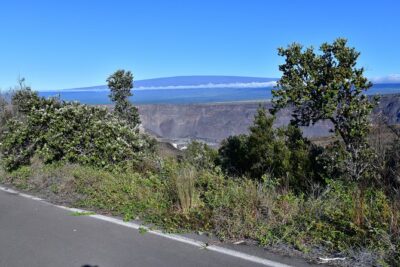
Private Tour: Hawaii Volcanoes National Park Eco Tour
Read our review →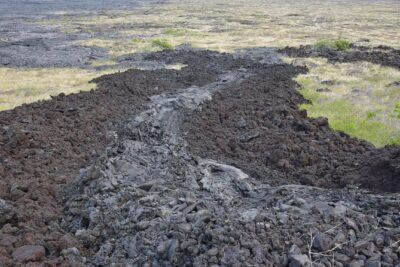

Self-Guided GPS Audio E-Bike Tour Hawaii Volcanoes National Park
Read our review →Browse the lists this tour appears in