
Review · ARUSHA
Private 6-Day Great Migration Ndutu Serengeti Safari Tour
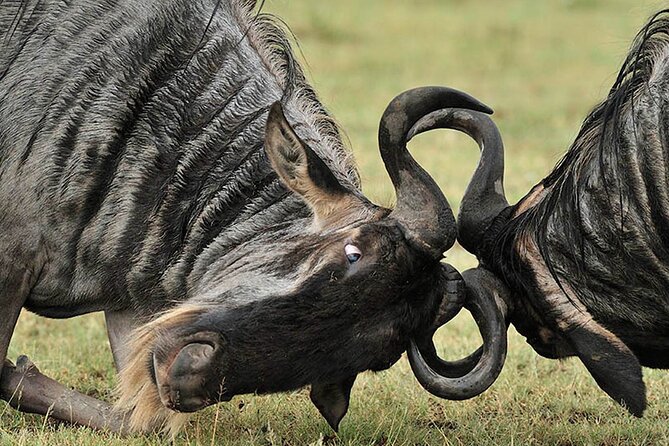
The star of this safari is Ndutu during calving season, when wildebeest and zebra gather across the short-grass plains from December through April. Around January, roughly half a million calves may be born in a short period, creating a dramatic mix of new life, nervous herds, and predators waiting nearby.
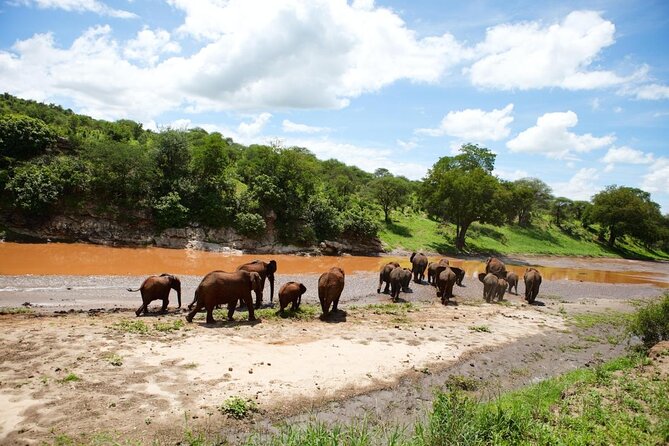
I like the smart mix of parks: Tarangire brings elephants and baobabs, Ngorongoro offers dense wildlife in a volcanic crater, and Lake Manyara adds forest, flamingos, and birdlife. I also like the private format, which gives your group one vehicle and guide rather than placing you with strangers.
The main consideration is the pace. You cover a lot of ground in six days, and several days include long drives on rough park roads. The migration is seasonal and never guaranteed on a precise day, so book this for the wider Ndutu experience, not a promised single wildlife scene.
Key points at a glance
- January calving action: The best chance to see newborn wildebeest comes around January, during a short period that usually lasts about three weeks.
- Four major wildlife areas: The route includes Tarangire National Park, the Ndutu region, Ngorongoro Crater, and Lake Manyara National Park.
- Private safari vehicle: Only your group takes part, giving you a more personal setup for questions, photographs, and time at sightings.
- Strong guide reputation: Guides including Shafino Dominick, Gilbert, Ozzie, Evans, Goodluck, Gama, Luther, and Meck have been praised for animal spotting, driving, and field knowledge.
- Arusha pickup and return: The trip starts at Mount Meru Hotel in Arusha and ends back at the meeting point.
- Price of $2,827 per person: The value depends heavily on what is included in your booking, since the supplied details do not list every meal, lodging category, park fee, or transfer.
Why Ndutu is the heart of this six-day safari
Ndutu sits in the Ngorongoro Conservation Area but belongs to the wider Serengeti ecosystem. That location matters. You get the open short-grass plains linked with the migration while also visiting a protected area with its own rules and scenery.
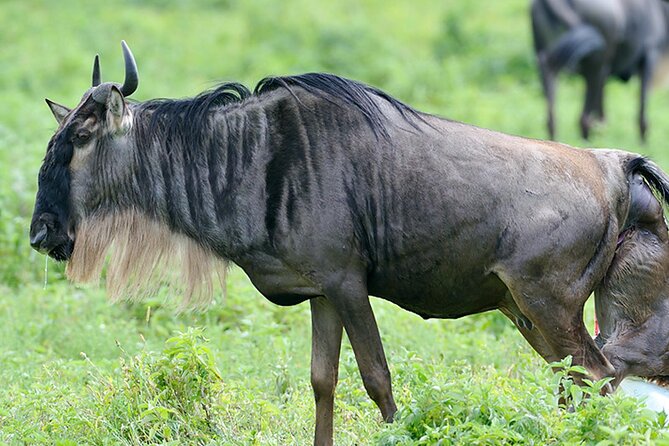
From December through April, the herds usually gather in the southern Serengeti and Ndutu area. January is the key month for calving. Newborn wildebeest can move within minutes of birth and become much stronger within a few days, but the open grass gives them little cover. That is why the calving season can bring both tender scenes and hard-edged predator action.
You should keep your expectations realistic. Wildlife follows food and rain, not a tour schedule. The herd may be spread out, conditions may be wet, and the exact calving peak can shift. Still, this is a well-chosen route if your priority is the southern migration rather than a general safari at any time of year.
A full day around Ndutu gives you the best chance to settle into the area. The drive may take you through swamps, woodland, soda lakes, and open plains. Those habitats attract different animals, so the day is not simply a long search across one flat field.
More Safari Tours in Arusha
- Balloon Safari & Bush Breakfast in Serengeti – Miracle Experience
★ 5.0 · 1,646 reviews - 3 Days Serengeti & Ngorongoro Group Camping Safari
★ 5.0 · 574 reviews - 3-Day Classic Serengeti Safari
★ 5.0 · 263 reviews
Day 1: A quiet Arusha arrival
Your first day is mainly about arriving, transferring, and getting ready. A Lion King Adventures representative collects you from the airport and takes you to Arusha, where you spend the night at Arusha Planet Lodge.
This is useful after an international flight. You do not need to rush straight into a national park, and you have time to rest before early starts and long drives. Arusha is the practical base for northern Tanzania safaris, so this first night helps break up the journey.
The supplied details identify Mount Meru Hotel on Arusha-Taveta Road as the meeting point, while the first night is listed at Arusha Planet Lodge. Confirm the exact pickup arrangement and lodging before departure, since those are separate location details.
Day 2: Elephants and open country in Tarangire
The second morning begins with collection from your Arusha accommodation. You travel across the Maasai plains on a good paved road before entering Tarangire National Park.
The route itself gives you a glimpse of daily life outside the parks. You may pass Maasai people in colorful clothing, cyclists, cattle herders, and donkey carts. This is not just filler between wildlife stops. It helps you see northern Tanzania as a lived-in place rather than a string of isolated reserves.
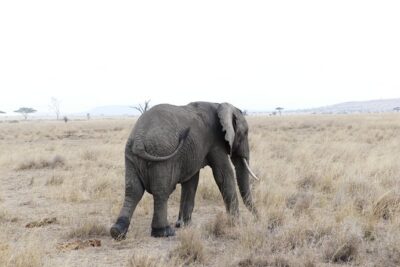
Tarangire is best known for its large elephant herds, but the park offers much more. Seasonal swamps, acacia trees, open grass, and the Tarangire River create useful water and feeding areas. From the open roof of the safari vehicle, you may look for zebra and other animals moving between these habitats.
This is an appealing first park because it differs from Ndutu. Tarangire has a more varied mix of trees and water, while Ndutu is closely tied to the open plains and the migration. The contrast makes the six-day route feel less repetitive.
The drawback is time. This is listed as an approximately eight-hour park day, and you are also traveling from Arusha. Expect a full day in the vehicle. That is normal on safari, but it may feel tiring if you have arrived in Tanzania only shortly before the tour.
Day 3: Reaching the Ndutu plains
After breakfast, you drive for about three hours toward Lake Ndutu. The route crosses the Rift Valley area and brings you into the southern Serengeti ecosystem.
Lake Ndutu is alkaline, like several Rift Valley lakes, and it attracts a range of wildlife. The lake itself is only part of the appeal. The surrounding area includes grassland, wet areas, woodland, and open country where the migrating herds may spread out.
After reaching the area, you begin a game drive. This timing gives you an early introduction to the place before dinner and your overnight stay. The day is not as packed as the Tarangire day, but the transfer still takes time. Bring patience, water, and a way to protect your camera from dust.
Ndutu is where your guide’s judgment becomes especially important. Guides such as Shafino Dominick, Gilbert, Ozzie, Evans, Goodluck, Gama, Luther, and Meck have received strong praise for spotting animals, choosing routes, and handling difficult tracks. Your assigned guide may be someone else, so treat those names as examples of the company’s guide team rather than a guarantee.
More Safari Tours in Tanzania
- 10-Day Serengeti Wildebeest Migration Safari from Arusha
★ 5.0 · 218 reviews - 4-Day Safari from Arusha: Tarangire, Serengeti and Ngorongoro
★ 5.0 · 173 reviews - 8 Day Spectacular Migration Serengeti mid -Range Tanzania Safari
★ 5.0 · 161 reviews - 7 Days Tanganyika Wilderness Safari
★ 5.0 · 159 reviews
Day 4: A full day with the migration
This is the most important day for anyone booking the tour for the great migration. After breakfast, you spend the full day around Ndutu, exploring the area rather than using it only as a stop between parks.
The possible sightings depend on the season and conditions. You may see great herds of wildebeest and zebra, with newborn calves more likely around the January peak. Lions, cheetahs, and other predators may be close by, drawn by the huge number of young animals. The drama comes from the setting as much as from any single sighting: open grass, little cover, and thousands of animals moving, resting, feeding, or gathering.
This is also the day when the private format matters most. You can ask your guide to explain animal behavior, spend longer at a worthwhile sighting, or focus your photography without sharing the vehicle with another booking. You still need to follow park rules and your guide’s judgment, but a private vehicle gives the day a more personal rhythm.
The Ndutu area can be busy during the migration. A private tour does not mean you have the plains to yourself. It does mean your group has its own vehicle and guide, rather than being tied to strangers’ preferences.
The calving spectacle is not gentle nature photography from start to finish. Predators are part of the scene, and sightings can involve feeding or pursuit. If you want a safari with a strong ecological story, this period is fascinating. If you prefer only calm animal viewing, the rawness of calving season may surprise you.
Day 5: From the Serengeti to Ngorongoro Crater
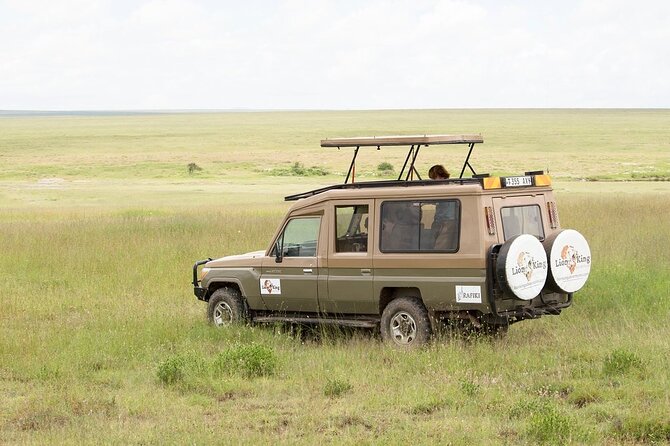
After breakfast, you travel through the Serengeti on an en-route game drive toward the Ngorongoro Conservation Area. This gives you one more chance to spot animals before leaving the open plains.
The route then changes character as you approach Ngorongoro Crater. The crater formed after a huge volcanic explosion millions of years ago. It is about 610 meters deep and covers roughly 304 square kilometers, creating a compact area with a very high concentration of wildlife.
The crater is often a strong choice for a short safari because you can see many animals in one broad setting. Around 25,000 ungulates are associated with the crater area, and the enclosed geography can make game viewing productive. With luck, you may see members of the Big Five, including lion, leopard, elephant, buffalo, and rhino.
You arrive at the crater rim before lunch, where the view down into the bowl is one of the visual highlights of the route. The contrast with Ndutu is clear. Ndutu feels open and spread out, while Ngorongoro gives you a huge natural basin with animals gathered below.
This is another approximately eight-hour day, and it includes driving rather than a full crater day. If seeing the crater floor is your top priority, check exactly how much time is allotted for the descent and game drive. The supplied schedule describes arrival at the rim and continued travel, so do not assume you receive a separate full-day crater visit.
Day 6: Birdlife and forest at Lake Manyara
The final safari day takes you to Lake Manyara National Park, about 120 kilometers west of Arusha. The park is smaller than the Serengeti and Ngorongoro areas, but its habitats change quickly.
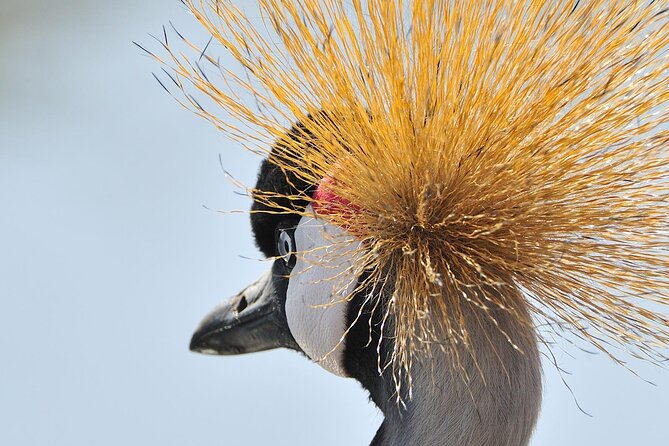
The shallow alkaline lake covers about 70 percent of the park at some points, depending on seasonal flooding and drying. It can support thousands of flamingos and about 500 bird species. For birdwatchers, this stop adds something the migration plains cannot provide.
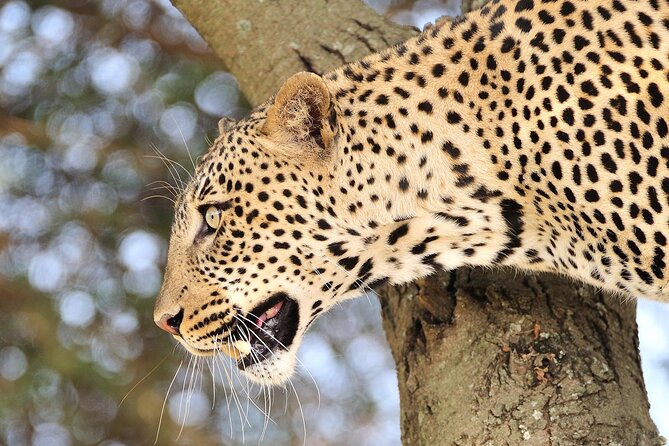
You may also look for monkeys, giraffes, zebra, wildebeest, buffalo, elephants, and lions. The park is known for lions that may lounge in trees, though that sighting is never certain. The scenery includes grassy plains, primate-filled woodland, and cliffs dotted with baobabs.
I like Lake Manyara as a final stop because it broadens the safari beyond the Big Five. You get forest and birdlife after several days of open country. The tradeoff is another full day, listed at about eight hours, before returning to the meeting point in Arusha.
What the $2,827 price means
At $2,827 per person, this is a substantial purchase, but a private six-day northern Tanzania safari can offer good value if the quoted price covers the major costs of operating in several protected areas. You are not paying for one park and one short drive. The route includes four major wildlife areas, a private setup, airport collection, an Arusha night, and several long game-drive days.
The details provided do not spell out every inclusion. Before paying, ask for a written breakdown of accommodation, meals, park and conservation fees, airport transfers, vehicle arrangements, and any crater or camping charges. Those details can change the value considerably.
Group discounts are available, which may make the per-person cost more attractive for families or friends sharing a private vehicle. Since only your group participates, the price may be easier to justify if you value flexibility and personal attention more than the lowest possible fare.
The strongest value comes from timing. If you travel from December to April and especially around the January calving period, the Ndutu focus matches the main reason for choosing this tour. Outside that window, the route still offers excellent parks, but the migration advantage may be weaker.
Guides, driving, and the private vehicle
The guide can make or break a safari. The strongest praise attached to this operation focuses on guides who spot animals quickly, explain what you are seeing, drive confidently over rough tracks, and adjust the day around your interests.
Names that appear repeatedly in the supplied material include Shafino Dominick, Gilbert, Ozzie, Evans, Goodluck, Gama, Luther, Meck, David, and Sahele. Specific strengths include finding elusive leopards, locating rhinos and lions, arranging thoughtful meal stops, handling muddy or rocky roads, and responding to a group’s preferred animals.
You should not book on the assumption that one particular guide will lead your departure unless the company confirms it. Still, the pattern gives you a useful question to ask: Who is assigned to my group, and what happens if the guide changes?
A private vehicle also helps with photography. You can ask for a slower approach, more time at an animal, or a position that suits your camera. The vehicle remains your base for much of the day, so pack only what you need close at hand and keep your expectations practical about road comfort.
Who should book this safari
I would point this tour toward someone who wants the migration as the main event but also wants a broad first safari. You see Tarangire, Ndutu, Ngorongoro, and Manyara rather than spending every night in one region.
It suits couples, families, and small groups who want a private vehicle and direct contact with one guide. The itinerary can also work well for first-time safari visitors because each park offers a different setting and type of wildlife.
It is less suitable if you want slow mornings, luxury resort time, or a single-base holiday. The days are active and driving is part of the experience. It is also not the right choice if you need fully flexible cancellation, since the booking is non-refundable and cannot be changed after payment.
Should you book it?
Book this safari if you can travel between December and April, want a serious chance at the Ndutu calving season, and value a private vehicle with an experienced guide. January is the most compelling period for newborn wildebeest, but the exact timing depends on nature.
Before committing, confirm the accommodation plan, inclusions, assigned guide, park fees, and how much time is spent inside Ngorongoro Crater. If those details fit your budget, this route gives you a strong six-day introduction to northern Tanzania, with the migration at its center and four very different wildlife areas around it.
FAQ
Where does the safari start?
The listed meeting point is Mount Meru Hotel on Arusha-Taveta Road in the Sekei Area of Arusha, Tanzania.
Where does the safari end?
The activity ends back at the meeting point in Arusha.
How long does the safari last?
The tour lasts approximately six days.
When is the best time to see the Ndutu migration?
The migrating wildebeest are normally in the Ndutu area from December through April. January is highlighted as the best period for seeing calving, which usually takes place over about three weeks.
Which parks and wildlife areas are included?
The route includes Tarangire National Park, the Ndutu region, Ngorongoro Conservation Area and Crater, and Lake Manyara National Park.
Is this a private tour?
Yes. Only your group takes part in the activity.
Can I cancel or amend the booking?
No. The experience is non-refundable and cannot be changed for any reason after booking.
More 6-Day Experiences in Arusha
- Private 6-Day Tarangire Manyara Crater and Serengeti with Mid-Range Lodges
★ 5.0 · 238 reviews - From Arusha: 6 Day Classic Game Drive Serengeti & Ngorongoro
★ 5.0 · 49 reviews - 6 Days Serengeti Safari(hiking waterfalls &coffee tour)
★ 5.0 · 48 reviews - 6 days 5 nights safari Ngorongoro, Serengeti and Tarangire National Parks
★ 5.0 · 39 reviews
Just added around Arusha
- Serengeti & Ngorongoro fly in safari★ 5.0 · 76 reviews
- serengeti, ngorongoro & tarangire 5days private tour★ 5.0 · 77 reviews
- 3 Days Private Safari – manyara, Ngorongoro & Tarangire★ 5.0 · 94 reviews
- 05 Days Tarangire, Serengeti, Ngorongoro and Lake Manyara★ 5.0 · 54 reviews
- day trip tarangire★ 5.0 · 46 reviews
- 5 days safari, hiking & culture (Serengeti & kilimanjaro)★ 5.0 · 27 reviews
- 4 Days Private Safari – Tarangire, Serengeti & Ngorongoro Crater★ 5.0 · 28 reviews
- Tanzania safari with guide in Italian, the great Migration of the Serengeti★ 5.0 · 23 reviews
Arusha National Park Tours, compared.
Balloon Safari & Bush Breakfast in Serengeti – Miracle Experience
Read our review →
3 Days Serengeti & Ngorongoro Group Camping Safari
Read our review →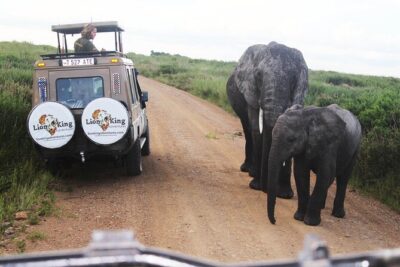
5-Day Highlights mid-Range Crater, Serengeti, Tarangire
Read our review →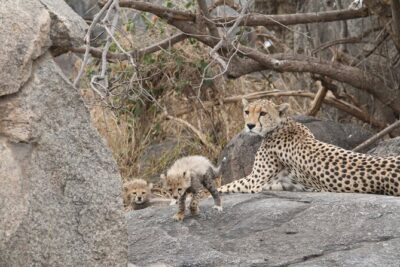
Private 6-Day Tarangire Manyara Crater and Serengeti with Mid-Range Lodges
Read our review →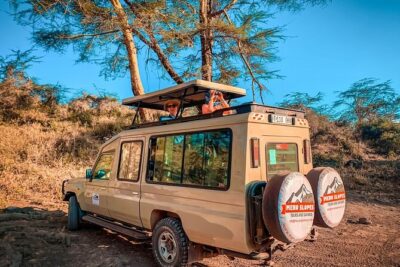
5 Days Camping Tarangire, Serengeti & Ngorongoro crater & Visiting Maasai
Read our review →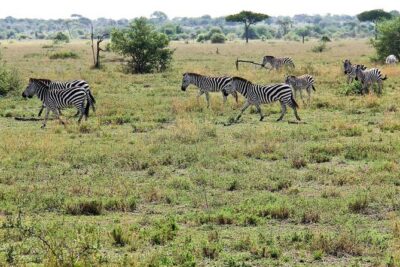
4 Days Join Group tour Tarangire Serengeti and Ngorongoro crater
Read our review →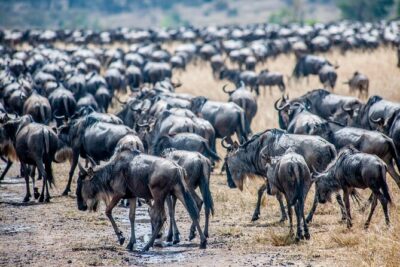
10-Day Serengeti Wildebeest Migration Safari from Arusha
Read our review →Browse the lists this tour appears in