
Review · BIG ISLAND
Big Island, Hawaii: Volcanoes National Park Safari
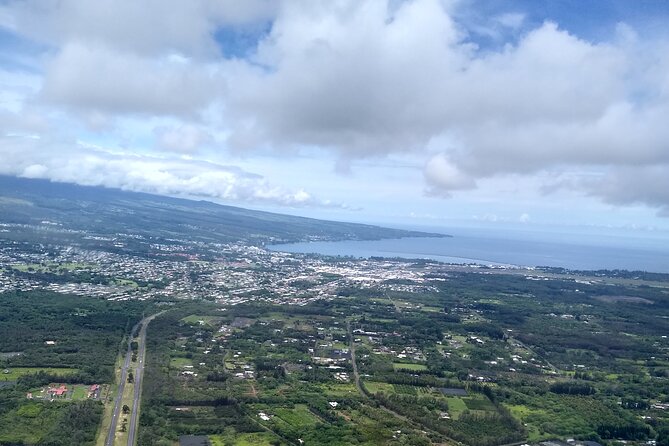
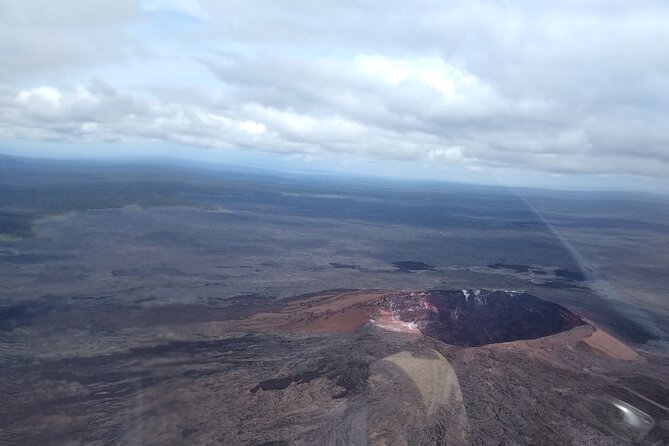
The most thrilling part of this 55-minute helicopter flight is the sudden change from Hilo’s green countryside to the black lava fields and volcanic craters of Hawaiʻi Volcanoes National Park. From the air, old flows, newer vents, gas rising from the caldera, waterfalls, and deep forest fit into one fast-moving view.
I like the easy Hilo Airport meeting point and the small group size, capped at six people. I also like the pilot-guide format. Andrew, Jim, and Drew are frequently praised for smooth flying, clear explanations, and stories about Hawaiian culture, geology, and past eruptions.
The main catch is simple: weather controls the show. Clouds, smoke, or low visibility can keep the helicopter away from the caldera, and an alternate coastal or north-side route may be offered instead. A few departures have also been moved or canceled when the minimum group size was not met.
Key points to know before you book
- Volcano views depend on weather and volcanic activity: You may see craters, vents, gas, and lava fields, but an active eruption is never guaranteed.
- The flight leaves from Hilo, not Kona: The address is 2220 Kekuanaoa Street, Hilo, and the experience returns there.
- Pilots are also your guides: Andrew, Jim, and Drew have all been praised for strong narration and calm, smooth flying.
- Only six people fly at most: That keeps the cabin small, but seating and window views are not equal for everyone.
- Weight rules are strict: Each passenger may weigh up to 249 pounds, with an extra seat required above 250 pounds or for a combined two-person weight above 420 pounds.
- Plan around the 40-minute check-in: You need to arrive well before departure, and the flight itself lasts about 55 minutes.
From Hilo Airport to the Volcanoes
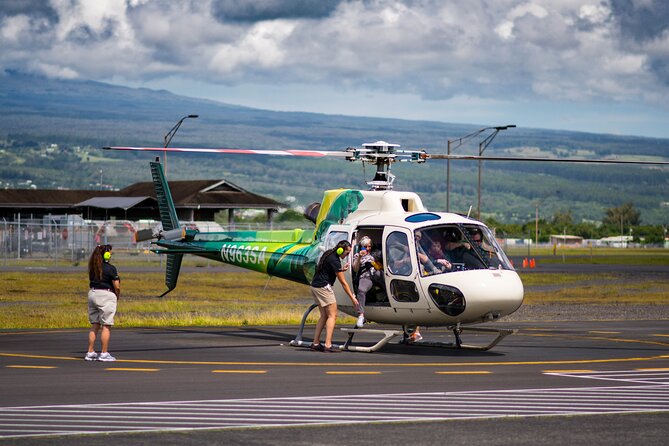
You meet Safari Helicopters at 2220 Kekuanaoa Street in Hilo. The location is near public transportation, and the operator sends confirmation when you book. You need to arrive 40 minutes before departure, not at the listed flight time, since the staff handles the safety briefing and passenger details before boarding.
The setup is pleasantly straightforward. You meet the ground crew, go through the safety instructions, and receive a briefing before walking out to the helicopter. The staff has been praised for making first-time fliers feel at ease, and that matters if the thought of a helicopter ride makes your stomach tighten.
This is a family-run company that has operated on the island for more than 30 years and presents itself as the longest-running helicopter company on the Big Island. That long local presence is useful here because the flight is not just a ride over a volcano. The pilot points out farms, forests, waterfalls, craters, vents, and old eruption zones while explaining how the island was formed.
The helicopter carries no more than six people on this experience. That is a real advantage over a large sightseeing aircraft, since a smaller cabin makes the flight feel more personal and gives the pilot a better chance to respond to questions. The tradeoff is that the seats are close together, and not every position offers the same view.
More Safari Tours in the USA
- Miami: Everglades Safari Park Airboat Tour
★ 4.4 · 1,267 reviews - Grand Teton Wildlife Safari in a Enclosed or Open-Air Vehicle (season dependent)
★ 5.0 · 1,212 reviews - Everglades Airboat Safari Adventure with Transportation
★ 3.0 · 956 reviews
Orchid farms, native forest, and Hilo’s green side
The flight heads toward the volcanoes from Hilo Airport. Before the black rock appears, you see the wet, green side of the island, including orchid farms and native forest. Much of this plant life is especially associated with the Big Island, and the change in scenery helps you understand how sharply the island’s climate shifts over a short distance.
From the ground, it is easy to think of Hawaiʻi as one continuous tropical setting. This flight shows you something more useful: Hilo’s rainfall supports thick forest and agriculture, while volcanic slopes farther inland can look stark and raw. The contrast is one of the best reasons to take the flight from Hilo rather than treat it as a simple volcano flyover.
Your pilot does the explaining in the air. Andrew, Jim, and Drew have all received praise for sharing information about the island’s geology, plants, people, and past eruptions. The strongest flights seem to combine narration with a smooth route, so you are not left wondering what you are looking at while the helicopter moves on.
Do not expect a slow, stop-and-study tour. The flight lasts roughly 55 minutes, and you cover a large area. If you want detailed information on every crater or a long look at one particular feature, a ground visit to Hawaiʻi Volcanoes National Park will give you more time. The helicopter offers a broad view and access to places you cannot reach by road.
The volcanic heart of Hawaiʻi Volcanoes National Park
The centerpiece is Hawaiʻi Volcanoes National Park, where the helicopter can show you large lava fields, old craters, volcanic vents, and the caldera around Kīlauea. When conditions are clear and activity is visible, the experience can be dramatic. A few flights have seen lava emerging from a fissure, while others have watched gas rise from vents or seen an active cone and fresh flows.
But you should book this with realistic expectations. Volcanic activity changes, and cloud or smoke can make the caldera unsafe to approach or impossible to see clearly. Even on a day when an eruption is happening, the timing may not line up with your flight. Lava fountains and overflows can be brief, and conditions can change between morning and afternoon.
That limitation is important because the name of the tour may lead you to expect a direct view into an active eruption. The route still covers the volcano and much of the national park if the caldera is blocked, but the exact highlight you most want may not appear. One flight was unable to reach the caldera because smoke mixed with cloud, even though the pilot continued over other parts of Kīlauea and explained earlier eruptive activity.
I appreciate the operator’s approach when weather closes the volcano route. You may be offered a different date, a full refund, or an alternate flight over the coast or the north side of the island. Some people have accepted that substitute and found it worthwhile, while others have declined because seeing the volcano was their only reason for booking. That choice is handled best if you decide in advance how flexible you are.
How the pilot makes the short flight count
A good pilot is the difference between a pretty aerial ride and a useful island experience. Andrew, Jim, and Drew have been singled out for calm handling, clear explanations, and efforts to give both sides of the cabin a look at major sights. Pilots may circle or use figure-eight patterns around points of interest, though the exact view depends on your seat and the flight path.
The narration covers more than volcano facts. You may hear about Hawaiian history, the island’s people, plant life, previous eruptions, and the meaning of features below. A pilot who answers questions also helps you connect the scattered sights: an old lava field is no longer just black rock, and a steaming vent becomes part of an ongoing volcanic story.
The flight has also been described as smooth, which is especially valuable for first-time helicopter passengers. The ground crew prepares you well, and the pilots have a reputation for keeping the mood relaxed without turning the tour into a constant sales pitch.
Still, cabin comfort varies. The seats are compact, and one position behind the pilot was criticized for poor visibility and cramped leg placement. Another passenger noted that not every seat has an equally good view. If seeing every feature from your own window matters greatly, ask the staff about seating when you arrive, but understand that the operator cannot promise a perfect view for every person.
More Volcano and Crater Tours in the USA
- Hilo Shore Excursion: Volcanoes National Park & Black Sand Beach
★ 4.5 · 2,338 reviews - Big Island: Fat Tire E-Bike Tour through Volcanoes National Park
★ 5.0 · 546 reviews - Small-Group Big Island Tour: Hawaii Volcanoes National Park and Kona Coffee Farm
★ 5.0 · 343 reviews - Volcano National Park Adventure From Kona
★ 5.0 · 339 reviews
When waterfalls and coast replace the volcano
Hilo’s weather can shift quickly. Low cloud, rain, smoke, or poor visibility may prevent the planned route. In that case, the company may offer a coastal flight, a north-side route, or a flight toward Waimanu Valley, depending on the day’s conditions and available options.
These alternate flights are not the same product as a volcano safari. If your only goal is to see Kīlauea, you may prefer to reschedule or take a refund instead. If you are open to seeing another side of the island from the air, the substitute can include waterfalls, coastlines, older lava flows, macadamia farms, and remote valleys.
This flexibility has two sides. It can save a day that would otherwise be lost to weather, and pilots still provide the same island background and safety-first approach. But you should not assume an alternate route will satisfy you if you have planned your entire day around the caldera.
The weather policy offers a date change or full refund if the experience is canceled for poor weather. A minimum number of passengers is also required, so a departure can be canceled or moved if too few people are booked. This has caused frustration for people who drove about two hours from the other side of the island. If you are staying near Kona or elsewhere far from Hilo, keep your schedule flexible and confirm the flight before committing to a long drive.
Is $379 a fair price for 55 minutes?
At $379 per person, this is a major vacation expense. You are paying for the aircraft, pilot, fuel, safety procedures, and access to a wide stretch of the island in less than an hour. The price includes the helicopter flight and all fees and taxes, but not snacks, hotel transportation, or anything beyond the flight experience.
I see the value most clearly if you have limited time on the Big Island, cannot hike comfortably, or want a broad view before exploring the park by car. The helicopter reveals remote lava fields, upper forest, waterfalls, and volcanic features that are difficult or impossible to connect during a normal road visit. For a family or couple seeking one memorable splurge, the small group and strong pilot narration help justify the cost.
The value is weaker if you are booking only for a guaranteed lava sighting. No operator can promise that. If the caldera is hidden by cloud, an active vent is quiet, or the route changes to the coast, you may feel the price is too high for what you received. I would book it for the aerial view of the Big Island and the chance to see volcanic activity, not as a guaranteed eruption ticket.
There is also no hotel pickup or drop-off. You need to arrange your own way to Hilo Airport and allow time for the return trip. That is easy if you are based in Hilo, but it adds several hours of driving if you are staying near Kona.
Weight limits, seating, and practical comfort
The operator requires accurate passenger weights. Each passenger has a stated limit of 249 pounds. An additional seat is required for anyone above 250 pounds, or when two passengers together weigh more than 420 pounds.
Do not guess or round down. Incorrect weight information can lead to an extra seat charge or prevent you from boarding, with no refund for a safety issue caused by inaccurate details. This is not a minor booking detail, since helicopter balance and weight limits are central to safe operation.
Most people can participate, and the ground staff has worked with older people who have mobility limits. Still, the cabin is compact, and you should tell the staff about mobility concerns before arrival. The flight is in English, and the captain serves as the guide.
The small cabin is both a strength and a limitation. Six people maximum keeps the group personal, but legroom is limited and the windows do not provide identical views. Wear comfortable clothing, arrive ready for a close seating arrangement, and keep your expectations practical rather than assuming every seat will offer a front-row view.
Cancellation rules and weather decisions
You can cancel up to 24 hours before the start time for a full refund. Inside that 24-hour window, cancellations and changes are not accepted for a refund.
The operator can cancel for poor weather or because the minimum number of passengers is not met. In those cases, you are offered another date, another experience, or a full refund. That protection helps, but it does not erase the planning issue if you have built a full day around the flight.
I would avoid scheduling this on the last possible day of your island stay. A weather delay or minimum-group cancellation leaves no room to try again. Give yourself at least one flexible day if the volcano flight is a top priority.
Who should book this Hilo helicopter tour?
I would recommend it to you if you want a quick, high-impact look at the Big Island, especially if you are staying in Hilo or already planning a visit to Hawaiʻi Volcanoes National Park. It suits first-time helicopter passengers, families with older relatives, couples marking a special trip, and anyone who wants to see remote volcanic areas without a long hike.
It is also a good choice for people who value interpretation. Pilots such as Andrew, Jim, and Drew add context about geology, culture, forests, farms, and previous eruptions, so the flight feels more informative than a simple scenic loop.
I would hesitate if your budget is tight, your schedule cannot absorb a delay, or you need a guaranteed view into an active caldera. I would also think twice if you are staying on the Kona side and have no interest in spending much of the day driving to and from Hilo.
Should you book the Volcanoes National Park Safari?
Book it if you can accept nature’s terms. You may see spectacular lava fields, craters, vents, waterfalls, and even active lava, but you may also see cloud, smoke, or an alternate part of the island. The operator’s best qualities are its small groups, experienced local pilots, capable ground staff, and clear narration.
My practical advice is to book early, since the experience is often reserved well in advance, give accurate weights, arrive 40 minutes early, and confirm the Hilo departure point. Leave room in your schedule for weather changes. If you want a memorable aerial introduction to the Big Island and can afford the splurge, this is a strong choice. If your entire decision rests on seeing lava in the caldera, save your money unless you are comfortable with the risk of disappointment.
FAQ
Where does the helicopter tour begin?
The tour begins at 2220 Kekuanaoa Street, Hilo, Hawaii 96720. It ends back at the same meeting point.
How long does the experience last?
The helicopter flight lasts approximately 55 minutes.
How early should I arrive?
You should arrive 40 minutes before the scheduled departure time for the check-in and safety briefing.
What is included in the price?
The price includes the helicopter flight over Hawaiʻi Volcanoes National Park, along with all fees and taxes.
Is hotel pickup included?
No. Hotel pickup and drop-off are not included.
How many people can join the flight?
The activity has a maximum of six travelers.
Are there passenger weight limits?
Yes. The stated limit is 249 pounds per passenger. An additional seat is required for a passenger over 250 pounds or when two passengers have a combined weight above 420 pounds.
What happens if weather prevents the planned volcano route?
If poor weather cancels the experience, you may be offered another date or a full refund. An alternate route over the coast or another part of the island may also be offered when conditions allow.
Can I cancel for a full refund?
Yes. You can cancel at least 24 hours before the experience start time for a full refund. Cancellations or changes made less than 24 hours before the start time are not refunded.
More Safari Tours in Big Island
- Teide National Park Sunset & Stargazing with Dinner (Star Safari)
★ 5.0 · 2,601 reviews - Serengeti Balloon Safari and authentic bush breakfast
★ 5.0 · 2,480 reviews - Teide National Park: Sunset & Stargazing Safari with Dinner
★ 4.6 · 2,115 reviews - Balloon Safari & Bush Breakfast in Serengeti – Miracle Experience
★ 5.0 · 1,646 reviews
More Volcano and Crater Tours in Big Island
- Private Tour: Hawaii Volcanoes National Park Eco Tour
★ 5.0 · 276 reviews - Volcano National Park Adventure from Waikoloa
★ 5.0 · 216 reviews - Private Guide Meet In Hawaii Volcanoes National Park
★ 5.0 · 181 reviews - Self-Guided GPS Audio E-Bike Tour Hawaii Volcanoes National Park
★ 4.5 · 131 reviews
Just added around Big Island
- Hawaii Volcanoes National Park Experience Departing From Maui★ 4.5 · 30 reviews
- Private Tour: Hawaii Volcanoes National Park Eco Tour★ 5.0 · 276 reviews
- Private Guide Meet In Hawaii Volcanoes National Park★ 5.0 · 181 reviews
- Self-Guided GPS Audio E-Bike Tour Hawaii Volcanoes National Park★ 4.5 · 131 reviews
- Volcano National Park Adventure from Waikoloa★ 5.0 · 216 reviews
- Big Island – Hawaii Volcanoes National Park Driving Tour★ 4.0 · 95 reviews
- Hawaii Volcanoes National Park Self-Guided Driving Audio Tour★ 4.5 · 29 reviews
- Hawaii Volcano National Park Shore Excursion★ 5.0 · 117 reviews
Big Island National Park Tours, compared.
Hilo Shore Excursion: Volcanoes National Park & Black Sand Beach
Read our review →
Small-Group Big Island Tour: Hawaii Volcanoes National Park and Kona Coffee Farm
Read our review →
Private Tour: Hawaii Volcanoes National Park Eco Tour
Read our review →
Self-Guided GPS Audio E-Bike Tour Hawaii Volcanoes National Park
Read our review →
Hilo Cruise Ship Excursion: Volcanoes National Park Rainbow Falls
Read our review →Browse the lists this tour appears in